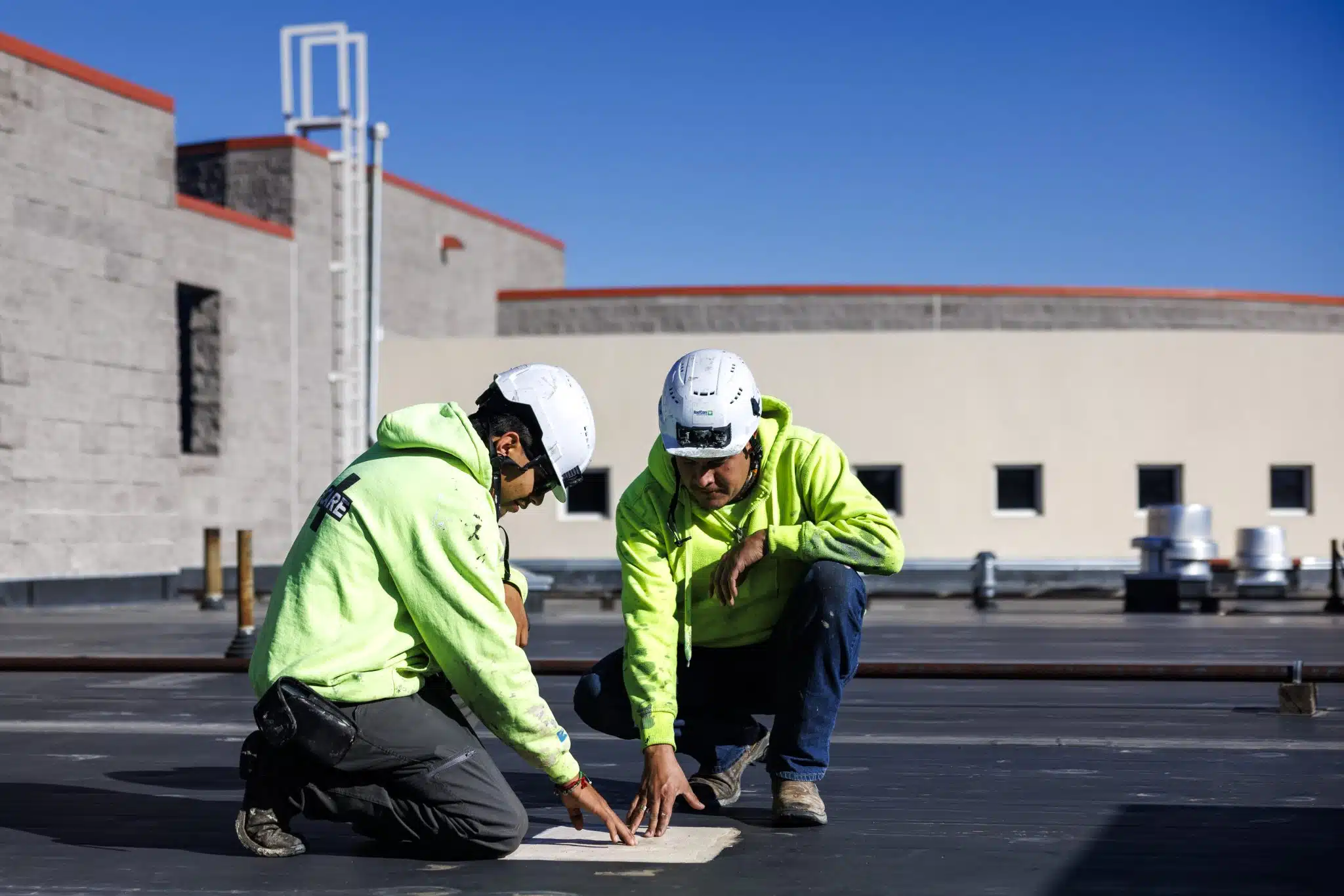
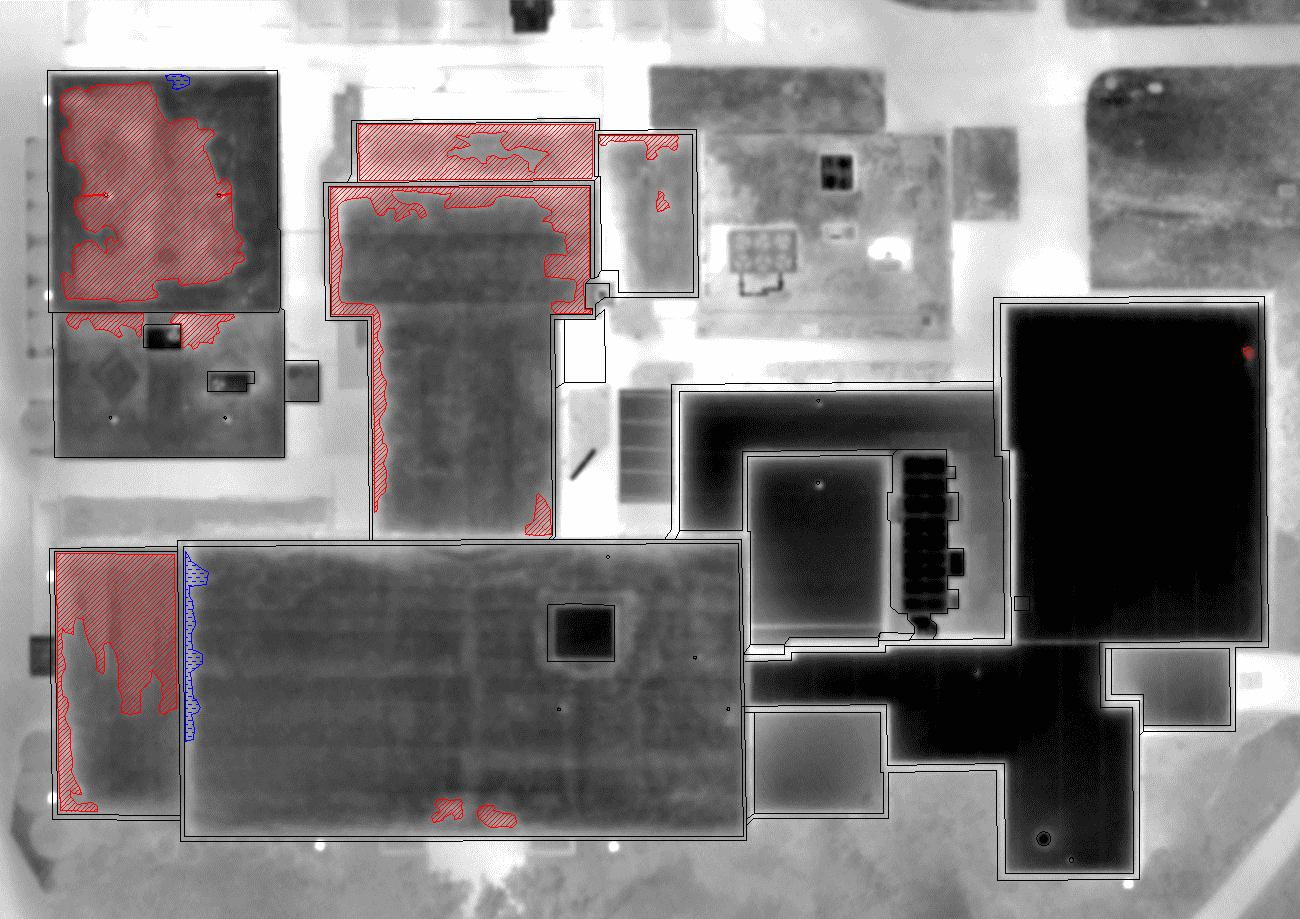
Independent field QA inspection during another contractor's installation - seam integrity testing, flashing detail verification, and manufacturer warranty eligibility assessment on Raleigh commercial projects we are not building.
Third-party quality inspection is a specific technical engagement, not a general advisory relationship through the project lifecycle. An owner, general contractor, or property manager retains us to walk a roof during or after another contractor's installation, document what we find against the manufacturer's published installation standard and the project's contract specification, and deliver a written report the owner can act on before the closeout package is accepted.
We conduct these inspections on Raleigh commercial projects regularly - for out-of-market owners who hired a local contractor and want an independent field check before accepting a closeout package, for general contractors managing a roofing subcontractor on a North Hills mixed-use development who need documented QA before accepting substantial completion, for REIT asset managers whose portfolio management protocols require third-party QA documentation on projects above a defined contract value, and for NC State and UNC facilities groups whose institutional procurement standards require independent installation verification.
Every finding is photographed, keyed to the building's roof zone diagram, and cited against the specific manufacturer detail requirement or specification section it deviates from. Findings are categorized as warranty-jeopardizing - must correct before manufacturer inspection - specification deviation - correction required per contract documents - or observation - no immediate action, documented for the asset record. The report format allows the installing contractor to use it directly as a correction-required list.
What We Inspect on Raleigh Commercial Installations
Seam integrity: We run probe tests on a representative seam sample - minimum one probe per 500 linear feet of seam, plus every seam in a flashing transition zone, every seam within 12 inches of a penetration, and every T-junction. Probe testing identifies cold welds that pass visual inspection but will fail under the thermal cycling that Raleigh's climate produces: rooftop surface temperatures above 160F in summer, periodic ice storm loading in winter, and sustained water-loading during hurricane remnant rainfall events. On a 100,000 sq ft TPO installation in Wake County, we typically test 800 to 1,200 linear feet of seam.
Flashing details: Parapet walls, penetrations, drains, HVAC curbs, and expansion joints - each photographed against the manufacturer's published detail drawing. The older masonry-parapet commercial buildings in Downtown Raleigh and the Glenwood South and Five Points corridors have parapet wall sections that require specific base flashing heights and termination bar details different from the standard CMU-parapet specification. Missing or undersized flashing dimensions at these locations are the most common warranty-jeopardizing finding we document on Raleigh commercial single-ply installations.
Fastener pattern: For mechanically attached systems, we pull a sample fastener pattern inspection at the field, perimeter, and corner zones and verify spacing against the approved wind-uplift design. Buildings near RDU Airport on the western Wake County edge and buildings in the open terrain along the I-540 outer loop corridor face higher wind-uplift exposure than the sheltered Downtown core. We find pattern errors in perimeter or corner zones on a consistent percentage of mechanically attached projects we inspect - the errors are most common at complex roof geometry and at parapet-adjacent zones where crews change spacing without updating the pattern documentation.
Drain ring installation and rooftop drainage: On TPO systems, we verify drain ring torque and clamping contact at every drain location. On all systems, we assess drain bowl conditions, sump geometry, and outlet slope. The Triangle's high annual rainfall volume - and the multi-day sustained events that hurricane remnant systems produce - means drain performance is not a secondary concern. Undersized drain outlets and insufficient sump depth are recurring findings on Raleigh commercial installations where the drain design was not updated to reflect ASCE 7-22 Wake County 100-year storm criteria.
Manufacturer Warranty Inspection Support in Raleigh
Most major manufacturer NDL warranty inspections in the Triangle market are performed by the manufacturer's own regional field inspector covering the Raleigh-Durham territory or a factory-credentialed applicator. These inspections produce a punch list of conditions that must be corrected before the warranty is issued, with a cure window that typically runs 30 to 90 days from the inspection date.
We support owners and general contractors through manufacturer warranty inspections in two ways. Pre-inspection, we walk the roof and identify probable punch-list items so the installing contractor can correct them before the manufacturer's inspector arrives. Post-inspection, we scope and complete the remediation the punch list requires and submit the completion documentation to the warranty desk within the required window.
The pre-inspection walk is particularly valuable on Raleigh projects because the conditions that manufacturer inspectors flag most often in the Triangle market - drain ring seating on TPO systems subjected to the Triangle's water-loading events, parapet flashing termination on the masonry-parapet buildings in the older Raleigh commercial corridors, and short seam legs at the penetration-heavy buildings common in Research Triangle Park and Centennial Campus - are detectable before the manufacturer's inspector arrives and correctable in a single crew day. Identifying them in advance reduces punch-list length and accelerates warranty issuance.
Report Format and Deliverable
Every third-party QA inspection delivers a written report within five business days of the field visit. The report includes: an executive summary covering overall installation quality assessment and a count of warranty-jeopardizing, specification-deviation, and observation findings; a roof zone diagram with all findings keyed by number; a finding-by-finding detail section with photograph, location, description, applicable specification section or manufacturer requirement, and recommended corrective action; and a findings matrix - a spreadsheet summary sortable by zone, finding category, and correction priority.
For institutional clients at NC State, WakeMed, and Research Triangle Foundation properties, we format the findings matrix to integrate with the client's project management system as a standard deliverable. A quality inspection report that has to be reformatted before the facilities team can use it adds delay and introduces errors. We deliver to the format the owner's system accepts.
Frequently asked questions
Can you inspect a roof installation that is already complete?
Yes, but with reduced utility. The highest-value inspection window is during installation - before membrane covers insulation and while seams and flashings are still accessible for probing. Post-completion inspection can still surface visible deficiencies and test exposed seams, but conditions under a completed membrane or covered by flashing cannot be assessed without destructive investigation. Post-completion inspections are still valuable for warranty inspection preparation and for ownership-transfer documentation.
Do you share inspection findings with the installing contractor?
That is the owner's decision. We deliver the report to the owner or general contractor who retained us. The owner decides whether to share the report directly, use it as the basis for a correction-required notice, or hold it for warranty inspection support. We do not communicate findings to the installing contractor without the retaining party's authorization.
How long does a full QA inspection take on a 100,000 sq ft Raleigh commercial roof?
Full seam probe, flashing detail inspection, fastener pattern verification, drain ring check, and zone-by-zone photo documentation: approximately one full field day on a 100,000 sq ft roof with standard equipment density. Research Triangle Park and Centennial Campus buildings with high rooftop equipment loads, multiple roof levels, or managed-access protocols requiring pre-clearance add time. We provide a time estimate after reviewing project documentation before scheduling.
What is the best timing for a third-party QA inspection on a Raleigh project?
We recommend scheduling at two points: once at roughly but a significant portion of the seaming and flashing work is still ahead, and once before the manufacturer warranty inspection. The mid-project visit catches the deficiency patterns early enough to correct them across the remaining production without rework cost. The pre-warranty visit clears the punch list before the manufacturer's inspector arrives.