Modified bitumen is the multi-ply asphalt system we recommend when a Raleigh commercial roof needs redundancy and toughness, especially where rooftop traffic or service activity would punish a thinner single-ply.
It builds on the proven asphalt roofing tradition with reinforced polymer-modified plies, and it remains a dependable choice for many Triangle low-slope buildings.
Why Modified Bitumen Still Fits Triangle Buildings
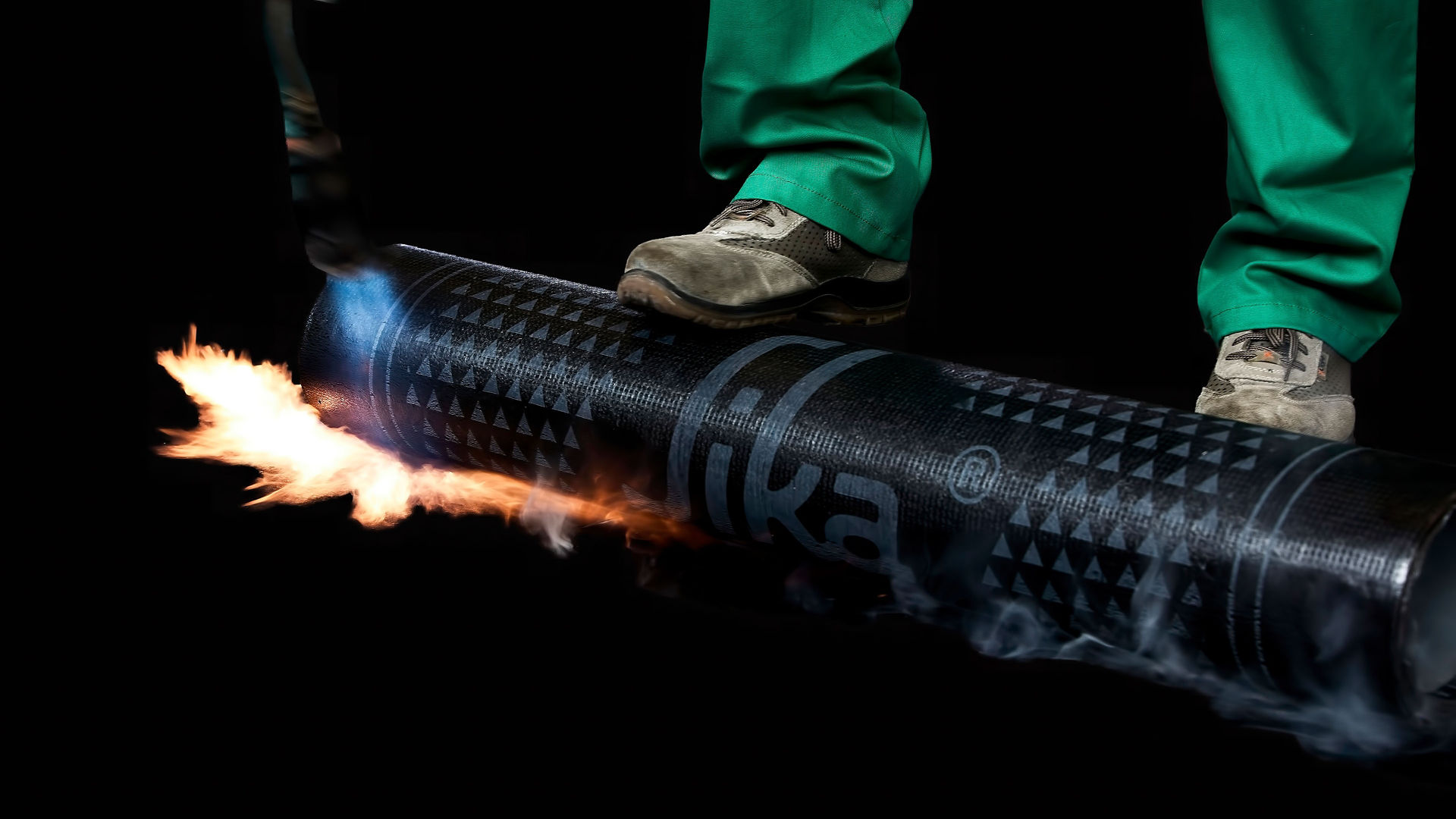
Modified bitumen is installed in layers, which gives the finished roof built-in redundancy: a puncture in the cap sheet does not immediately become a leak into the building. The granulated cap surface resists foot traffic and UV, making it a practical choice for roofs that see regular service visits to rooftop equipment. SBS and APP formulations can be torch-applied, cold-applied, or self-adhered, and we select the method based on the building's occupancy and fire considerations.
How It Performs Through Raleigh Heat and Storms
The Triangle's combination of intense summer UV and heavy rain rewards a surfaced, multi-ply roof. The granule cap shields the asphalt from ultraviolet breakdown, and the layered construction holds up to wind-driven rain and the occasional hail event better than a single thin sheet. The trade-off is heat absorption on darker caps; where cooling load matters we specify a reflective granule or a coating over the finished system.
What We Assess Before Specifying or Repairing
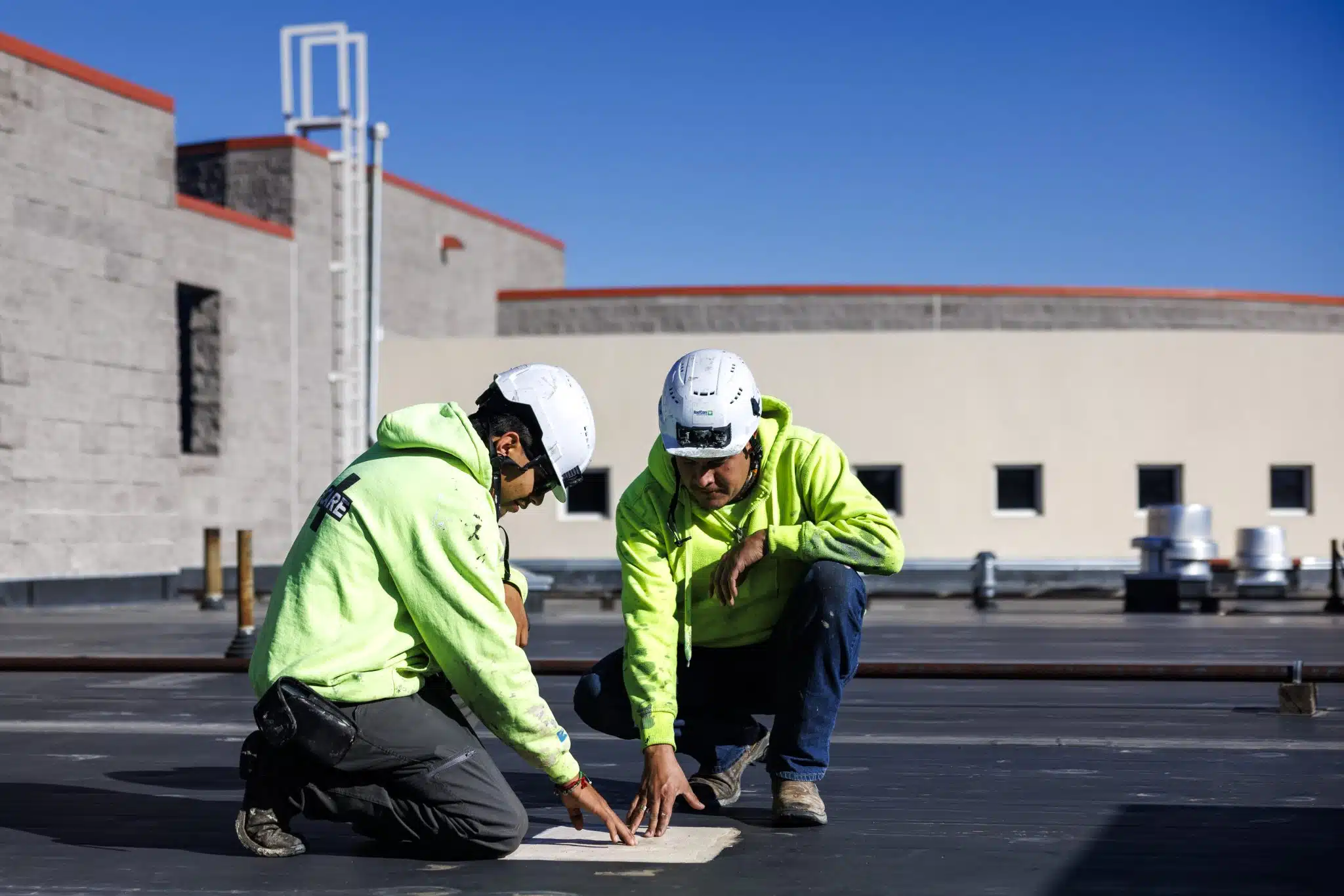
On an existing modified bitumen roof we check for blistering, ply separation, granule loss, and open laps at the seams, then core to confirm the insulation below is dry. The written scope separates surface restoration and lap repair from full replacement, and on re-roofs we confirm the deck can carry the weight of a multi-ply assembly before it is specified.
SBS, APP, and the Application Method We Choose
Modified bitumen comes in two polymer families, and the right one depends on how the building is used. SBS, the rubber-modified asphalt, stays flexible in cold snaps and handles the thermal movement common on Triangle roofs that swing from freezing January mornings to baking July afternoons; it is well suited to cold-adhesive and self-adhered installation. APP, the plastic-modified asphalt, is engineered for torch application and forms a tough, weld-like bond, which can make sense on isolated or unoccupied buildings where open flame is permitted and a hot-applied surface is the goal.
Most of our specifications are two-ply assemblies: a reinforced base sheet mechanically fastened or adhered to the insulation, then a granulated cap sheet bonded on top so the seams are staggered and water has no straight path through the system. The polyester or fiberglass reinforcement inside each ply is what gives the membrane its puncture and tear strength. For occupied buildings we lean on cold-process adhesive or self-adhered SBS to keep an open torch off the deck, reserving heat-welded APP for the cases where the structure, the fire rating, and the schedule all allow it. That decision is documented in the scope so the owner understands exactly what is going on their roof and why.
Wind Uplift and Edge Detailing for North Carolina Exposure
Raleigh sits far enough inland to be spared a direct landfall most years, but the remnants of Atlantic hurricanes and tropical storms still push serious wind across the Triangle, and the roof edge is where those failures start. We design the attachment to the uplift pressures calculated under ASCE 7 for the building's height, exposure, and roof zones, recognizing that the perimeter and corners see far higher loads than the field and need denser fastening or a fully adhered cap. A multi-ply modified bitumen assembly has a real advantage here: the layers and the continuous adhered or welded laps spread uplift force rather than concentrating it on a single sheet.
The metal edge is the other half of the equation. Loose or undersized perimeter metal peels in high wind and takes the membrane with it, so we detail the gravel stop, fascia, and coping to the relevant edge-securement standard and tie the base ply into that metal before the cap goes down. Rooftop equipment curbs, expansion joints, and parapet walls get reinforced flashing plies because those transitions concentrate stress during a storm. Getting the edge and the details right is what separates a roof that rides out a tropical system from one that fails at the first gust line.
Frequently asked questions
Is modified bitumen a good roof for a building with frequent rooftop traffic?
Yes. The granulated, multi-ply surface tolerates foot traffic and service activity better than most single-ply membranes, which is one of its main advantages on Triangle service buildings.
Can modified bitumen be torch-applied on an occupied building?
Often we avoid it. On occupied or fire-sensitive buildings we specify cold-applied or self-adhered systems to remove open-flame risk while keeping the redundancy of a multi-ply roof.
How do I keep a modified bitumen roof from running hot?
A reflective granule surface or a compatible reflective coating lowers rooftop temperature, which protects the asphalt and reduces the cooling load through Raleigh's long summers.