Silicone coating is the restoration system we recommend when a Raleigh commercial roof is weathered on the surface but sound underneath, and the owner wants to avoid the cost and disruption of a tear-off.
It is a fluid-applied, seamless membrane rolled or sprayed over the existing roof, and on the right substrate it renews service life for a fraction of replacement.
How Silicone Restoration Works on Triangle Roofs
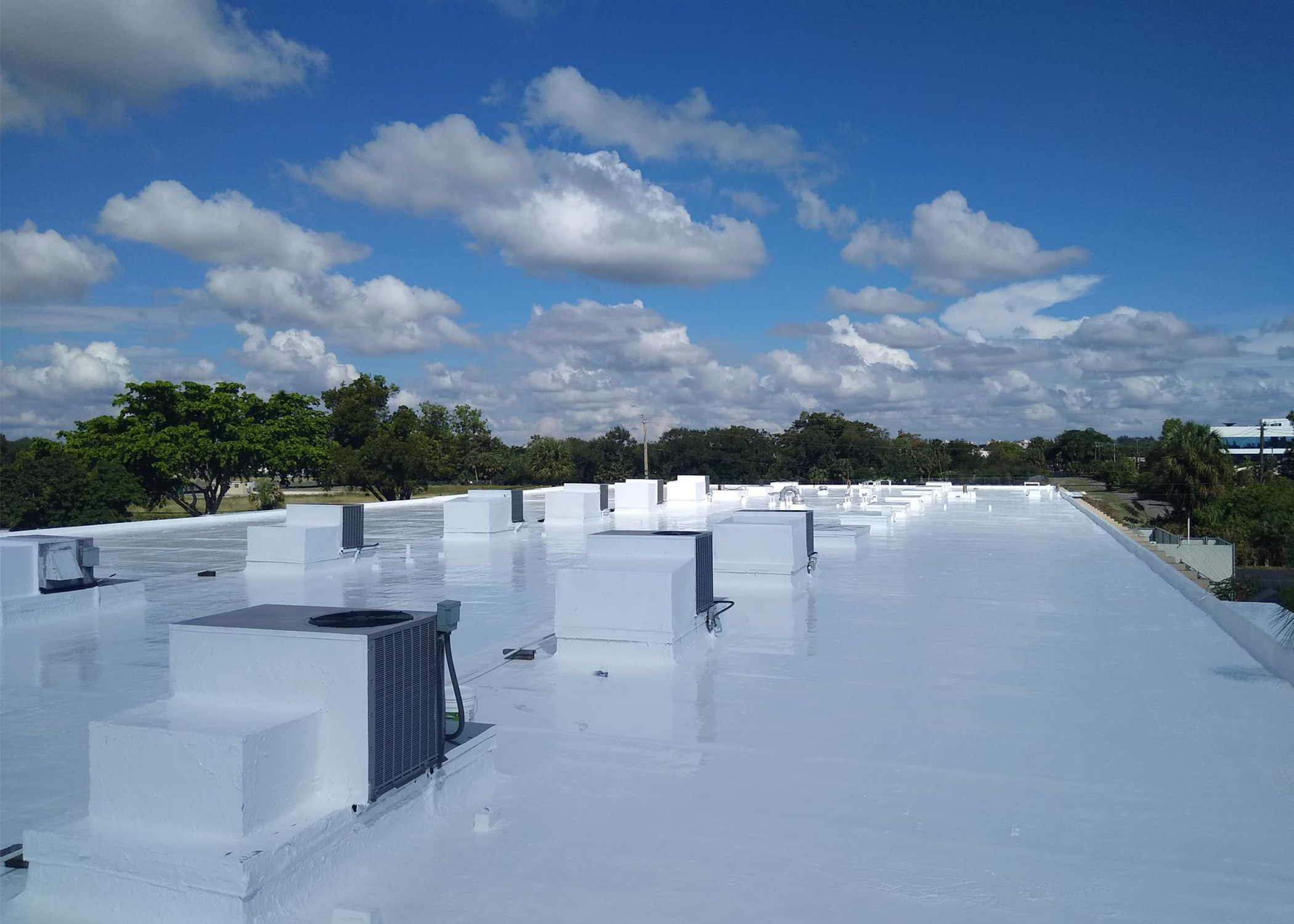
A silicone roof coating cures into a seamless, monolithic film over the entire roof surface, sealing the field and detailing the penetrations without removing the existing membrane. Because there is no tear-off, the building keeps operating through the work and none of the old roof goes to a landfill. The reflective white finish drops rooftop temperature immediately, which protects the substrate below and lowers cooling load through Raleigh's long summers.
Why Silicone Fits Raleigh's Rain and Ponding
The Triangle's heavy, sustained rainfall is exactly where silicone outperforms other coatings. Silicone holds up to standing water without breaking down, so it is the right chemistry for low-slope Raleigh roofs that pond after a storm. The seamless film has no laps or seams for wind-driven rain to exploit, and it renews easily: a silicone roof can be recoated at the end of its cycle rather than replaced.
What Makes a Roof a Candidate for Coating
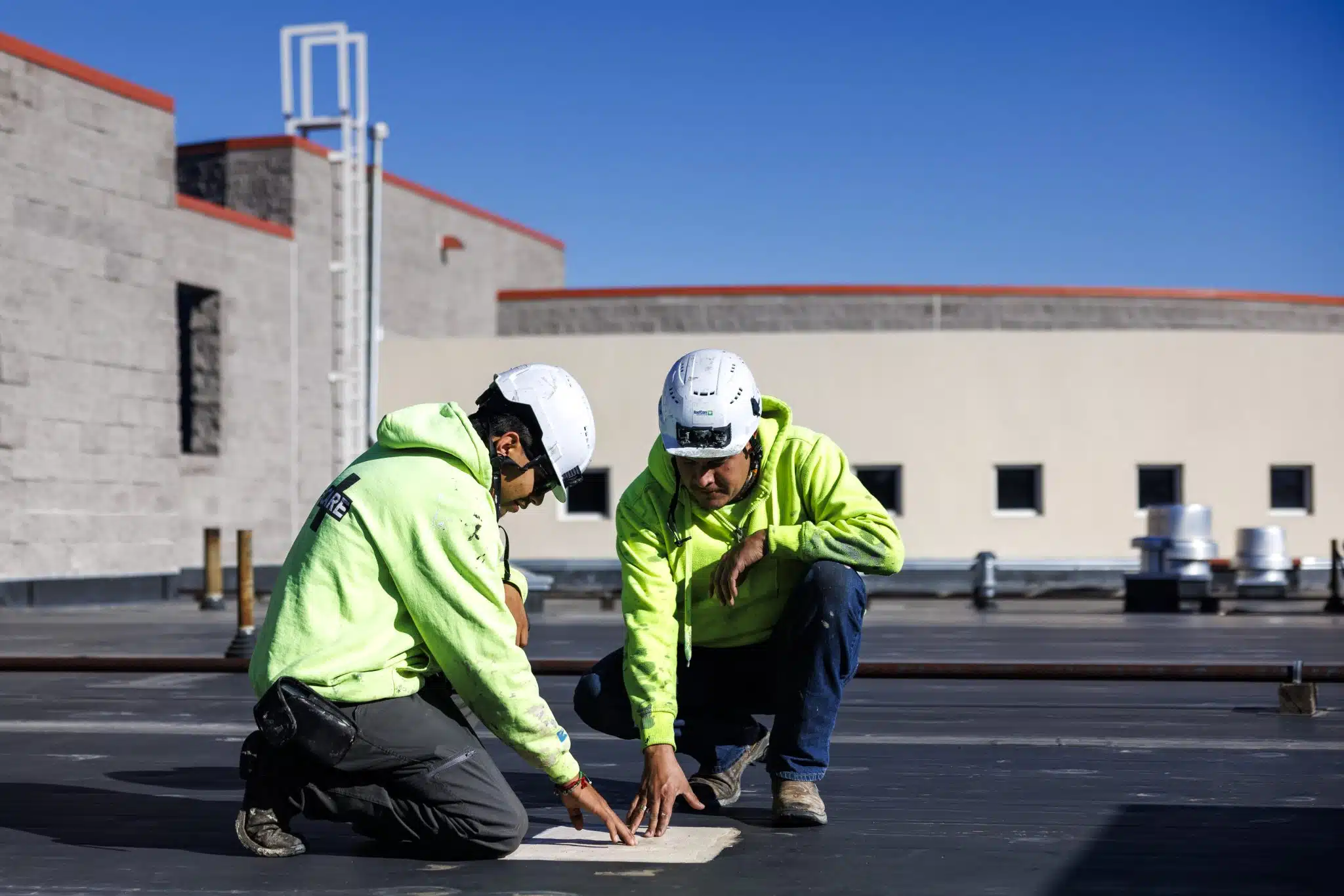
Coating only works over a sound roof, so the assessment is everything. We pull cores to confirm the insulation is dry, because coating over wet insulation seals the moisture in and wastes the investment. We document membrane condition, repair the failed seams and flashings first, and confirm adhesion compatibility with the existing surface. The scope is honest about whether the roof qualifies for restoration or has reached the point where replacement is the responsible call.
Mil Thickness, Reflectivity, and the Re-Coat Warranty
A silicone restoration is only as good as the dry film thickness that gets built on the roof, so we specify and verify the mils rather than chasing coverage rate alone. The warranty term a manufacturer will issue is tied directly to that thickness: a thinner application carries a shorter term, while a fuller build qualifies for the longer non-prorated warranties that make the investment worthwhile. We apply in measured passes, often a base coat and a top coat in contrasting colors so any holiday or thin spot is obvious before it is buried, and we check wet-mil readings as the work proceeds so the finished membrane meets the spec across the entire field, not just in the easy-to-reach center.
The reflective white surface is doing real work beyond appearance. High-reflectance silicone bounces a large share of the solar load back off the roof, which lowers membrane surface temperature through the Triangle's long, intense summers and eases the cooling demand on the building below. Cooler operating temperature also slows the weathering of everything under the coating, extending the life of the restored assembly. When the coating reaches the end of its warranted cycle, a manufacturer-backed re-coat renews the system after cleaning and preparation, so the owner is recoating an existing surface rather than paying to tear off and start over.
Restoration Economics Versus a Tear-Off
The case for a coating is financial as much as technical. A tear-off means demolition labor, hauling the old roof to a landfill, disposal fees, and days of an open or disrupted building, on top of the new membrane itself. A silicone restoration skips the demolition and the landfill entirely, goes down over the sound existing roof while the building keeps operating, and in many cases can be expensed differently than a full capital replacement, which matters to the owners and facility managers weighing the decision. For a roof that is weathered on the surface but structurally sound below, that gap in cost and downtime is substantial.
The honest limit is condition. A coating extends the life of a roof that still has life in it; it does not resurrect one that is saturated or failing structurally. Where our cores come back showing widespread wet insulation, delaminated membrane, or deck problems, sealing all of that under a fresh film only postpones a larger bill, and we say so. The right framing is recover-versus-replace: when the substrate passes inspection, silicone restoration is the lower-cost path that defers replacement for years, and when it does not, replacement is the responsible call. We lay out both numbers so the choice is clear-eyed.
Triangle Roofs Suited to a Silicone Restoration
Silicone restoration fits a wide band of the Triangle's existing commercial roofs because it bonds over sound TPO, EPDM, metal, and built-up surfaces alike. The large low-slope membrane roofs on the distribution and light-industrial buildings along the I-40 and I-440 corridors and near RDU are prime candidates: broad fields that pond after a storm, that would be expensive to tear off, and where keeping the operation running during the work has real value. Aging metal roofs on warehouses across the region are another natural fit, where a fluid-applied silicone seals the fastener penetrations and seams that drive metal-roof leaks.
Institutional and campus buildings tied to NC State, Duke, and Research Triangle Park often carry sound but weathered roofs that a restoration can extend without the disruption a tear-off would force on an occupied facility. The same logic serves office and retail properties around North Hills and downtown Raleigh whose roofs are simply tired rather than failed. In each case the deciding factor is the same: a substrate that our assessment confirms is dry and structurally sound, on which a seamless silicone membrane renews the roof for a fraction of replacement cost.
Frequently asked questions
Can any commercial roof be coated with silicone?
No. Coating requires a sound, dry substrate. If core samples show widespread wet insulation, a coating only traps the moisture, and replacement is the better investment.
Why silicone instead of another coating for a Raleigh roof?
Silicone's standout trait is ponding-water resistance, which matters in the Triangle's heavy rainfall. Roofs that hold water after storms are where silicone clearly outperforms acrylic and other chemistries.
What happens when a silicone coating reaches the end of its life?
It is recoated, not torn off. After cleaning and preparation, a fresh silicone layer renews the roof, which makes the system renewable rather than disposable.