A cool roof is less a single product than a strategy, and in Raleigh's cooling-dominated climate it is one of the highest-return decisions an owner can make on a commercial roof.
We specify reflective membranes and coatings that cut rooftop heat gain, lower cooling loads, and slow the thermal aging that shortens roof life across the Triangle.
Why Cool Roofs Make Sense in the Triangle
Raleigh spends far more of the year cooling buildings than heating them, so a roof that reflects sunlight instead of absorbing it works in the owner's favor most of the calendar. A dark commercial roof can exceed 160 degrees Fahrenheit on a summer afternoon; a reflective white surface runs dramatically cooler. That temperature drop reduces the load on rooftop cooling equipment and eases the heat stress that drives membrane and seam failure over time.
How a Cool Roof Is Achieved
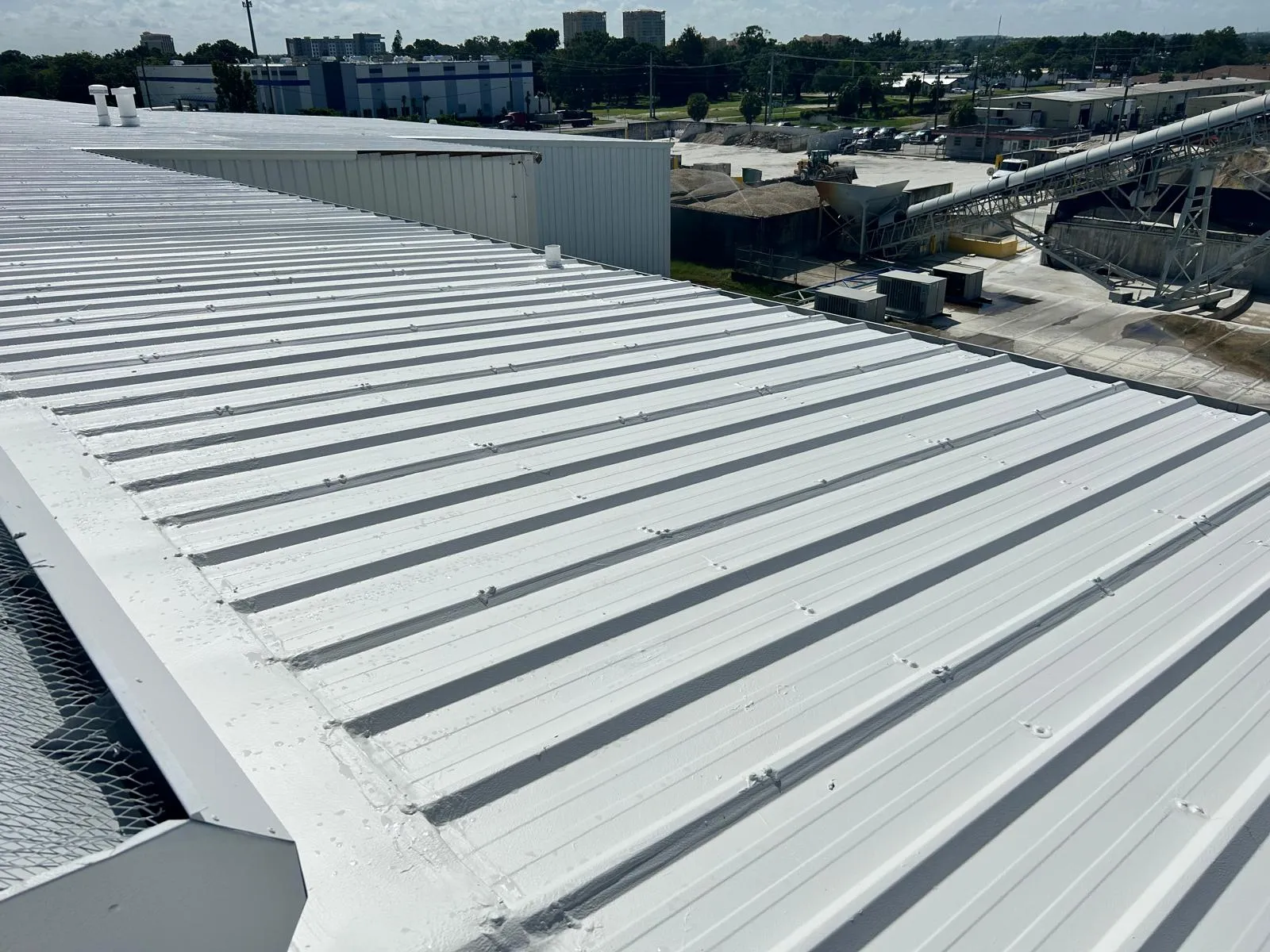
There are several paths to a cool roof, and the right one depends on the existing assembly. On a replacement, a reflective single-ply such as white TPO or PVC delivers the benefit from day one. On a sound existing roof, a reflective coating restores the surface and turns a dark, heat-absorbing roof into a cool one without a tear-off. The reflective surface also helps the building meet energy goals and reduces the heat the roof contributes to its surroundings.
What We Weigh Before Recommending a Cool Roof
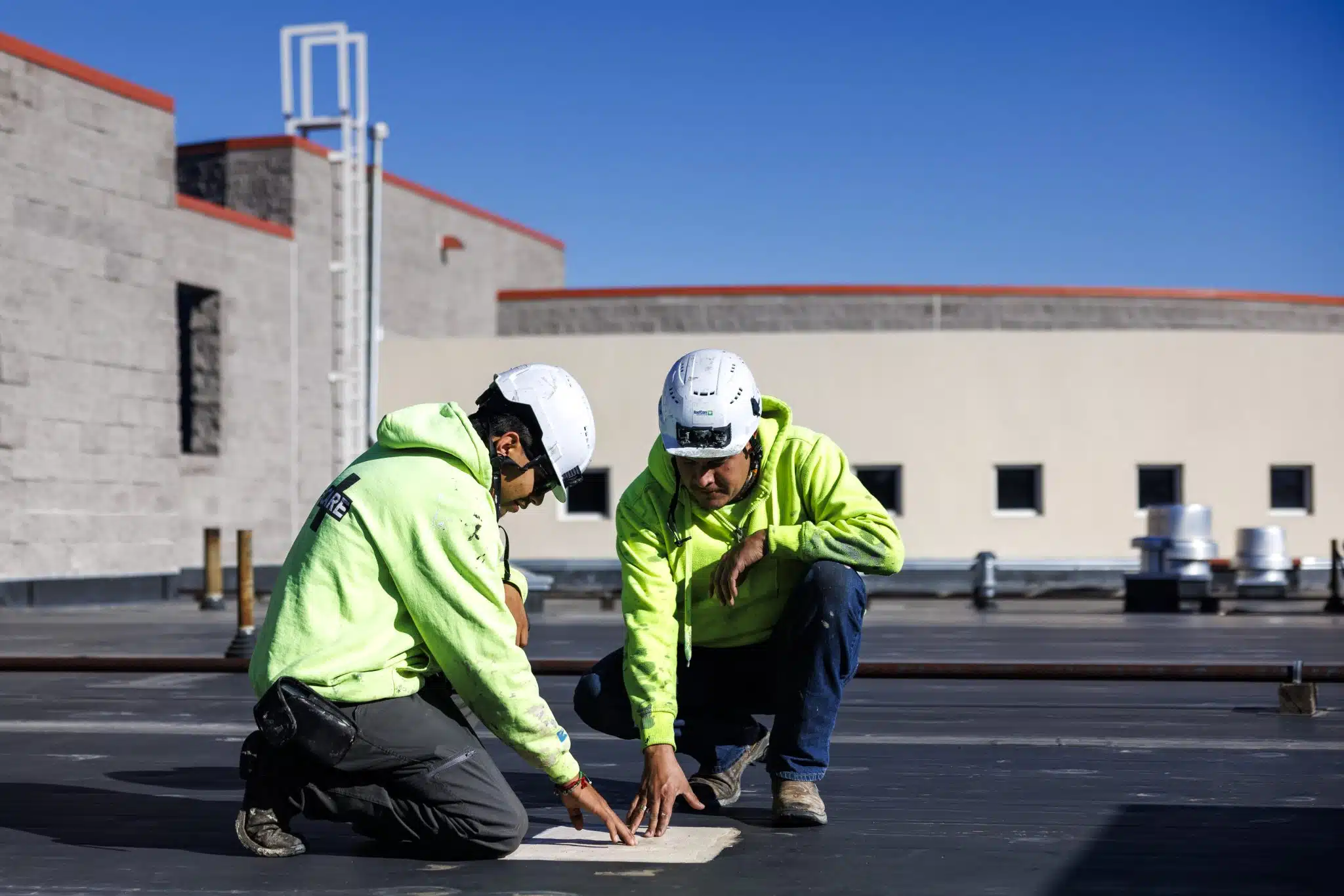
A cool roof only pays off over a sound assembly, so we start with the same core sampling and moisture survey we use on any system. We document the building's cooling profile and rooftop equipment, confirm the substrate is dry, and recommend either a reflective replacement membrane or a coating restoration based on the roof's real condition. The scope is clear about expected energy benefit and the maintenance the reflective surface needs to keep performing.
Reflectivity, SRI, and What ENERGY STAR Actually Measures
A cool roof is defined by two numbers, and an owner specifying one should understand both. Solar reflectance is the fraction of sunlight the surface bounces back rather than absorbs, and thermal emittance is how readily the surface sheds the heat it does take on. Combined, they produce the Solar Reflectance Index, the single figure that lets a designer compare one reflective surface against another. A fresh white TPO, PVC, or coated membrane commonly starts with a solar reflectance in the high range and a high SRI, where a weathered dark roof sits near the bottom. ENERGY STAR roof products certify minimum reflectance both when new and after three years of weathering, which is the more honest measure because every reflective surface dulls as Triangle pollen, soot, and organic film accumulate. We specify to the aged value, not just the day-one number, so the projected benefit reflects how the roof will actually perform after a few Raleigh summers rather than how it looks on the data sheet.
Payback in a Cooling-Dominated Climate
The economics of a cool roof turn on the local balance of cooling versus heating, and that balance strongly favors reflectivity in the Triangle. Raleigh accumulates far more cooling degree-days than heating degree-days, so for most of the year a surface that rejects solar gain is working with the building's mechanical systems rather than against them. The winter heating penalty that undercuts cool roofs in cold northern climates is small here, because the sun sits lower and the heating season is short. The payoff shows up in two places: lower peak cooling demand on rooftop units that run hard through July and August, and a meaningful drop in membrane surface temperature that slows the heat-driven aging of the roof itself. On a large flat roof over a conditioned space, that combination of reduced cooling load and extended membrane life is what carries the reflective surface to payback, and we frame the recommendation around the specific building's roof area, occupancy, and equipment rather than a generic claim.
Where Cool Roofs Fit Across the Triangle
The buildings that gain the most from a cool roof are the ones with large low-slope footprints over heat-sensitive contents or heavily conditioned interiors. The distribution and warehouse corridor along I-40 and I-440 is full of expansive flat roofs where a reflective surface keeps stored goods and working floors cooler and trims demand on big rooftop systems. The research and lab buildings around Research Triangle Park and the medical and lab facilities near WakeMed and the NC State Centennial Campus run cooling year-round to protect equipment and processes, so any reduction in solar heat gain through the roof directly eases that mechanical load. Even older Downtown Raleigh buildings carrying dark, heat-absorbing membranes are strong coating candidates, since a reflective restoration converts an aging roof to a cool one without the disruption of a tear-off. We match the path, reflective replacement membrane or coating restoration, to each building's condition and use.
Frequently asked questions
Will a cool roof actually lower energy costs in Raleigh?
In a cooling-dominated climate like the Triangle, a reflective roof reduces summer heat gain and eases the load on rooftop cooling equipment. The savings depend on the building, but the direction is clearly favorable here.
Do I need to replace my roof to get a cool roof?
Not necessarily. If the existing roof is sound and dry, a reflective coating converts it to a cool roof without a tear-off. We confirm condition with core samples first.
Does a cool roof help the roof last longer?
Yes. Lower surface temperatures slow the thermal cycling that ages membranes and stresses seams, so a reflective surface tends to extend service life along with cutting heat gain.