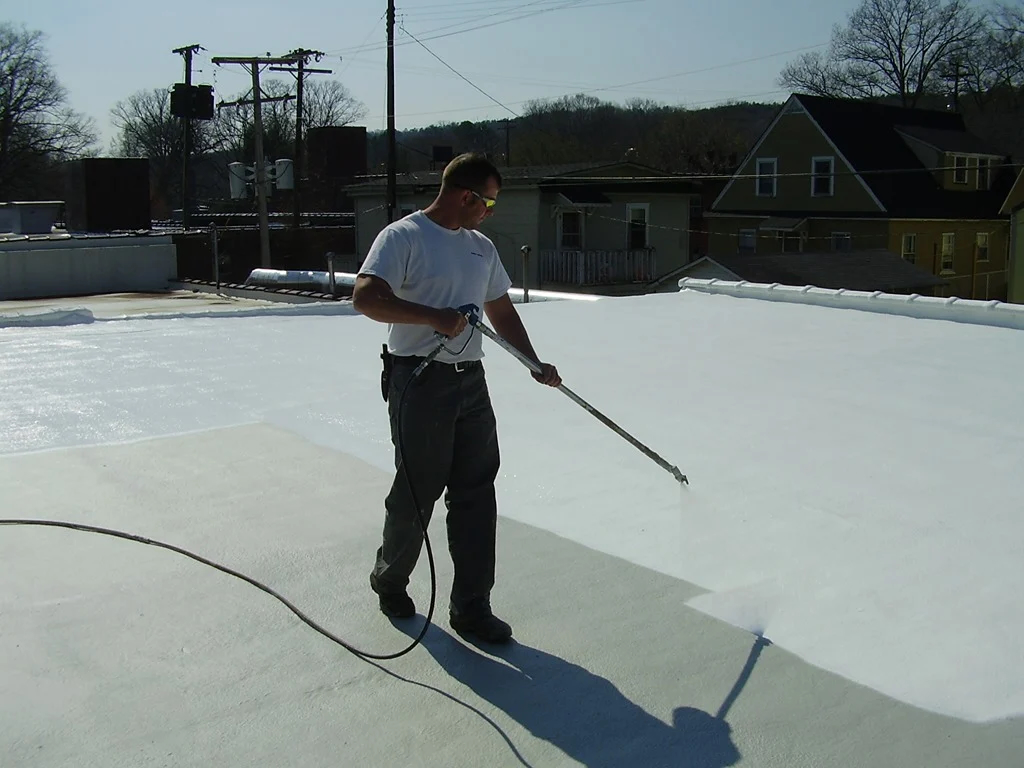
Spray polyurethane foam is the system we recommend when a Raleigh commercial building needs waterproofing and added insulation in one seamless application, especially on roofs with complex penetrations.
SPF is sprayed in place, expands into a monolithic layer, and is finished with a protective coating, which makes it both the roof and a continuous layer of insulation.
What SPF Brings to Triangle Commercial Roofs
Spray foam goes down as a liquid and rises into a closed-cell layer that bonds to the substrate and self-flashes around every curb, pipe, and penetration. That seamless quality removes the seams and laps that most roofs leak through. Because closed-cell foam is also an excellent insulator, SPF raises the roof's thermal performance at the same time it waterproofs it, which is a real advantage on older Triangle buildings with thin or wet existing insulation.
How SPF Performs in Raleigh's Climate
The monolithic foam handles the Triangle's heavy rain because there is no seam for water to find, and the reflective coating on top keeps the assembly cool through hot, humid summers. Foam can be sprayed to build positive slope toward drains, which solves ponding on roofs that were originally built dead-flat. The system's main maintenance requirement is the protective coating, which shields the foam from UV and has to be renewed on a schedule to keep the roof performing.
What We Verify Before Specifying SPF
SPF installation is weather-sensitive, so timing and surface conditions matter; foam will not bond correctly to a damp or dirty substrate. We confirm the existing roof is dry and sound, document the penetrations and slope problems SPF is meant to solve, and set the recoat expectation up front. The scope makes clear that the coating is part of the system's lifecycle, not an afterthought.
SPF for Triangle Warehouses and Industrial Roofs
The large, low-slope decks on Triangle distribution centers, manufacturing plants, and the industrial buildings around I-40 and the Research Triangle Park are where spray polyurethane foam earns its keep. These roofs are wide open, broken up by mechanical curbs, conduit, and exhaust penetrations, and a sprayed-in-place system self-flashes around every one of them without the cut-and-patch detailing a membrane requires. On a building that runs climate-sensitive inventory or process equipment, the added R-value the foam delivers across the whole field tightens the thermal envelope and steadies interior conditions through Raleigh's hot summers and cold snaps. Because the foam adheres directly to a sound substrate, it also adds uplift resistance, which matters on the exposed roofs that catch the wind off open industrial sites near I-440. We size the foam density and coating system to the building's use, separating the spec for a high-bay warehouse with heavy rooftop loads from the spec for a lighter industrial roof, and we document where penetrations and equipment supports need extra detailing before the crew mobilizes.
Building Slope and Curing Ponding Water
Many older Triangle commercial roofs were built dead-flat, and after years of deck deflection they hold standing water long after a storm clears. Ponding accelerates membrane aging, stresses the deck, and is a frequent warranty exclusion, so it is a problem worth solving rather than living with. Spray foam is one of the few systems that can rebuild positive slope as part of the roof itself: we taper the foam thickness to move water toward the drains and scuppers, eliminating the low spots without adding a separate tapered-insulation package or tearing the roof off. On a Raleigh building that sheds more than forty inches of rain a year, getting water off the field quickly is the single biggest factor in how long the assembly lasts. We map the ponding areas with the roof wet, set drainage targets during the assessment, and build the foam to hit them, then finish with a reflective coating that protects the new slope and keeps the surface draining cleanly for the long term.
The Recoat Lifecycle and Long-Term Economics
An SPF roof is a renewable system, and that is the core of its economic case for a Triangle building owner. The foam itself does not wear out the way a membrane does; what ages is the protective coating that shields it from UV. On a planned schedule, typically every ten to fifteen years depending on the coating and the exposure, the surface is cleaned and recoated rather than replaced, which restores the warranty and resets the clock without a tear-off. That recoat cycle turns a roof replacement into a maintenance line item and avoids the disposal cost and disruption of stripping a roof to the deck. When we write an SPF scope we put the recoat interval in writing so it lands in your capital plan, not as a surprise. For an owner weighing repair against replacement on a roof that still has a sound deck and dry insulation, the seamless foam-and-recoat approach is frequently the lower lifetime cost, and we will say so plainly when the numbers support it and recommend a different system when they do not.
Frequently asked questions
Does spray foam roofing add insulation to my building?
Yes. Closed-cell SPF is a strong insulator, so it waterproofs and raises the roof's thermal performance in one application, which is valuable on Triangle buildings with thin or saturated existing insulation.
Can SPF fix a roof that ponds water?
Often. Foam can be sprayed to build slope toward the drains, correcting ponding on roofs that were originally built flat, before the protective coating goes on.
How much maintenance does an SPF roof need?
The foam is durable, but its protective coating must be renewed on a schedule to shield it from UV. Kept on that cycle, an SPF roof delivers a long service life.