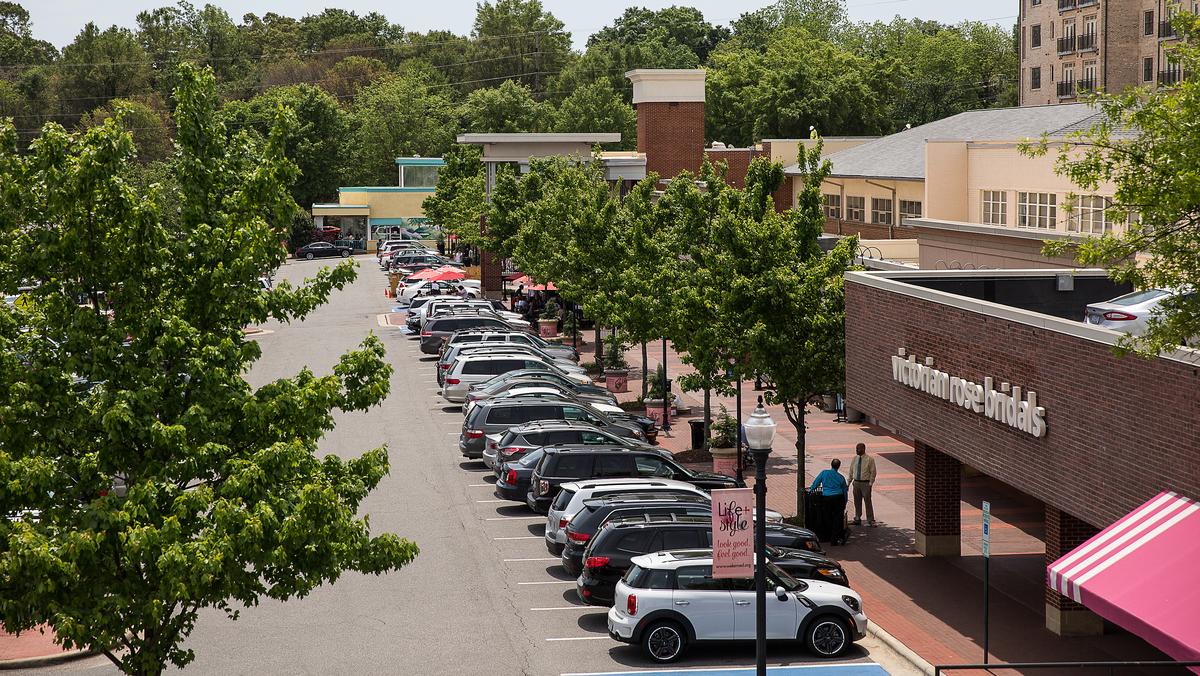
Cameron Village opened in 1949 as one of the first planned shopping centers in the Southeast. Now rebranded as The Village District, the development at Oberlin Road and Clark Avenue remains one of Raleigh's most active mixed-use commercial corridors - with building stock that spans seven decades.
Cameron Village occupies a unique position in Raleigh's commercial real estate history. When it opened in , it was a genuinely novel building type for the Southeast: a planned, purpose-built open-air shopping center. The buildings constructed in that original phase - and through the 1950s and 1960s expansions - are now 60-plus years old. The redevelopment and rebranding as The Village District has brought new tenants and some new construction, but the core building fabric is historic by commercial real estate standards.
That building age is the defining challenge for commercial roofing work in this district. The original Cameron Village buildings have flat or nearly-flat built-up roofing systems that have been modified, patched, and partially replaced through multiple generations of tenants and ownership changes. The masonry parapet walls and architectural concrete elements that give the district its mid-century character are also sources of ongoing moisture migration that affects the roofing system's performance.
We serve commercial buildings in the Village District and throughout the surrounding Hillsborough Street and Oberlin Road corridors - from the NC State University campus boundary on Hillsborough Street west to the Wade Avenue interchange. The mix of historic mid-century commercial buildings, 1970s and 1980s additions, and recent infill and adaptive reuse projects in this area requires a flexible inspection approach that treats each building as its own specific case.
Original Cameron Village Buildings - Mid-Century Commercial Stock
The original Cameron Village buildings along the Oberlin Road and Clark Avenue frontage are two-story and single-story brick-faced commercial structures with flat roofs and masonry parapet walls - a construction type common to planned commercial development in the Southeast in the postwar era. These buildings have accumulated layers of roofing history: original built-up roofing systems modified by coal-tar overlays, then by EPDM recover systems, then by sporadic patching through successive tenant cycles.
Masonry parapet moisture infiltration is the primary long-term threat to this building stock. The brick parapet walls and concrete coping elements in the original Cameron Village buildings have been through many decades of Raleigh's thermal cycling, and the mortar joints at coping caps and through-wall penetrations are a persistent source of moisture that tracks into the roof assembly at termination flashings. A roof membrane replacement that does not address the parapet condition - mortar joint restoration, coping cap reseating, counterflashing renewal - will fail at the same points as the previous system.
The property management structure at The Village District involves a combination of anchor and junior anchor tenants with their own maintenance requirements and smaller inline tenants whose rooftop access is mediated through the property management office. We coordinate all inspection and project access through the property management team and deliver scope documentation in formats the asset manager can use in capital planning.
Hillsborough Street Corridor Commercial Buildings
Hillsborough Street runs from the NC State University main campus boundary west to the I-440 Beltline - a commercial corridor that has been the subject of the City of Raleigh's Hillsborough Street Community Service District revitalization effort for more than a decade. The commercial buildings along Hillsborough Street range from 1940s and 1950s brick commercial structures near the campus boundary to 1970s and 1980s commercial renovation buildings and newer mixed-use infill closer to the I-440 overpass.
The NC State University proximity shapes several aspects of commercial roofing work on Hillsborough Street. Buildings near the main campus boundary deal with periodic high-pedestrian-density conditions during academic year events, which affects staging and access logistics. Some buildings in this corridor house university-affiliated tenants with specific construction documentation requirements that parallel NC State's institutional procurement standards.
The restaurant and bar tenants that anchor the Hillsborough Street commercial strip - a concentration that has grown significantly through the 2010s and into the 2020s - create the same food service operational constraints we manage in the Five Points and Glenwood South districts: dry-in secure at end of each production day, HVAC work scheduled around kitchen hours, and direct communication with the tenant's operations contact when work affects their service capability.
Oberlin Road and the Cameron Park Neighborhood Commercial Edge
The commercial fabric along Oberlin Road north and south of the Cameron Village / Village District core is a mix of neighborhood commercial buildings - medical offices, professional services, specialty retail - and commercial-adjacent commercial that requires careful management of noise, access, and visual impact during construction. The Cameron Park neighborhood is one of Raleigh's most established in-town commercial neighborhoods, and the commercial buildings at its edge operate in a community context that values minimal disruption.
Buildings at the Cameron Park / Village District commercial edge are often smaller-footprint mixed-use structures where the rooftop of the commercial ground floor is immediately below commercial units above. Rooftop moisture migration into a commercial unit is a landlord-tenant issue as well as a building maintenance issue; we see these situations most commonly in older mixed-use buildings where the commercial units were added as a second story to an original single-story commercial building.
The redevelopment momentum in the Village District - the rebrand, the new food hall, the updated anchor and junior anchor tenant mix - has brought new investment to the district that makes deferred maintenance decisions more visible. A landlord who tolerated a patched roof when the building was at 70% occupancy faces a different calculus when the building is fully leased to premium tenants. We provide capital planning analyses that translate roof asset condition into the lease-cycle timeline the asset manager actually needs to plan against.
Frequently asked questions
The Cameron Village building I own has had the same EPDM roof for nearly 20 years with multiple patches. What are my options?
A 20-year EPDM roof with a patch history is a candidate for recover or replacement depending on insulation saturation. We pull moisture cores to determine how much insulation has absorbed water - if more than 25% is saturated, replacement is the right call. If the insulation is mostly dry, recover with targeted insulation replacement at wet spots is an option at 40-60% of full replacement cost. Either way, the parapet condition needs to be assessed and addressed simultaneously.
How do you work around the busy retail traffic at The Village District?
Pre-construction logistics planning. We schedule material delivery and crane positioning for early morning before the center's peak hours. Tear-off work - the noisiest phase - gets scheduled for the first two to three hours of the day. We coordinate staging plans with the property management office to keep parking and pedestrian circulation unobstructed.
Do you work on the smaller commercial buildings on Hillsborough Street near NC State?
Yes. Small commercial buildings on Hillsborough Street - including buildings with university-affiliated tenants - are part of our regular service area. We provide full inspection reports and capital planning documentation for buildings of all sizes and can format closeout documentation to NC State institutional standards when applicable.