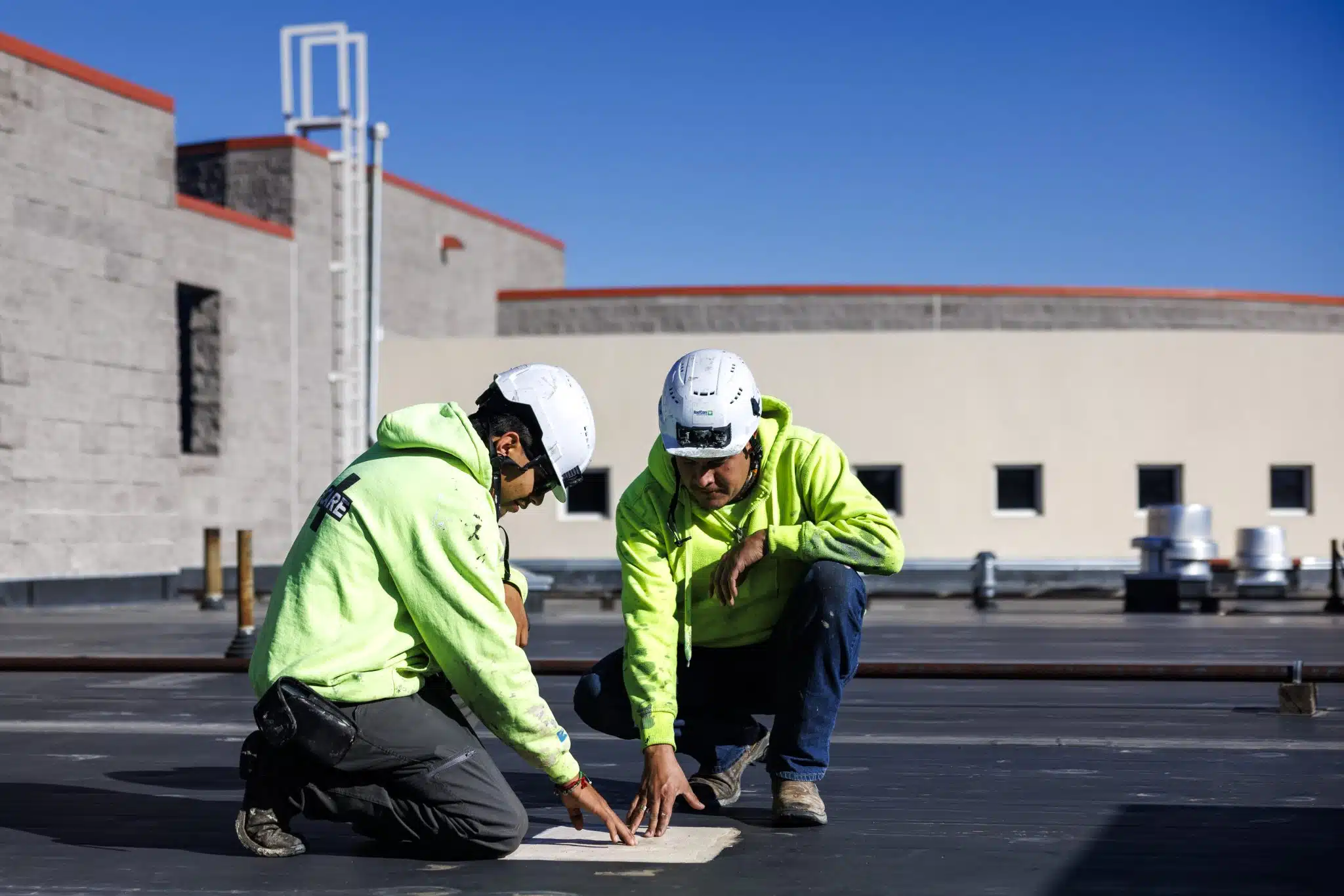
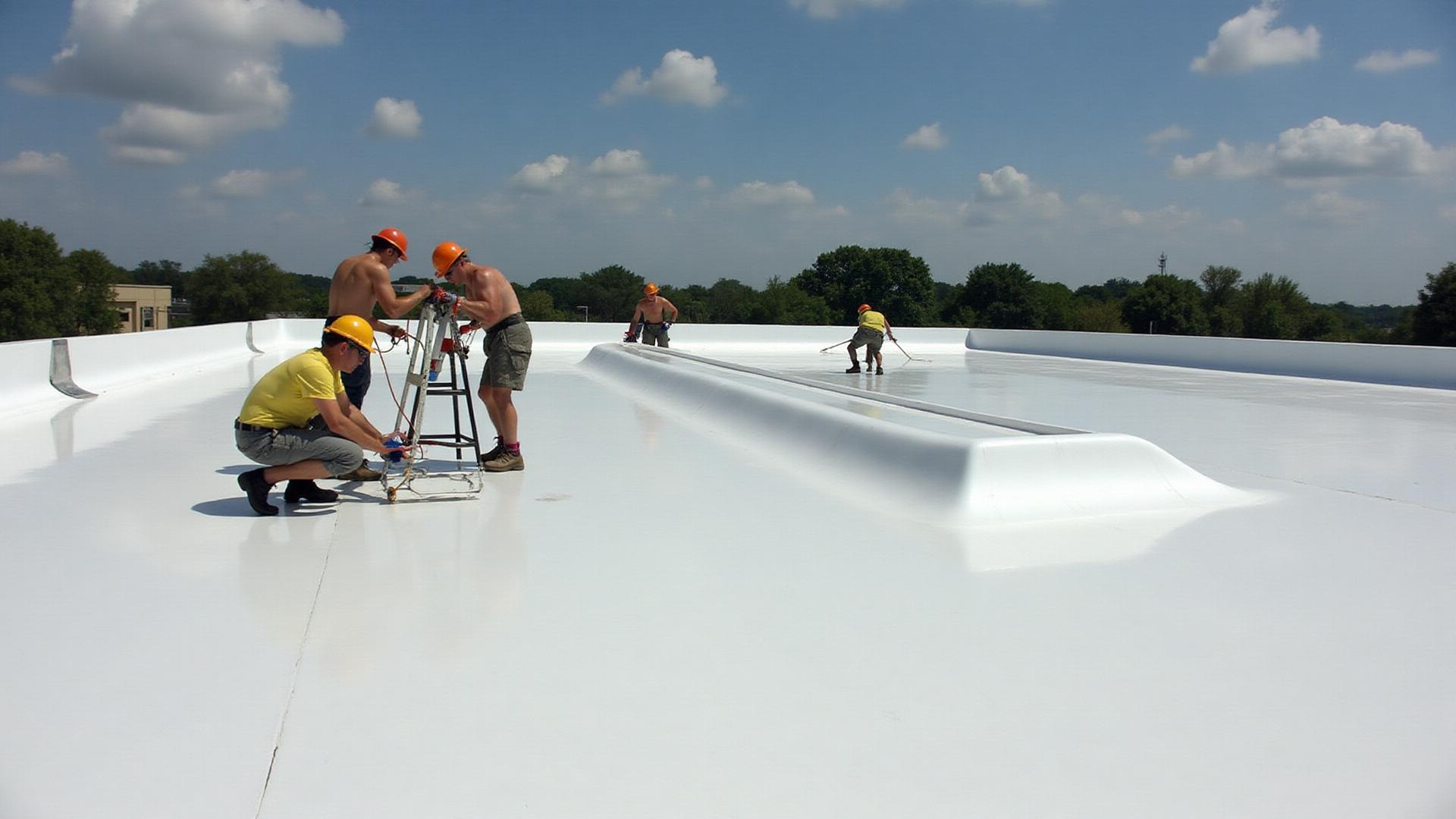
TPO is the most-specified single-ply membrane on new and re-roofed commercial buildings across Raleigh and the Triangle, and its reflective white surface is a direct answer to a cooling-dominated climate.
We assess, install, and repair thermoplastic polyolefin membrane on low-slope commercial roofs, and the recommendation always starts from the deck and insulation condition underneath, not the membrane brochure.
Why TPO Leads the Triangle Commercial Market
TPO is a heat-welded single-ply sheet, which means the seams are fused into a monolithic bond rather than glued. On a Raleigh commercial roof that has to shed more than 46 inches of annual rainfall, a welded seam is the difference between a roof that drains and a roof that wicks water into the insulation. The membrane comes in wide rolls, installs mechanically attached or fully adhered, and carries manufacturer warranties of 20 to 30 years when the assembly is specified correctly for the building's wind exposure and roof height.
How TPO Performs in Raleigh Heat and Humidity
The white reflective surface is the reason TPO fits the Triangle. Summer rooftop temperatures on a dark membrane regularly exceed 160 degrees Fahrenheit; a reflective TPO surface runs far cooler, which lowers the cooling load on rooftop equipment and slows the thermal aging that drives seam creep. The trade-off is that weld quality and membrane thickness do the long-term work. A thin sheet or a cold weld looks identical on day one and fails differently in year eight, which is why we probe seams and check membrane gauge rather than trusting the spec sheet.
What We Check Before Specifying or Repairing TPO
Before a TPO scope is written we pull the membrane at suspect seams, test weld integrity, read the insulation for trapped moisture, and confirm the drainage actually moves water off the field. On a re-cover we verify the existing assembly can legally and structurally accept another layer. The written scope separates membrane field repairs from flashing and edge-metal work, because on most Triangle TPO failures the field is sound and the perimeter is where water is getting in.
Heat-Welded Seams and Why They Outlast Adhesive
The defining feature of a TPO roof is the seam, and on a Raleigh commercial building the seam is where the system either holds or fails. TPO sheets are joined with a hot-air welder that melts the two surfaces and fuses them into a single continuous bond, so a properly welded seam is effectively as strong as the membrane field itself. That is a fundamentally different mechanism than the adhesives and tapes older single-ply systems relied on, which lose grip as they age and are the first thing to open up under the Triangle's thermal cycling and wind-driven rain. A good weld and a bad weld look identical on the day the roof is finished, which is exactly why we probe seams with a tool during installation and during every assessment rather than trusting appearance. When we inspect an existing TPO roof we concentrate on the seams, the T-joints, and the flashing welds at penetrations, because that is where moisture finds its way into the insulation long before the open field of the membrane gives any trouble.
White Reflective Membrane and the Cool-Roof Advantage
Raleigh sits in a cooling-dominated climate, where buildings spend far more of the year fighting heat than holding it, and that is the single biggest reason TPO has become the default low-slope membrane across the Triangle. A white TPO surface reflects the bulk of the solar energy that hits it, so the roof runs dramatically cooler than a dark membrane that can exceed 160 degrees on a humid July afternoon. A cooler roof means a lighter cooling load on the rooftop units, lower summer energy bills, and slower thermal aging of the membrane and its seams, since heat is what drives the breakdown that eventually opens a roof up. That reflective performance is most valuable on the wide, exposed decks of Triangle warehouses, big-box retail, and office buildings where the roof bakes in full sun all day. We pair the reflective sheet with the right insulation value beneath it so the cool-roof benefit at the surface and the thermal resistance through the assembly work together rather than one offsetting the other.
Membrane Thickness, Fleeceback, and Specifying for the Building
TPO is not one product but a range, and matching the membrane to the building is most of what separates a roof that performs from one that disappoints. Sheet thickness is the first decision: a 60-mil membrane is the workhorse for many Raleigh commercial roofs, while an 80-mil sheet buys extra puncture resistance and a longer service life on buildings with heavy rooftop traffic, frequent service work, or hail exposure. Fleeceback TPO, which bonds a fabric backing to the underside of the sheet, adds toughness and allows a fully adhered installation that performs well under high wind uplift, an advantage on the exposed roofs that catch storm gusts off open Triangle sites. The attachment method, mechanically fastened or fully adhered, follows from the building's wind exposure and roof height rather than from habit. When we specify a TPO assembly we put the thickness, the attachment, and the warranty term in writing, and on a re-cover we confirm the existing roof can legally and structurally take another layer before we recommend it over a tear-off.
Frequently asked questions
How long does a TPO roof last on a Raleigh commercial building?
A correctly installed TPO assembly typically performs 20 to 30 years in the Triangle climate. Membrane thickness, weld quality, and how well the perimeter flashings are detailed move that number more than the brand does.
Is TPO a good fit for a building with heavy rooftop grease or chemical exhaust?
Not always. TPO resists weather well but is more vulnerable to grease and certain chemical exposure than PVC. On restaurants and process buildings with concentrated exhaust we usually recommend PVC for the affected zones.
Can an aging TPO roof be restored instead of torn off?
Often yes. If the membrane is weathered but the insulation is dry and the deck is sound, a reflective coating restoration can extend service life without a full replacement. We confirm that with core samples before recommending it.