Chapel Hill commercial roofing runs across two distinct environments: the UNC Chapel Hill institutional campus with its managed procurement and historic building stock, and the Franklin Street and East Franklin commercial corridor that has been evolving for decades.
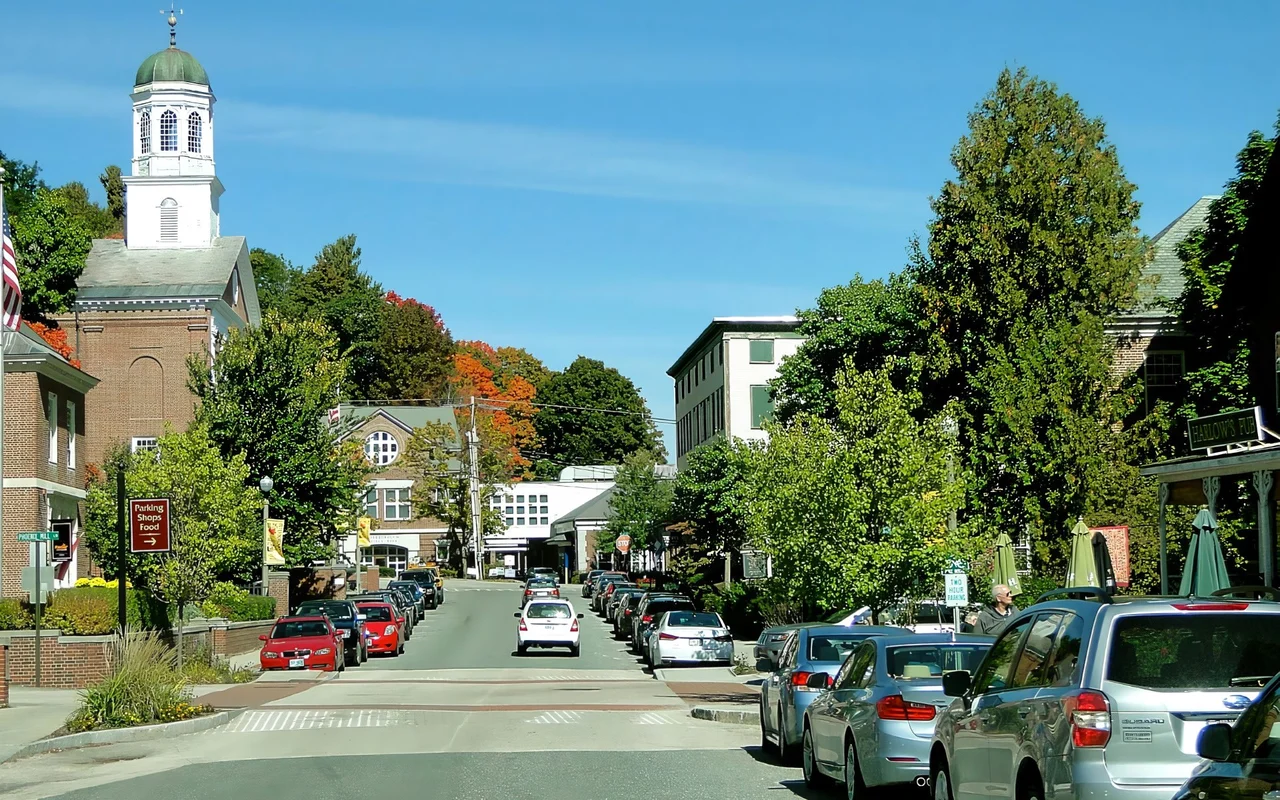
Chapel Hill is a small-footprint town with a large institutional anchor and a commercial real estate market shaped almost entirely by UNC Chapel Hill's presence and growth cycle. Franklin Street has been the town's commercial spine for more than a century - the mix of 1920s and 1930s brick storefronts, 1960s and 1970s infill, and the post-2000 mixed-use development that replaced some of the older strip commercial has created a building stock that requires roofing contractors who can work across eras of construction, not just apply one membrane type to every flat roof they see.
We cover Chapel Hill from our Raleigh office. The US-15-501 run from Downtown Raleigh to Chapel Hill is about 35 minutes, and we service the Franklin Street corridor and the UNC campus area on regular inspection routes. For emergency response inside Chapel Hill's commercial core - roughly from Carrboro's main commercial area to East Franklin Street - we treat response time as equivalent to our broader Triangle priority.
UNC Chapel Hill's institutional procurement system is the defining factor for any contractor working on campus buildings. The university has real contractor qualification requirements, documented insurance standards, and closeout deliverable expectations that align with UNC's asset management system. We have worked within institutional procurement systems like UNC's and treat the pre-qualification process as a standard pre-construction step.
UNC Chapel Hill Campus and Medical System Buildings
UNC's main campus occupies the high ground above Franklin Street, and its medical center complex to the south along Manning Drive is one of the Triangle's largest healthcare real estate concentrations. The medical center - UNC Hospitals, UNC Rex Healthcare's parent system, and the UNC Health Sciences campus - represents a dense cluster of commercial buildings with the same roofing constraints as any major academic medical center: infection control, HVAC integrity, and facility manager coordination as a baseline expectation.
UNC's research buildings - particularly in the health sciences complex and the newer science quad buildings - carry laboratory HVAC, chemical exhaust, and controlled-environment constraints that intersect with roof construction at every mechanical penetration. We document every rooftop penetration system before work starts, sequence opening and closing penetrations around building operations, and deliver a verified penetration condition report at closeout.
The original campus buildings - the brick and limestone structures dating to the early 1900s around South Building and the Old Well - are historically significant and have roofing conditions that reflect decades of incremental repair. When UNC facilities undertakes work on these buildings, the scope typically involves historic preservation considerations alongside current building code requirements. We scope these projects in writing before any work starts.
Franklin Street and the Historic Commercial Core
Franklin Street's commercial core between Columbia Street and Church Street is one of the Triangle's most architecturally dense commercial corridors. The mix of 1920s-era brick commercial buildings, mid-century retail infill, and more recent mixed-use development means that almost every building on the block presents different roofing conditions. Many of the older buildings have parapet walls with original through-wall flashing that has been patched and re-patched over decades without a systematic replacement.
The historic brick buildings along Franklin Street are not candidates for standard flat-roof production schedules. Parapet flashing on century-old brick requires careful detailing - aggressive membrane termination into brick faces can cause water infiltration behind the brick wythe, which is a more serious problem than the original roof leak. We specify flashing details for historic masonry that account for the building's actual construction rather than defaulting to generic flashing details.
The East Franklin Street corridor extending toward Eastgate shopping center represents a different generation of commercial construction - primarily 1970s and 1980s strip commercial and retail buildings whose original roof systems are at or past end of life. These buildings are straightforward TPO recover or replacement candidates if the deck and drain conditions support it, and many are.
Carrboro and the Weaver Street Commercial Area
Carrboro's commercial core around Weaver Street and Main Street is small but dense - a mix of adaptive reuse industrial buildings, 1970s commercial construction, and newer mixed-use development clustered around the Carrboro Town Commons and the ArtsCenter corridor. Roofing on these buildings runs from original BUR systems on the oldest structures to recent single-ply work on new construction.
Carrboro's Orange County permitting system is separate from Chapel Hill's permit office. We file permits with both jurisdictions as part of standard pre-construction, and we are familiar with the difference in inspection schedules between the two. For building owners whose property straddles the Chapel Hill-Carrboro municipal boundary - which happens more often than you might expect in this part of Orange County - we navigate the jurisdiction question during permitting.
The commercial corridor along NC-54 connecting Carrboro to Chapel Hill and extending toward I-40 is in an active development phase, with new mixed-use and retail construction alongside older strip commercial buildings. New construction in this corridor is predominantly TPO single-ply; older buildings in the corridor are candidates for assessment and capital planning.
Frequently asked questions
Do you work within UNC Chapel Hill's contractor qualification requirements?
Yes. UNC's facilities management system has contractor qualification requirements around insurance, safety documentation, and closeout deliverable formats. We handle the pre-qualification process during pre-construction coordination and deliver closeout documentation compatible with UNC's facilities records system. Contact us with your UNC facilities point of contact and we coordinate from there.
Can you work on historic brick buildings along Franklin Street without damaging the masonry?
Yes, and this is worth asking about explicitly. Flashing terminations on historic brick require details that differ from standard membrane termination - aggressive cuts into century-old brick mortar joints can introduce new water infiltration paths behind the brick face. We specify flashing details for historic masonry in writing before any work starts. The assessment visit is the right time to identify these conditions, not during demo.
What permits are required for commercial roofing in Chapel Hill?
Commercial roofing projects in the Town of Chapel Hill require a building permit through the town's Inspection Services division. Projects in Carrboro permit through Orange County's Building Inspections office. We handle permit applications and required inspections for both jurisdictions as part of pre-construction and include permit closeout in the project's final documentation.