Built-up roofing is the original commercial flat-roof system, and a large inventory of it still covers older Downtown Raleigh and mid-century industrial buildings across the Triangle.
We assess, repair, and plan the replacement of BUR with the same discipline we bring to any system: pull cores, read the moisture, and recommend from what the data shows.
Where Built-Up Roofing Still Lives in the Triangle
Built-up roofing layers asphalt and reinforcing felts into a thick, redundant membrane, often finished with gravel or a cap sheet. It was the dominant commercial roof from the 1950s through the 1980s, so Raleigh's older building stock carries a great deal of it. A BUR roof that was well built and maintained can outlast newer systems, but much of the Triangle's inventory is now decades past its design life and accumulating hidden saturation.
How BUR Ages in Raleigh's Climate
The region's heavy rainfall and humidity drive moisture into aging BUR at every compromised flashing and lap. Because the system is multi-ply, water often travels laterally between layers and saturates insulation well away from the visible stain inside the building. That same redundancy that makes BUR durable also makes its failures hard to locate from the surface, which is why visual inspection alone consistently misreads these roofs.
What We Document Before a Repair or Replacement Call
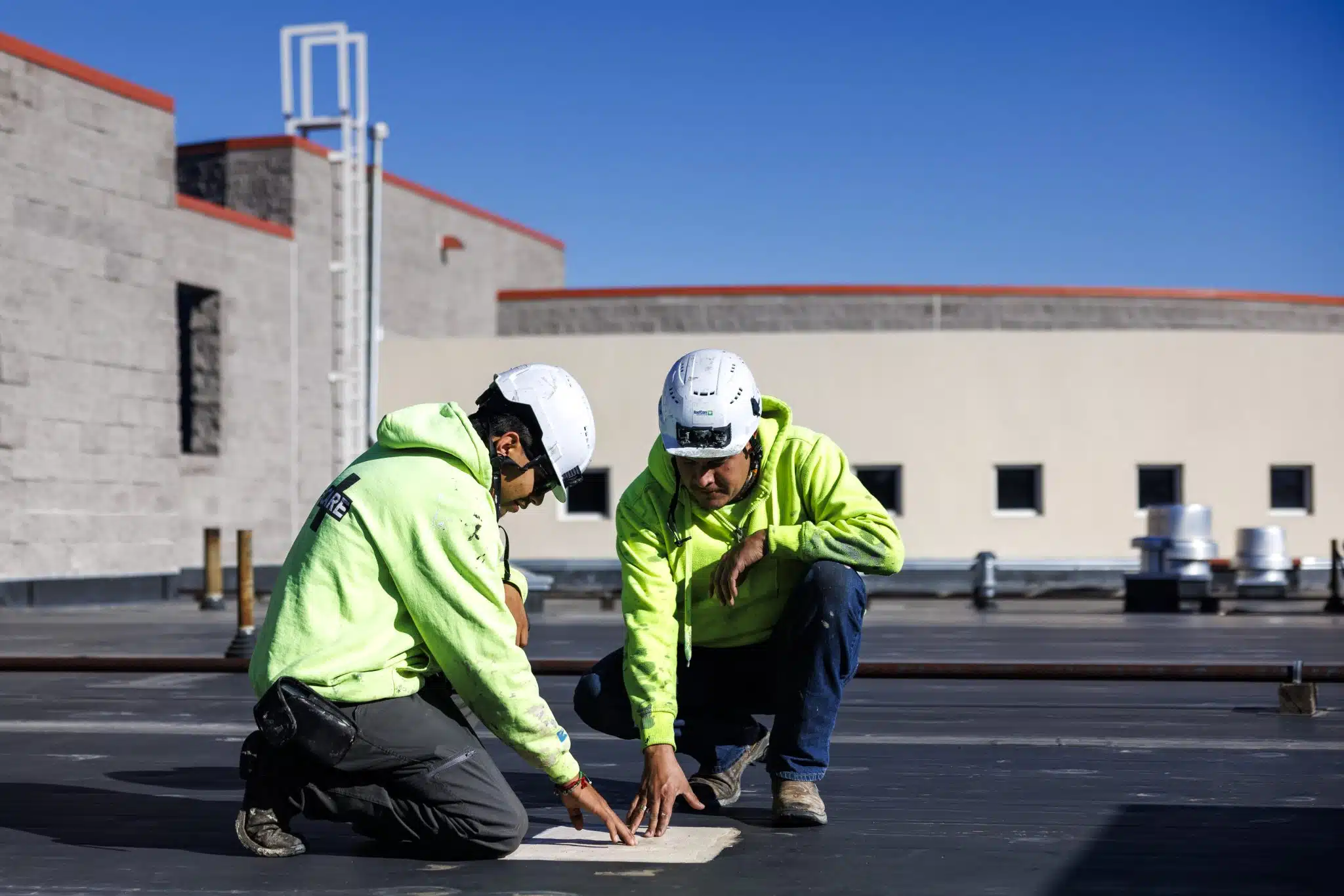
Our BUR assessment pulls cores to measure actual insulation moisture, maps saturation against a zoned roof diagram, and rates each component in writing. The output is a scope an owner can take to competitive bid, including the honest call between continued repair, a recover, and full replacement. We do not overstate deterioration to drive a larger project, and we do not understate saturation that an honest core pull would reveal.
Plies, Bitumen, and Surfacing: What a Core Reveals
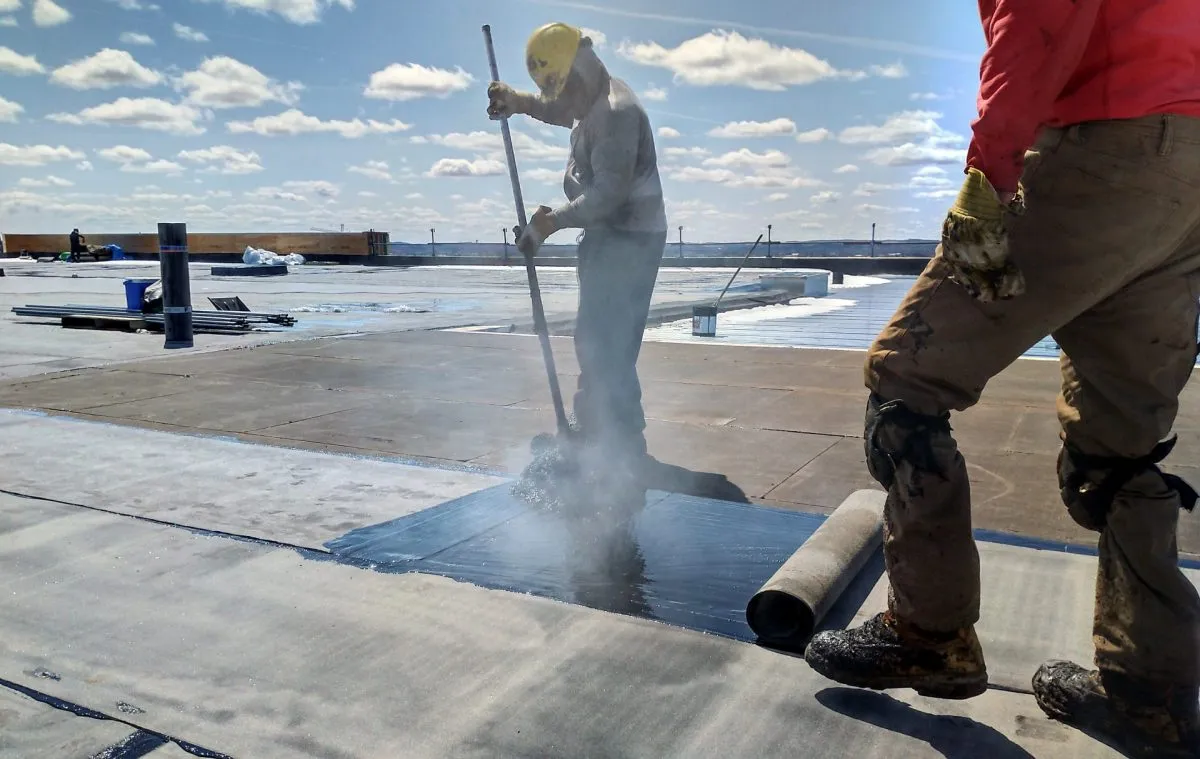
The defining feature of built-up roofing is the membrane itself, and a core tells us how it was made. A typical assembly stacks three or four reinforcing felt plies in alternating moppings of bitumen, then a surfacing layer on top. The bitumen is usually hot-applied asphalt, though some older Triangle buildings carry coal-tar pitch, which behaves differently underfoot and demands different repair materials and handling, so identifying it on the first core pull matters. Surfacing varies just as much: a flood coat of aggregate gravel shields the bitumen from sunlight and gives the roof its classic appearance, while a mineral-surfaced cap sheet or a smooth-coated finish reads and repairs differently. When we open a BUR roof we record the actual ply count, confirm the bitumen type, note whether the gravel is still embedded or has weathered loose, and check that flashings were built up with the same materials rather than patched with incompatible asphalt cement. Those details decide whether a repair will bond and last or simply delaminate at the next thermal cycle.
Mopping, Adhesion, and Wind Performance in the Triangle
Built-up roofing resists wind through full adhesion rather than weight or isolated fasteners: each ply is mopped solidly to the one below, and on a sound roof the assembly behaves as one bonded mass that is hard for uplift to peel. That continuity is a real advantage when a tropical-storm remnant pushes across Raleigh, but it depends on the moppings staying intact. ASCE 7 puts the highest uplift pressures at the roof's perimeter and corners, and on aging BUR those are the zones where moppings starve, felts blister, and base flashings lift away from parapets and curbs. We inspect edge metal, gravel stops, and flashing terminations closely, because a field that still tests sound can be undone by an edge detail that has lost its bond. Where the perimeter has begun to release, we document whether re-flashing and edge repair will restore the assembly's wind resistance or whether the moppings have aged past the point a patch can save.
Where BUR Sits in the Triangle and the Recover-or-Replace Math
Much of this inventory sits on the older Downtown Raleigh core, on mid-century institutional buildings around the NC State campus, and on the first generation of industrial structures along the rail and warehouse corridors. On these buildings the live question is rarely another patch; it is whether the roof has enough sound substrate left to carry a recover or whether saturation has spread far enough to demand a tear-off. A BUR roof with dry insulation and localized failures can sometimes take a coating or a single-ply recover that buys a decade without the cost and disruption of full removal. Once cores show widespread wet insulation, that math flips: a recover only entombs the moisture, and replacement is the honest call. We tie the recommendation to the survey data and to the manufacturer warranty conditions a recover would have to satisfy, so the owner is choosing on lifecycle cost rather than on the lowest first number.
Frequently asked questions
Is it worth repairing an old built-up roof or should it be replaced?
It depends on the core data. If saturation is localized and the deck is sound, targeted repair buys real time. If moisture is widespread through the insulation, repair money is better redirected toward replacement planning.
Why can't a built-up roof be judged by looking at it?
Because its multi-ply construction lets water travel between layers and saturate insulation far from any visible sign. Only core sampling and moisture survey show the true condition.
Do you install new built-up roofs?
New commercial construction in the Triangle has largely moved to single-ply and modified systems. Our BUR work centers on honest assessment, repair, and replacement planning for the existing inventory.