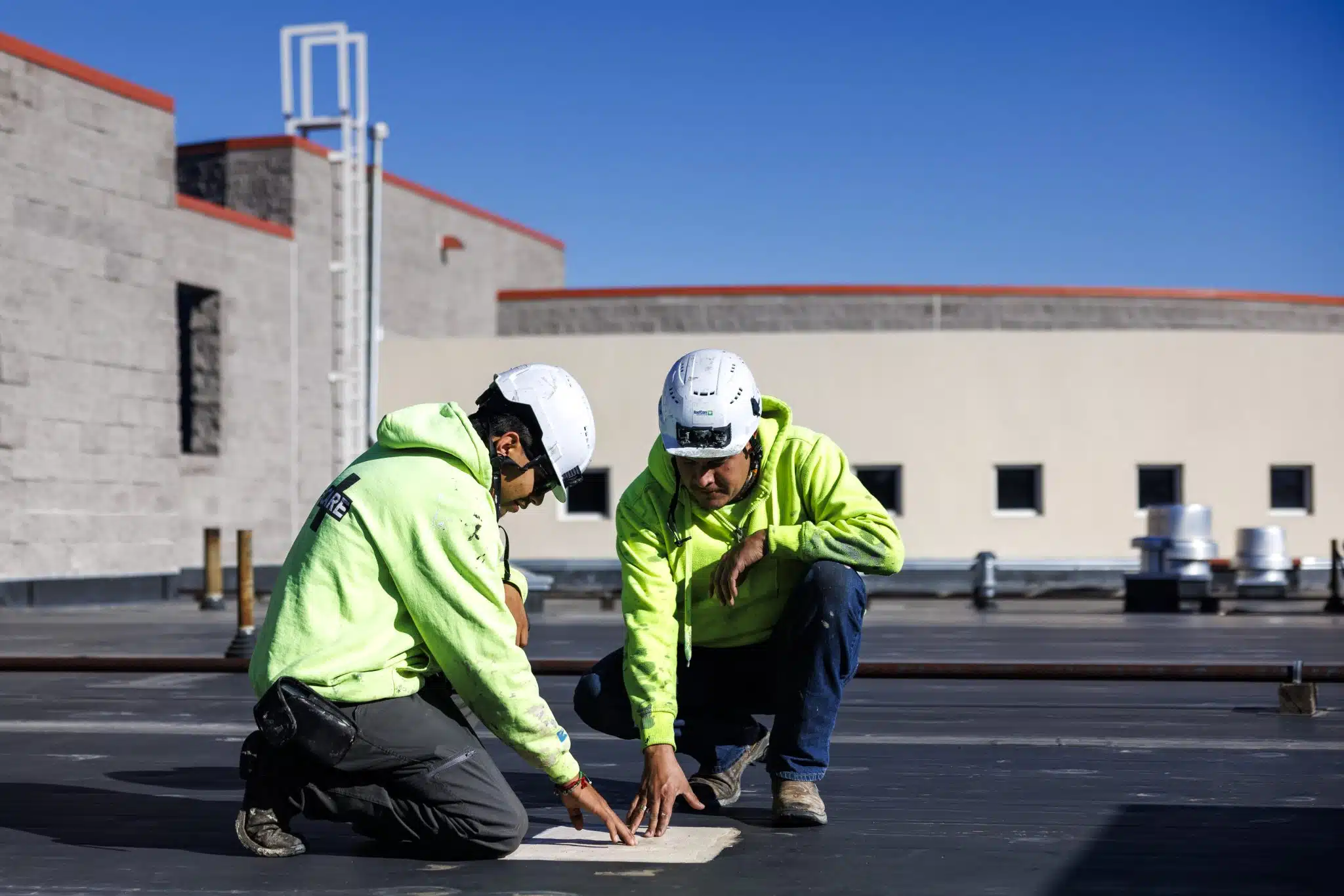
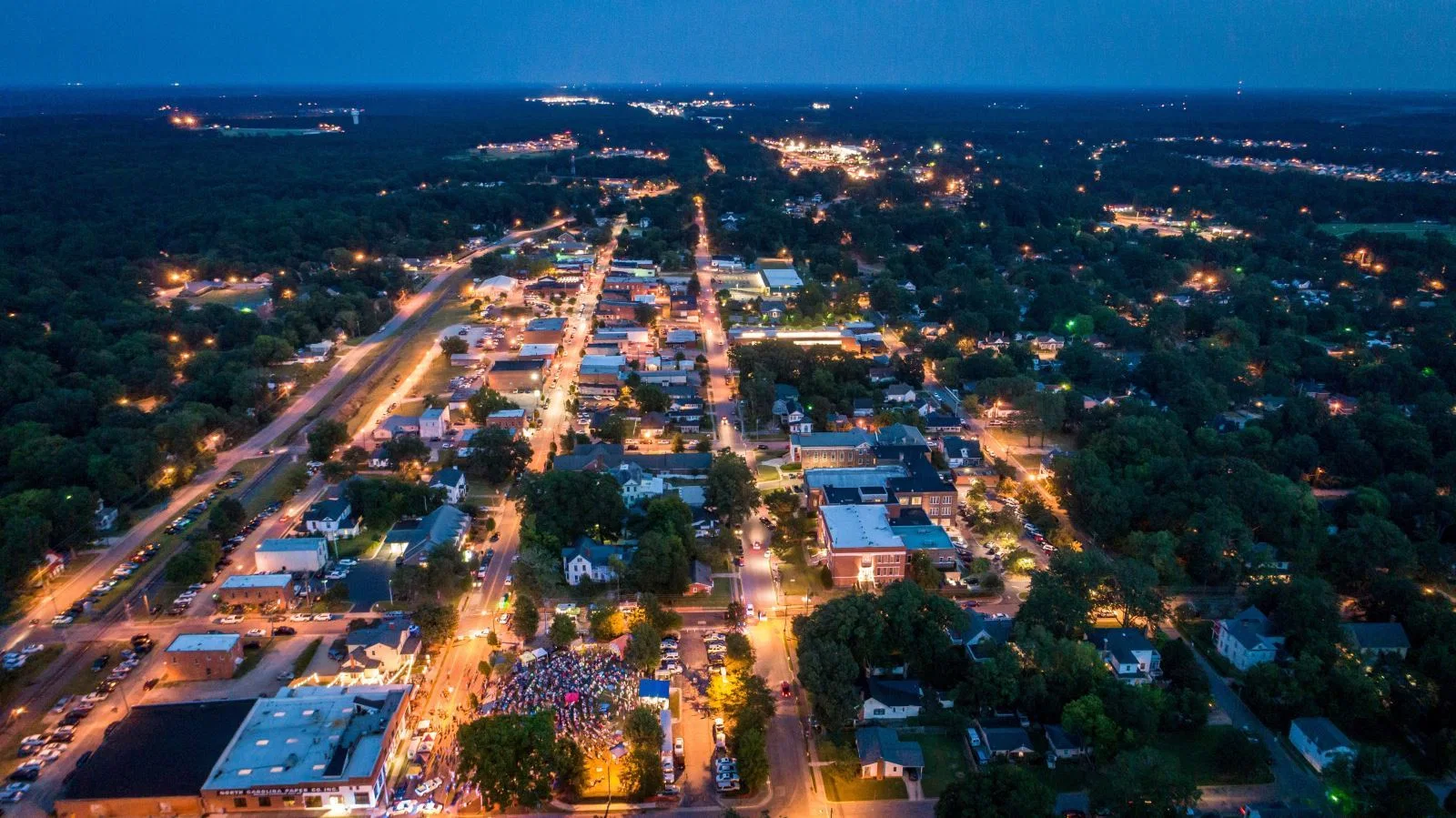
Clayton is Johnston County's commercial hub and one of the Triangle's fastest-growing secondary markets - the US-70 corridor east from Garner through Clayton carries sustained commercial and industrial development, and the NC-42 and NC-96 corridors are filling with business park and retail development serving a rapidly expanding commercial base.
Clayton sits at the eastern end of the Triangle's growth arc - Johnston County's largest town, positioned at the US-70 and US-70 Business interchange east of Garner. The Raleigh-to-Clayton commute shed has expanded as commercial development has priced buyers east, and that commercial growth has pulled commercial development along US-70, NC-42, and the Cornwallis Road corridor into a sustained expansion cycle.
We cover Clayton from our Raleigh office on a project and scheduled-route basis. The US-70 east run from Downtown Raleigh to Clayton is about 30 to 35 minutes, and we service the US-70 commercial corridor and the Johnston County industrial parks on regular inspection routes. For emergency response in the Clayton commercial core, we treat the I-40 Business and US-70 intersections as our primary entry points.
Johnston County commercial buildings are permitted through Johnston County's Building Inspections office and, for buildings within Clayton's municipal limits, through the Town of Clayton Inspections division. We handle permit applications with the correct authority as a standard pre-construction step - the jurisdiction question comes up regularly in the rural-to-suburban transition zone east of Clayton where county and municipal limits are actively changing.
US-70 Commercial Corridor and Retail Development
The US-70 corridor through Clayton - running from the Garner-Johnston County line east through the Clayton commercial core and toward Smithfield - is the primary commercial artery for east Johnston County. The corridor carries a mix of national chain retail anchors, strip commercial, medical and professional services, and light industrial development that has been expanding continuously as the Johnston County commercial base has grown.
Retail buildings on US-70 in Clayton are predominantly post-2000 construction, with a significant cluster dating to the 2005-2015 period when Johnston County commercial development was at its most active. Buildings in this vintage range are entering or have entered the phase where their original TPO or EPDM systems need serious assessment - 15-year-old single-ply on a building that has had only reactive repairs is a building where the moisture survey results frequently justify replacement over another repair cycle.
The anchor commercial centers serving the Clayton market - particularly the grocery-anchored and big-box-anchored centers along the US-70 Business corridor - have large roof footprints where production logistics are the primary planning challenge. We approach these projects with the same logistics planning discipline we apply to any active-retail large-footprint replacement: crane positioning, daily production sections, debris management, and dry-in before end of day.
Johnston County Industrial Parks
Johnston County's industrial parks - concentrated in the Buffalo Road and Glen Road corridors east of Clayton and in the industrial zones along US-70 Business - have benefited from Clayton's position between I-40 and US-70, two major freight arteries. Distribution, logistics, food processing, and light manufacturing facilities in these parks serve both regional and national supply chains.
The industrial buildings in Johnston County parks cover a wide age range - some facilities date to the 1980s when Johnston County first developed its industrial tax base, alongside newer buildings constructed in the 2010s and 2020s as I-40 connectivity made the county more competitive for regional distribution. Older industrial buildings in this corridor frequently have BUR or first-generation single-ply systems that have not received a formal inspection since original installation.
Food processing and agricultural processing facilities in Johnston County - the county's agricultural our process produces a meaningful concentration of food-industry commercial buildings that are not common in Wake County's suburban commercial landscape - have specific roofing considerations: chemical exposure from processing environments, temperature and humidity cycling from refrigerated and processing spaces, and enhanced corrosion risk on fastener systems near ammonia-based processing environments. We treat food processing building roof assessments with this in mind.
NC-42 Corridor and New Commercial Development
NC-42 running from Clayton south toward Cleveland and Garner has become a primary commercial growth corridor for the Clayton area, and commercial development is following close behind the commercial buildout. Business parks, medical office clusters, and retail development along NC-42 are being built on what was farmland five years ago - a new-construction environment where establishing maintenance programs and warranty records at the start of the building's life is straightforward if contractors and owners prioritize it.
The medical office and urgent care development along NC-42 serving the Clayton commercial population carries standard medical occupancy constraints - HVAC continuity, controlled-access during construction, and infection-control protocols for any construction adjacent to clinical spaces. We plan around these constraints in pre-construction, not on the first day the crew arrives.
Clayton's downtown revitalization around Lombard Street and Second Street has brought new investment into the historic commercial core. Buildings in the downtown area - some dating to Clayton's early development as a railroad junction town in the late 1800s - require the same period-appropriate flashing and parapet assessment we apply to other Triangle historic downtown buildings.
Frequently asked questions
Do you work in Johnston County, or only in Wake County?
We work across Johnston County's commercial markets, including Clayton, Smithfield, and Selma on a project basis. Clayton's US-70 and I-40 Business corridors are within our regular coverage zone. For buildings farther east in Johnston County, call us with the location and we will confirm coverage and typical response time.
Who permits commercial roofing work in Clayton - the town or Johnston County?
Buildings within Clayton's municipal limits permit through the Town of Clayton Inspections division. Buildings in unincorporated Johnston County outside the town limits permit through Johnston County Building Inspections. This distinction is worth confirming before work starts, particularly for buildings in the transition zones east of Clayton where annexation is ongoing. We handle the permit determination and application during pre-construction.
Can you work on food processing facilities in the Johnston County industrial parks?
Yes, and we treat food processing buildings as a distinct building type. Chemical exposure, temperature cycling from refrigerated processing spaces, and corrosion risk near ammonia-based systems all affect how we specify fastener systems and membrane details. We document those building-specific conditions in the assessment before scoping any work.