Expansion joints fail when the cover assembly can no longer accommodate the building's structural movement without cracking or separating. Patching a failed joint with caulk is not a repair - it is a delay that makes the eventual correct repair more expensive.
Commercial buildings in Raleigh move. Thermal expansion and contraction cycles in the Triangle's climate - from July rooftop surface temperatures above 150F to January lows that can drop below 20F - produce measurable movement at expansion joints in commercial structures. Buildings with large footprints, buildings with connected wings of different heights, and buildings where the structural system transitions between concrete and steel are all candidates for significant expansion joint movement.
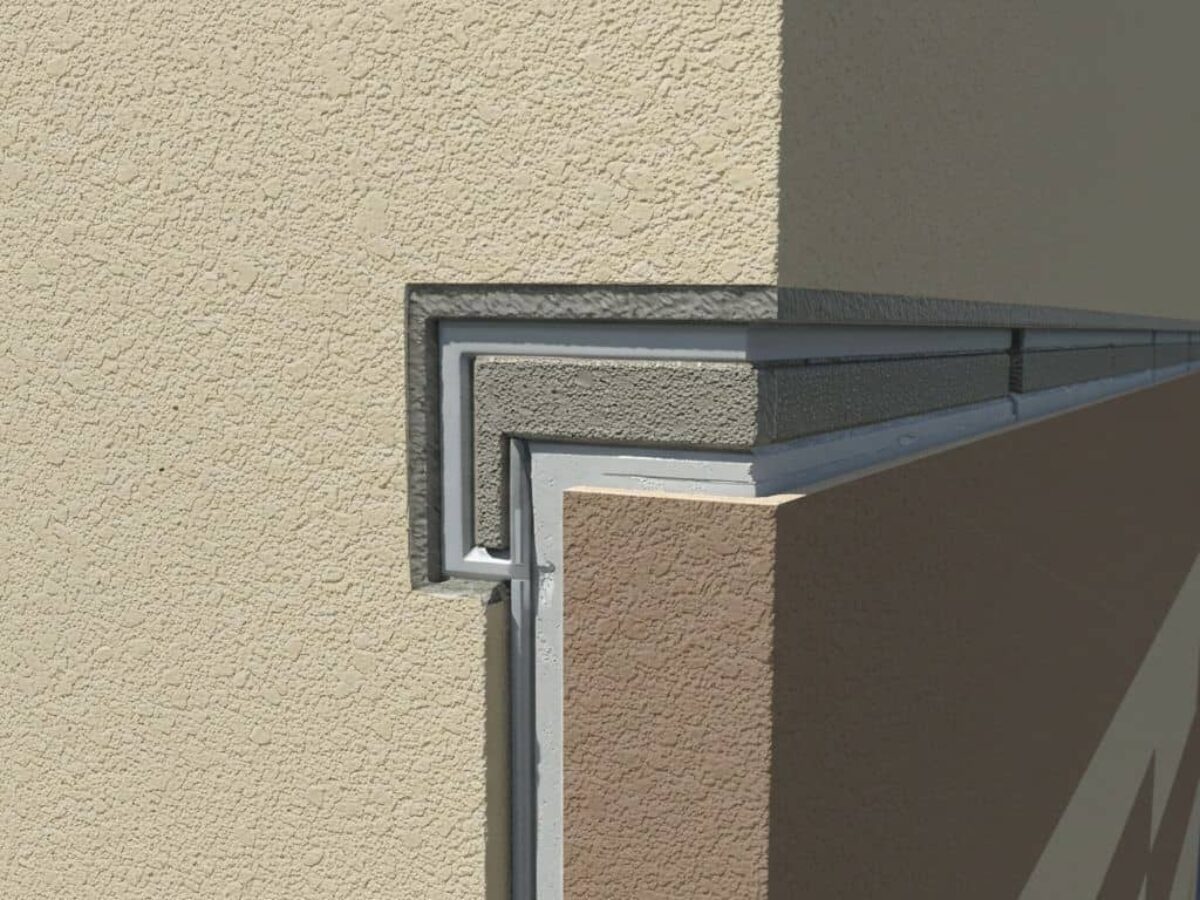
Roof expansion joints are designed to accommodate that movement without allowing water infiltration - a flexible cover assembly, typically a metal cap with a flexible center member or a thermoplastic bellows, spans the joint and moves with the structure while maintaining a watertight barrier over the joint opening. When that cover assembly fails - and they do fail, because they are moving parts in a system that experiences hundreds of thermal cycles per year - water enters the joint opening and travels directly to the building interior.
The failure pattern we see most commonly on Raleigh commercial expansion joints: the bellows or flexible center member has cracked or separated from the metal cap; the cap itself has lifted or separated from the membrane flashings on each side; or the entire cover assembly has been patched so many times with incompatible materials that the patch stack has failed in multiple places simultaneously. All three failure modes require a repair approach that addresses the joint system as a whole, not just the most visible failure point.
Why Expansion Joints Fail
The flexible center component - whether a thermoplastic bellows, a neoprene gasket, or a coiled metal spring - undergoes mechanical fatigue over time. Each thermal cycle compresses or extends the center member; over 20-30 years, the cumulative fatigue exceeds the material's elastic limit and the center member cracks or separates. In Raleigh's climate, with its wide diurnal temperature range and humid conditions that accelerate degradation of neoprene and EPDM bellows, 15-20 years is a realistic service life for a properly installed expansion joint before the flexible component requires replacement.
The membrane flashing on each side of the joint - the vertical legs of the roof membrane that run up the joint curb faces and terminate under the cover assembly - is subject to the same movement the center member accommodates. If the base flashing is bonded too rigidly to the joint curb and the curb moves, the flashing tears at the termination or at the weld to the field membrane. Properly designed joint flashings have a loose loop or slack at the joint face to accommodate the range of movement without tensioning the flashing material.
Ponding at the joint is a significant accelerant of failure. Expansion joints in Raleigh flat roofs - particularly at building wing transitions where the roof geometry changes - are often low points in the roof profile. Chronic ponding at the joint means the cover assembly is under sustained water loading that exceeds its design condition, and any micro-crack in the center member becomes a leak path under that hydrostatic pressure.
Repair Versus Replacement
Repair is appropriate when the metal cap is sound, the mounting flanges are intact, and only the center flexible component has failed. In that case, we remove and replace the bellows or center member with a new component compatible with the existing cap system - most major expansion joint manufacturers offer replacement bellows for their standard cap systems. The mounting flanges are re-sealed to the adjacent membrane, the new center member is installed per the manufacturer's specification, and the joint is tested before closeout.
Replacement of the full cover assembly is appropriate when the metal cap has corroded or deformed, when the mounting flanges have separated from the curb, or when the existing assembly does not have a replacement bellows available for its profile. Full cover assembly replacement also provides an opportunity to specify a system with appropriate movement capacity for the joint - some older Raleigh commercial buildings have undersized expansion joint covers that were installed without adequate movement-range specification for the building's actual thermal movement profile.
Base flashing re-integration accompanies every expansion joint repair or replacement we perform. The membrane base flashing on each side of the joint is inspected for separation, tearing, and inadequate slack, and repaired or replaced as needed. A new cover assembly installed over failed base flashings will leak at the flashing before the new center member shows any deterioration.
Design Considerations for High-Movement Raleigh Joints
Raleigh commercial buildings in exposed locations - the open terrain along the I-540 outer loop, buildings near RDU Airport along US-64, and large-footprint industrial buildings in the Wake County industrial corridors - experience larger thermal movements than buildings in the more sheltered urban core. For these buildings, expansion joint specification requires calculating the expected movement range based on building dimensions, material coefficients, and the local temperature differential, and selecting a cover assembly with appropriate movement capacity.
Buildings with rooftop solar arrays that have added significant dark-surface area to the roof profile may experience higher rooftop surface temperatures than the original roof design assumed - particularly in areas near but not under the array. If the array was added to a building with existing expansion joints, the increased thermal loading may have exceeded the original joint design range. We assess this when solar arrays are present on buildings with aging expansion joint systems.
Institutional buildings on NC State Centennial Campus and in the Downtown Raleigh government district - many of which have long roof runs with multiple expansion joints - benefit from a joint-by-joint condition survey that documents each joint's movement range, current cover condition, and estimated remaining useful life. This gives the facilities team a prioritized repair schedule rather than a reactive response to whichever joint fails first.
Frequently asked questions
Can we patch a failed expansion joint with caulk or membrane material as a temporary fix?
Caulk over a failed expansion joint is not a temporary fix - it is a temporary delay that usually makes the permanent repair more expensive. Caulk applied over a moving joint cracks with the first significant thermal cycle. Membrane patches over the joint opening do not accommodate movement and tear quickly. These materials do not bond reliably to the various substrates at an expansion joint intersection, and their failure creates additional debris and contamination that must be removed before the proper repair can be installed. If you need a temporary fix while budgeting the permanent repair, we can install a temporary unconstrained membrane bridge that accommodates limited movement - but we recommend scoping the permanent repair at the same time.
How do you know what size movement range to specify for the replacement joint?
We calculate expected movement based on the building's structural dimensions, the construction materials, and the local design temperature differential - the difference between the maximum summer rooftop surface temperature and the minimum winter temperature the joint will experience. For a Raleigh commercial building, that range is significant: summer rooftop surface temps above 140-150F and winter lows that have reached 10-15F during recent cold events. The calculation tells us the movement range the cover assembly must accommodate, and we specify accordingly - not based on what is in the truck.
The expansion joint in our roof has been leaking for years - is there likely to be structural damage?
Possibly. A long-term active leak at an expansion joint means sustained moisture at the joint opening, which in most commercial buildings means contact with structural framing elements - steel angle, concrete edge condition, or wood blocking depending on the building type. We inspect accessible structural elements at the joint opening during the repair scope and report what we find. If structural assessment beyond our scope is indicated - for example, a concrete edge condition that requires structural engineering evaluation - we advise on that before the repair scope is finalized.