Recurring maintenance contracts for Raleigh commercial roofs - semi-annual or annual inspection cadence, documented visits, and manufacturer warranty maintenance compliance built into every scheduled call.
A commercial roof maintenance contract in Raleigh means something specific or it means nothing at all. The kind that means nothing: a contractor appears once a year, walks the roof for half an hour, patches a couple of splits near the drains, invoices for a maintenance visit, and never produces documentation that satisfies a manufacturer warranty desk. The owner pays annually; the warranty lapses anyway because the submission format, the timing requirements, and the photo-documentation standard were never met. I have walked roofs where the facility manager believed a maintenance contract was active and the manufacturer's warranty desk had no record of a maintenance submission in three years.
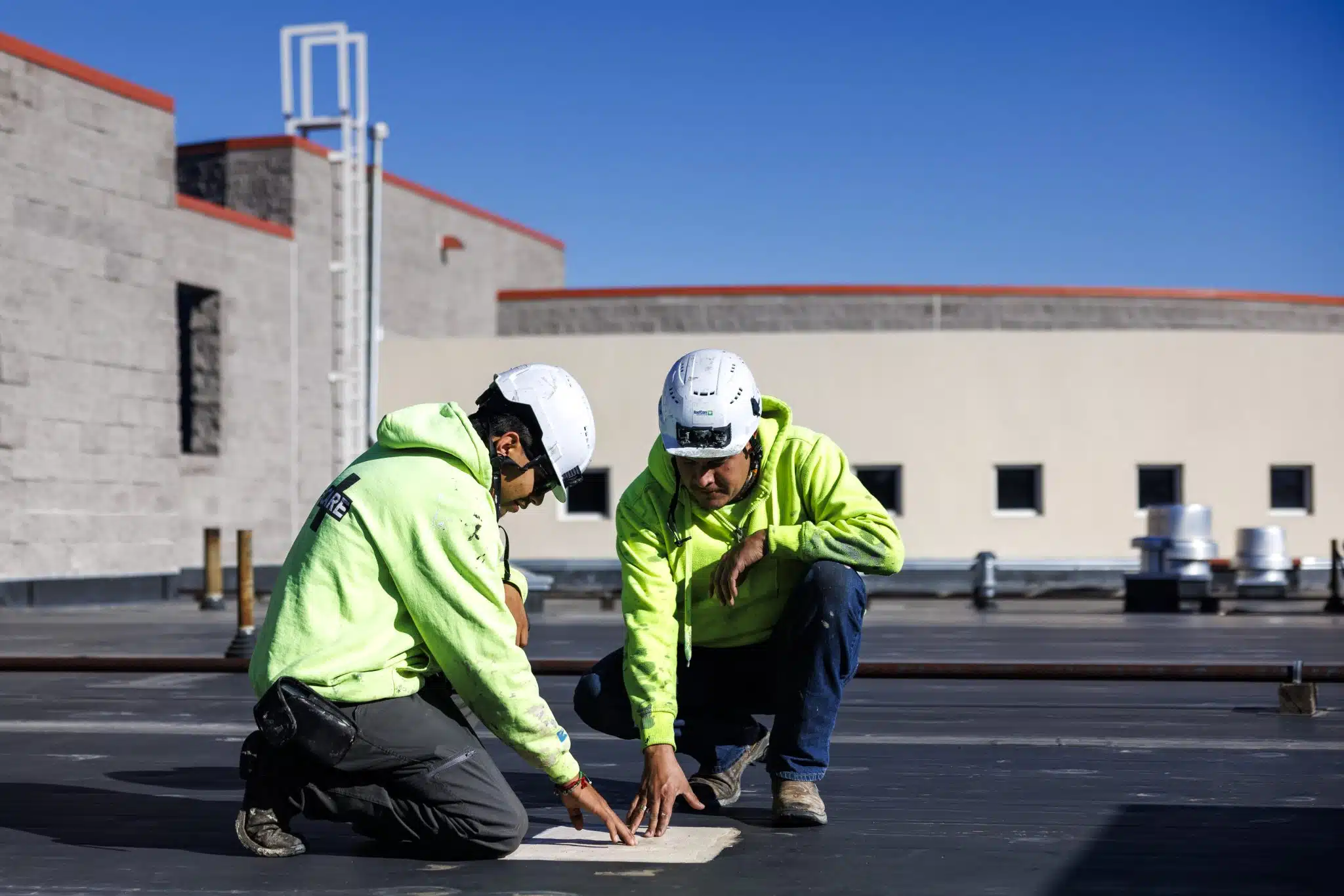
Our maintenance program is geared to documentation first. Every visit produces a written condition report keyed to the building's roof zone diagram, a photo log organized by zone, a repair summary with before-and-after photographs, and a manufacturer maintenance submission in the exact format the warranty desk accepts. For owners with multiple Raleigh buildings on our program - a common structure for the Class A office portfolio managers operating along the Fayetteville Street corridor or in the North Hills cluster - the documentation is uniform across every property so the facilities team reads any building's report without learning a new system.
The visit checklist is calibrated to the Triangle's specific climate and to the specific roof system on each building. What we walk through on a 2021 TPO building at a Research Triangle Park campus is not the same checklist we run on a 2002 modified bitumen building in the Glenwood South office corridor. The program is not a standardized vendor visit. It is asset management applied to a specific roof on a specific building in a climate that produces hurricane remnant rainfall events, high-intensity summer convective storms, and periodic winter ice loading.
Semi-Annual vs. Annual Cadence for Triangle Buildings
Most manufacturer NDL warranties require documented inspection at minimum once per year. Some require semi-annual. We default to semi-annual for Raleigh commercial buildings for two reasons beyond the warranty requirement: the spring storm season from April through June and the late summer and fall hurricane remnant period from August through October each create a distinct category of roof stress that requires separate documentation cycles.
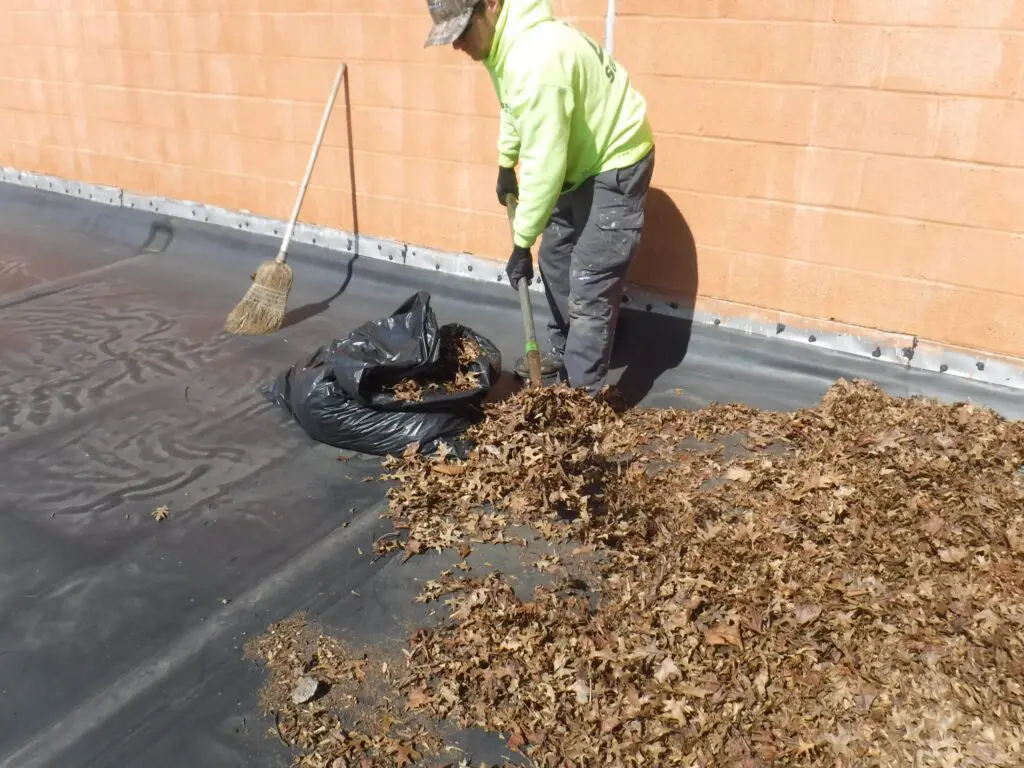
The spring visit - conducted in March or April before the active convective storm season - documents any winter damage from ice or thermal cycling, clears debris from scuppers and internal drains that accumulated over the cold-weather months, verifies parapet flashing caulk and termination bar conditions after any ice storm events such as the significant January 2022 event, and establishes the pre-storm baseline that becomes critical if a tornado or severe hail event moves through the Triangle in May or June. The Raleigh metro has tracked documented tornado events in recent years including paths through Wake County communities; pre-event documentation records determine what is covered by insurance and what is disputed as pre-existing condition.
The fall visit - conducted in October or November after the hurricane remnant season - documents any membrane surface stress from the summer heat loading, checks drain conditions after the summer HVAC maintenance season when condensate routing issues are most commonly introduced, confirms that drainage systems are clear before any risk of ice-dam formation, and ensures that conditions produced during summer rooftop equipment service visits are in the record. On buildings at NC State's Centennial Campus or in Research Triangle Park where multiple rooftop trades are active through the summer, the fall visit almost always surfaces equipment-contact damage that the summer calendar missed.
What We Deliver on Each Raleigh Visit
Condition report: Zone-by-zone assessment covering membrane surface condition - UV chalking, seam lap integrity, puncture and cut damage from rooftop trades - flashing condition at all penetrations, drains, parapets, and HVAC curbs, and drainage system status including bowl cleanliness, screen integrity, and ponding extent measured against the 48-hour ponding threshold in most Raleigh commercial NDL warranties. The Triangle's high annual rainfall means drain performance evaluation is not a box-checking exercise; it is a meaningful predictor of insulation saturation risk.
Repair scope: Any condition requiring immediate repair is scoped and priced on the same visit. We tier findings - active leak risk, warranty-jeopardizing condition, and deferred corrective maintenance - so the facilities budget can sequence work rather than receiving every item framed as urgent. Downtown Raleigh office building facilities teams and the WakeMed and UNC Rex Healthcare facilities capital groups have budget approval cycles that require 60 to 90 day lead on repair scopes; our tiered findings reports accommodate that requirement.
Manufacturer submission: For buildings carrying an active NDL warranty, we complete and submit the manufacturer's maintenance form within the required window after each visit. We retain confirmation from the warranty desk and include it in the visit package delivered to the owner. This confirmation is the document that keeps the warranty active - and the document that proves maintenance compliance if a claim is disputed after a storm event.
Drainage verification: Raleigh's flat terrain through the Downtown and North Hills corridors means commercial roof drainage design is critical and ponding is a chronic risk. We document ponding locations with measurements, duration estimates from post-rain observations, and photograph evidence. Buildings where tapered insulation was designed for a pre-renovation roof slope that no longer matches the current configuration - common in the older WRAL and Five Points commercial stock - get specific drain-load documentation each visit.
Emergency Response Priority for Maintenance Contract Clients
Maintenance contract clients are prioritized for emergency dispatch. Raleigh's summer convective storm season - the afternoon thunderstorms that drop two inches in forty-five minutes across Wake County from May through September - generates multiple simultaneous emergency calls after significant events. Contract clients are dispatched ahead of non-contract calls, same day, for properties inside the I-, Glenwood South, North Hills, and the Centennial Campus corridor all receive same-day mobilization under our maintenance contract priority protocol. For properties between the I-440 Beltline and the I-540 outer loop, response is next-day guaranteed.
Emergency dry-in calls under a maintenance contract do not consume the scheduled maintenance visit. An emergency response after a June storm and a scheduled spring inspection in April are separate line items. Owners on maintenance contracts who call us for emergency response are not penalized with a consumed maintenance visit - the emergency is invoiced separately at our standard emergency rate.
Frequently asked questions
What does a typical maintenance contract cost for a 100,000 sq ft Raleigh commercial building?
Annual program with two visits and full documentation for a 100,000 sq ft single-membrane roof - TPO or EPDM, under 15 years old, standard equipment density - roughly $3,500 to $5,500 per year depending on condition complexity, equipment density, and active warranty maintenance requirements. Buildings with heavy rooftop equipment loads typical of Research Triangle Park facilities, older modified bitumen systems in the Glenwood South office corridor, or buildings with manufacturer warranties requiring semi-annual submission run higher. We price per visit after an initial inspection, not off a flat rate card.
Can we put multiple Raleigh buildings on a single maintenance contract?
Yes. The documentation uniformity advantage compounds as buildings are added. We schedule multi-building route days across the Triangle to reduce mobilization cost - a North Hills building and a Downtown building can share a route day, which reduces per-visit cost. Portfolio owners with five or more Raleigh-area buildings typically see 15 to 20 percent lower per-visit cost than single-building clients.
Do you subcontract the inspection visits?
No. Our own project managers perform every inspection. We do not use third-party inspection vendors or pass inspections to a subcontracted labor force. The field manager who walks your spring visit is the same person who would run a repair scope if one is warranted - the inspection is not separated from the rest of our work.
What if we have a manufacturer warranty dispute during the maintenance period?
We produce the documentation record that supports your claim. If a manufacturer disputes a warranty claim on a building where we hold the maintenance contract, we engage directly with the manufacturer's warranty desk and provide the visit records, submission confirmations, and repair documentation that substantiate the claim. We have navigated warranty dispute processes in the Triangle market and know the escalation path at each major manufacturer.