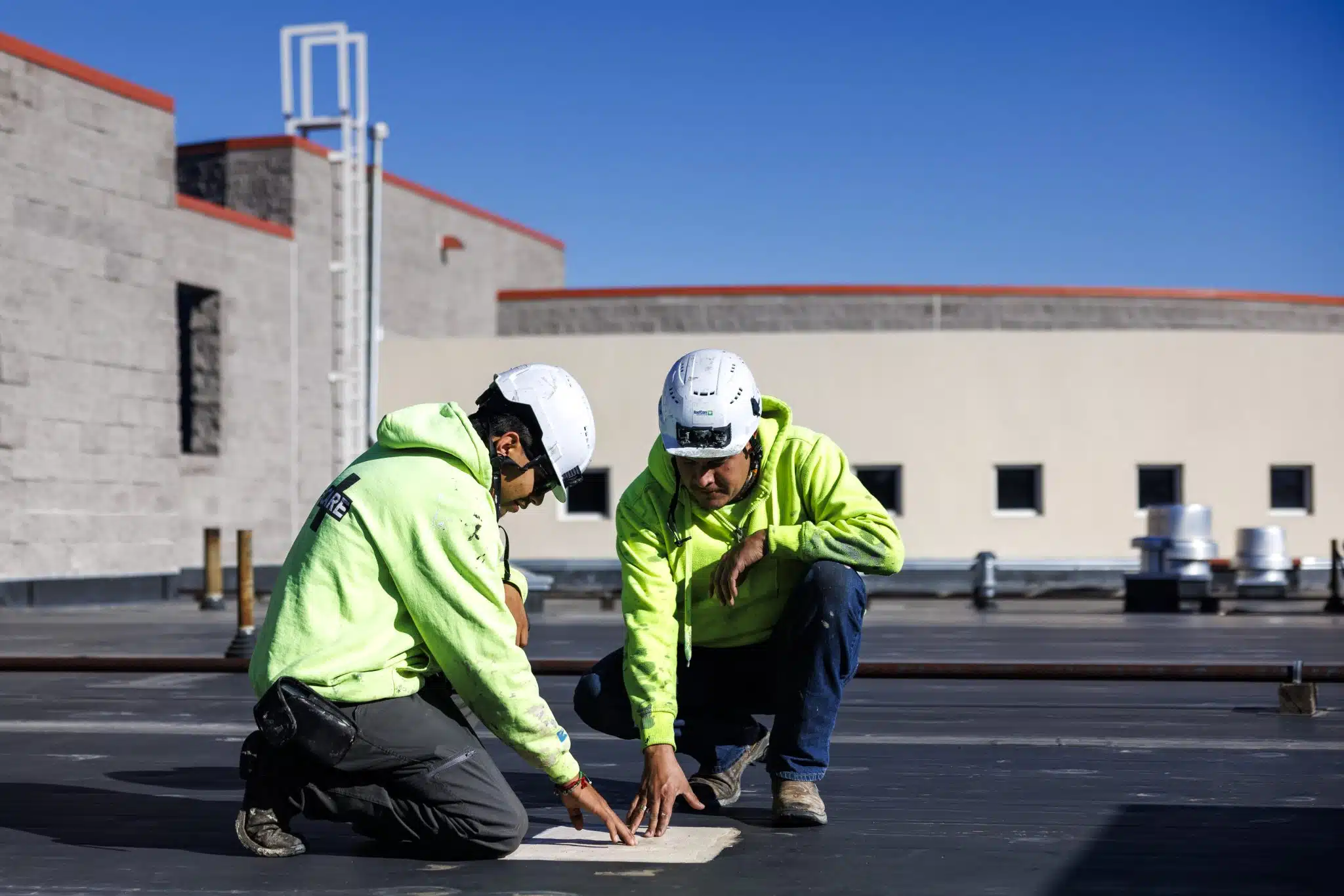
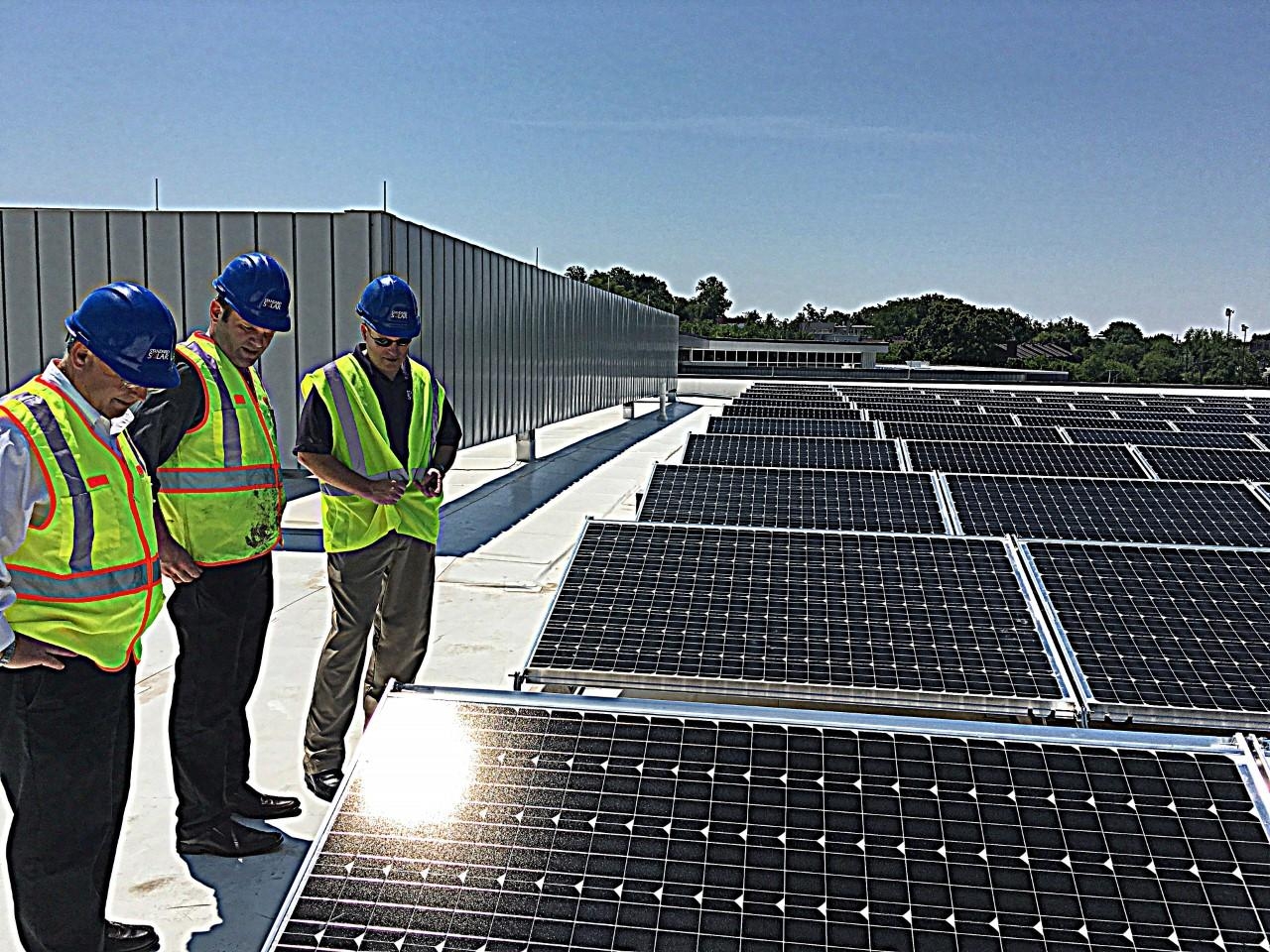
We act as technical owner's representative on Raleigh commercial roofing projects where we are not the installing contractor - reviewing submittals, observing installation at high-risk milestones, and protecting your warranty closeout.
An owner's representative on a commercial roofing project is the person on the owner's side who can read a roofing submittal, walk a roof during installation, identify a detail deviation before it becomes a warranty failure, and escalate to the right contact at the contractor or manufacturer when a construction deficiency needs resolution before it is covered by membrane. Most Raleigh commercial building owners do not have this person internally.
The facility director at a WakeMed medical office building off Edwards Mill Road is managing clinical compliance and infection-control protocols simultaneously with the roofing project overhead. The asset manager for a North Hills Class A office portfolio is managing capital allocations and tenant relations across multiple buildings. The research facilities manager on NC State's Centennial Campus is balancing laboratory operational requirements against the construction schedule. None of these people necessarily knows the difference between a correctly torqued TPO drain ring and one that will infiltrate water at the clamping flange within two Triangle storm seasons - or why a parapet flashing that does not extend the required distance onto the wall face voids the manufacturer warranty inspection outright.
I fill this role on Raleigh projects where I am not the installing contractor. The arrangement is clean: I am retained by the owner at a fixed engagement rate, I have no financial relationship with the installing contractor, and my only interest is that the project is installed correctly against the manufacturer's published standard, documented completely, and closed out with a warranty that survives the Triangle's hurricane remnant rainfall exposure.
What Owner's Rep Engagement Covers in Raleigh
Pre-construction: I review the contractor's submitted scope, manufacturer submittals, and proposed material samples against the contract documents. Pre-construction submittal review is where I most often find scope drift on Triangle commercial projects - the submitted membrane product differs from the specified product line, the proposed insulation stack does not reach the IECC 2021 R-value minimum for North Carolina climate zone 3A, the vapor retarder detail is absent on a building with an interior humidity load, or the proposed flashing detail deviates from the manufacturer's published standard library in a way that will generate a warranty punch list at closeout inspection. These get resolved in writing before installation starts.
During construction: I conduct field observation visits at defined milestones - insulation installation before membrane cover, membrane installation during progress rather than only at punch walk, parapet and penetration flashing completion, and drain clamping ring installation. The milestone visits are targeted at the points where deviations are most common and hardest to correct after the membrane is installed over them. For Raleigh buildings where afternoon convective storms are a near-daily risk from May through September, I add a production dry-in review at each milestone to confirm the contractor's daily dry-in plan matches the NOAA forecast window.
Closeout: I participate in the punch walk, verify that contractor-identified punch items match my field observation notes, confirm that the manufacturer warranty inspection is scheduled with the correct credentialed inspector from the manufacturer's Raleigh-Durham territory team, and review the closeout package before the owner accepts substantial completion. My payment recommendation goes to the owner only after I confirm the closeout package is complete and the signed warranty document is in hand - not the warranty application, the actual issued document.
High-Risk Installation Deviations on Raleigh Projects
Drain ring installation on TPO systems: Under-torqued or improperly bedded TPO drain rings allow water infiltration at the clamping interface - one of the most common sources of warranty-ineligible water infiltration on Triangle commercial buildings, particularly given the sustained water-loading events the Raleigh area experiences during hurricane remnant rainfall. I observe drain ring installation and verify clamping torque at every drain location rather than spot-checking, because drainage is the first point of failure in the Triangle's high-rainfall events.
Parapet flashing height and termination on older Raleigh buildings: The masonry-parapet office buildings along Glenwood South, the Wake Forest Road corridor, and the older Downtown office stock have parapet wall sections that require longer base flashing runs than the standard manufacturer detail assumes for newer CMU construction. I verify that base flashing height meets the manufacturer's minimum, that termination bar fastening is at the specified spacing, and that caulk at the termination bar is the specified sealant type - not whatever was on the contractor's truck.
Insulation continuity at equipment curbs on RTP and Centennial Campus buildings: Research Triangle Park and Centennial Campus buildings have high rooftop equipment density - HVAC units, exhaust systems, communication infrastructure, and in some cases photovoltaic arrays. Equipment curb details are high-failure points where insulation voids allow thermal bridging and where seam stress from curb movement is concentrated. I verify insulation continuity at every curb base and confirm that curb flashing details match the manufacturer's specification for the membrane system being installed.
Wind-uplift fastener pattern verification: Mechanically attached TPO in Wake County is designed against IBC 2021 wind-uplift exposure levels. The fastener pattern varies across the roof - higher density at perimeter and corner zones, lower density at the field. Buildings near RDU Airport and along the open western Wake County edge between the I-540 outer loop and Jordan Lake face higher wind-uplift exposure than the sheltered Downtown core. I verify pattern compliance in all three roof zones on every mechanically attached project.
When Owner's Rep Is Worth the Engagement Cost
Projects above $250,000 installed value in Raleigh almost always have enough at risk to justify the engagement. A warranty-voiding installation deficiency on a 100,000 sq ft replacement at a North Hills office building means the owner carries an unwarranted roof for 20 years through the Triangle's hurricane-remnant exposure. The engagement cost is small relative to that exposure.
Raleigh buildings with sensitive operations have particular urgency for owner's rep engagement. WakeMed and UNC Rex Healthcare facilities where an interior water infiltration during clinical operations is an infection-control event, Research Triangle Park laboratory buildings with biosafety and clean-room considerations, and Downtown office towers where a production deficiency that generates a tenant-space leak triggers lease obligations - each of these buildings carries liability exposure that exceeds project cost by a significant multiple if the installation goes wrong.
Out-of-market owners acquiring Raleigh commercial properties - REIT acquisitions along the Fayetteville Street corridor, out-of-state institutional investors entering the North Hills market - who are running their first Triangle project without established local contractor relationships find owner's rep engagement particularly valuable in the first project cycle.
Frequently asked questions
How many site visits does owner's rep typically involve on a Raleigh project?
For a standard Raleigh commercial replacement of 50,000 to 100,000 sq ft with three to four weeks of production: typically four to six field observation visits plus pre-construction submittal review and punch walk participation. Buildings with deck replacement, photovoltaic array coordination at Centennial Campus or RTP, occupied clinical environments, or phased production schedules add visits at the relevant decision points.
Can you do owner's rep on a project where you also wrote the RFP?
Yes. Both roles are owner-side engagements where I am not competing with the installing contractor. Continuity from RFP through construction reduces scope drift risk because the same technical person who wrote the specification is the one verifying installation compliance against it - which is particularly valuable on the more complex Raleigh commercial projects where the RFP specification was detailed and the owner needs verification that the installed system matches it.
What is your authority on site?
Advisory. I can direct the owner to issue a stop-work notice - I do not issue stop-work orders directly to the contractor. If I observe a critical deficiency during a field visit, I document it in writing, notify the owner's designated representative immediately, and recommend a specific corrective action with timing. A written deficiency notice from an independent technical observer is typically sufficient to get contractor response on Raleigh commercial projects.
Do you coordinate with the manufacturer's field rep during construction?
Yes. On projects with active manufacturer warranty paths, I coordinate with the manufacturer's regional field representative for the Raleigh-Durham territory to confirm that installation is tracking toward warranty eligibility. On large projects above $400,000, I request a mid-project manufacturer field visit - most manufacturers accommodate this on projects where the warranty closeout represents significant financial value to the owner.