Data center roofing for colocation facilities, server rooms, and mission-critical buildings throughout Raleigh, NC.
Research Triangle Park - the massive technology and research campus spanning Durham, Raleigh, and Chapel Hill - has made the Raleigh area one of the most data-center-dense markets in the South. IBM's long-established RTP campus, NetApp's operations here, and the SAS Institute's sprawling headquarters computing infrastructure collectively represent some of the most sophisticated and well-maintained commercial technology facilities anywhere in the region. Epic's RTP campus adds healthcare IT to the mix, and healthcare technology demands continuous availability in ways that have trained facilities teams here to treat roofing decisions as mission-critical infrastructure choices rather than routine building maintenance.
The SAS Institute's headquarters computing environment is distinctive in the data center landscape: a privately held company with a distinctive approach to campus design and facilities management that takes long-term quality seriously rather than optimizing for short-term cost. SAS's RTP facilities are among the better-maintained commercial technology campuses in the country, and the roofing standards they apply reflect that philosophy. Contractors who have worked successfully on SAS facilities have demonstrated an ability to meet institutional expectations that extend well beyond simple waterproofing competence - documentation, process control, materials quality, and the kind of relationship-based facilities management that long-term campus clients value.
Raleigh's Piedmont climate produces a combination of heat, humidity, and periodic severe weather that creates demanding roofing conditions. Summers are hot and humid, with temperatures regularly in the 90s and humidity that keeps the air saturated through much of the season. The area experiences periodic ice storms in winter - a climate feature unique to the transition zone between the cold interior and the warm coast - that create ice loads on roofs that flat commercial assemblies can struggle to drain. Hurricanes, while less severe inland than at the coast, still deliver heavy rainfall and elevated winds to the Raleigh area when tracking up the Eastern Seaboard. A data center roof here must be specified for all of these conditions.
Ice storm risk in Raleigh is a roofing consideration that many facility managers underestimate because it is less common than the routine summer storms that dominate local weather awareness. When freezing rain coats a flat commercial roof, it creates drainage conditions that are fundamentally different from liquid precipitation - ice accumulates in low points and at drains, preventing drainage until temperatures rise. The resulting load can significantly exceed the design snow load for Raleigh's mild climate zone, and the combination of ice load plus standing water load when the ice melts can approach structural limits on roofs that were engineered conservatively. Monitoring roof drainage performance during and after ice events, and removing ice accumulation from drain locations when it builds up, is an important facility management practice for RTP data centers.
Vapor management in Raleigh's humid climate requires the inward-drive orientation appropriate to the Southeast. Exterior relative humidity is high enough through much of the year to create vapor drive toward the air-conditioned data center interior, and a vapor retarder positioned on the exterior side of the insulation is the correct approach. For facilities at RTP where the computing loads are substantial and the interior is maintained at tight temperature and humidity tolerances, the vapor drive during peak summer humidity can be significant, and an inadequate vapor control system will produce moisture accumulation that degrades insulation performance over time. Infrared inspection annually will reveal any areas where moisture has infiltrated the insulation, allowing targeted remediation before the problem becomes pervasive.
Energy efficiency at Raleigh data centers benefits from cool-roof membrane specifications that are already aligned with the primary performance driver - reducing cooling loads in a warm, sunny climate. North Carolina's building code requires cool roofing for commercial buildings meeting certain criteria, and data centers generally exceed those thresholds. White or light-colored TPO membranes that meet Energy Star requirements are the standard specification in this market, reducing roof surface temperatures by 50-70F compared to dark alternatives and meaningfully lowering the entering air temperature to rooftop cooling equipment. For large campus facilities with many acres of roof surface, this translates to measurable annual energy cost reduction.
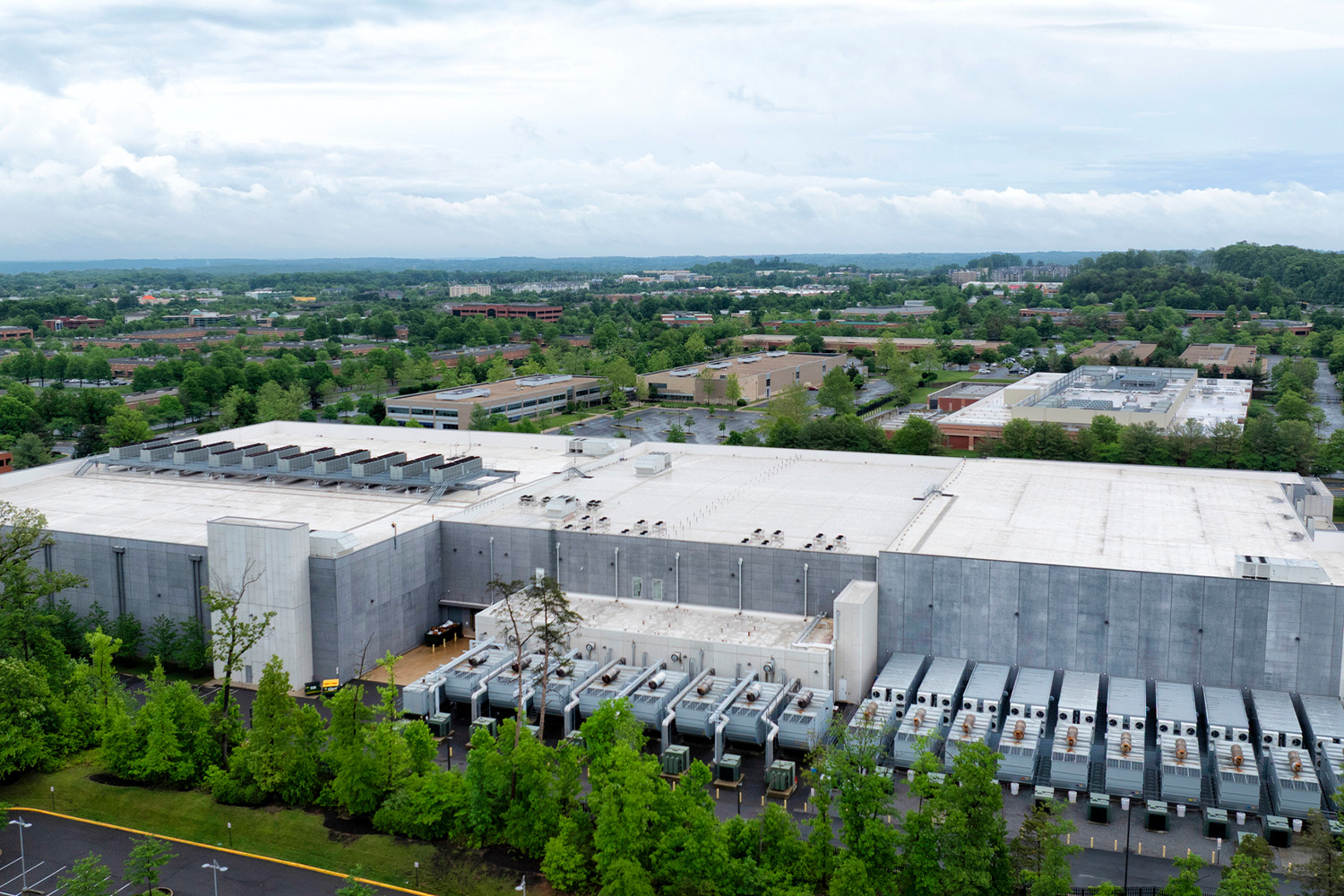
The RTP real estate environment has produced a data center landscape of large campus-scale facilities with extensive rooftop equipment inventories. IBM and NetApp facilities carry substantial cooling infrastructure, power distribution systems, and emergency power equipment on their roof surfaces - each a potential penetration point, each a maintenance obligation. The cumulative effect of years of equipment additions without systematic tracking can create a situation where facility managers do not have a complete, accurate picture of what is on the roof and how each piece of equipment is flashed. A roof audit - a systematic survey of all rooftop equipment, penetrations, and flashing conditions - is a valuable baseline investment for campus facilities where the history of additions and modifications is incompletely documented.
Hurricane season in Raleigh runs from June through November, and the area has experienced significant storm impacts from storms that weakened after landfall but still delivered substantial wind and rain inland. Hurricane Fran in 1996 caused serious damage across the Triangle, and more recent storms have demonstrated that the area is not immune to hurricane-force conditions. Data center roofing specifications for RTP facilities should include FM Global wind uplift ratings appropriate for North Carolina's inland wind exposure - typically lower than coastal values but still substantially above minimum code requirements for the most stringent wind uplift standards.
The long-term maintenance relationships that facility managers at IBM, NetApp, and SAS have established with their roofing contractors reflect the value these organizations place on institutional knowledge about their facilities. A contractor who has maintained a campus roof for ten or fifteen years has accumulated detailed knowledge of that assembly's history - where previous repairs have been made, which drains have a history of collecting debris, which mechanical equipment has been modified in ways that affected its flashing. That institutional knowledge is genuinely valuable and contributes to better maintenance outcomes than starting fresh with a new contractor every few years. Raleigh's data center market tends toward stable, long-term contractor relationships for exactly this reason.
The RTP data center market is growing, driven by the continued expansion of technology employment in the Triangle and the increasing computing density of AI and cloud workloads that are pushing existing facilities to add capacity. This growth creates opportunities for roofing contractors who can credibly serve mission-critical clients - and a competitive market in which technical differentiation and relationship quality determine outcomes. For facility managers in this market, the combination of strong local contractor options, a sophisticated client community, and well-developed industry standards for data center roofing creates a procurement environment where excellent outcomes are achievable for those willing to invest the attention the selection process deserves.
Frequently Asked Questions
How does ice storm risk affect data center roofing management in Raleigh?
Raleigh experiences freezing rain events periodically, and flat roofs accumulate ice that can impede drainage and impose significant load. After an ice event, monitor drainage by checking whether roof drains and scuppers are clear or blocked by ice. If primary drains are blocked, the combined weight of ice accumulation and standing water that forms when surface melting begins can approach structural limits. For facilities with roof load monitoring sensors, set alert thresholds that account for ice loads - which are denser than snow and require different load factors. Manual inspection during and after ice events to clear drain areas of ice accumulation is a reasonable precaution for mission-critical facilities.
What cool roof specifications apply to data centers in North Carolina?
North Carolina's Building Energy Code requires cool roofing for low-slope commercial roofs in the state's warmer climate zones, including the Raleigh area. The requirements specify minimum solar reflectance and thermal emittance values for the roof membrane, with Energy Star certification of the membrane product typically satisfying compliance requirements. Confirm compliance documentation is available from the membrane manufacturer before specifying any product, and ensure the contractor files the required compliance documentation with the permit application.
How should I manage the rooftop equipment inventory on a large RTP data center campus?
Establish a documented rooftop equipment registry at the time of initial construction or the next re-roofing project, and maintain it by updating the registry whenever equipment is added, modified, or removed. The registry should include the equipment type, dimensions, curb height, installation date, weight, and the contractor who performed the associated roofing work. Update the registry after every maintenance inspection. This documentation is valuable for structural load management, flashing condition tracking, and warranty documentation, and it provides the institutional memory that persists even as facility management personnel change over time.
What wind uplift rating is appropriate for a data center roof in the Raleigh area?
FM Global 1-90 is an appropriate baseline for inland Raleigh facilities. For campus-scale facilities with significant equipment value or business continuity requirements, FM 1-120 is a defensible upgrade that provides additional margin against the hurricane and severe thunderstorm events that the area experiences. North Carolina's Building Code establishes design wind speeds for the Raleigh area based on ASCE 7 maps, and the roof attachment system must be engineered to the applicable design wind speed for the facility's specific location and exposure category.
How do I evaluate a roofing contractor's mission-critical experience in the Raleigh market?
Ask for a list of data center, technology campus, or healthcare facility projects completed in the last five years, with contact references for the facility managers who oversaw those projects. Ask specifically about experience with the membrane system you intend to specify, and verify manufacturer certification status directly with the manufacturer rather than relying on the contractor's representation. Ask how the contractor handles emergency response - what is their response time commitment for mission-critical clients, what emergency materials inventory do they maintain locally, and how do they communicate with clients during storm events when rapid response may be needed?
Frequently asked questions
Can you work within NC State's or Duke's contractor procurement requirements?
Yes. Both universities have formal contractor pre-qualification and project delivery requirements, including insurance documentation, license verification, and closeout package specifications. We maintain the required documentation and can navigate both universities' procurement processes. For projects that go through competitive bid, we submit complete bid packages with specifications, references, and the required insurance documentation.
How do you manage a school roof replacement to hit the back-to-school deadline?
The academic calendar is the primary project constraint and we plan the production schedule backward from the first school day. We staff the project to complete all work within the summer window, we do not rely on weather contingency days that compress the schedule, and we communicate daily progress to the district's facilities coordinator so there are no surprises in the final weeks. If unforeseen deck conditions - discovered only when tear-off begins - threaten the schedule, we bring in additional crew and escalate the decision immediately rather than hoping it resolves itself.
What warranty terms are available for a Wake County Public Schools project?
Standard manufacturer warranty for the systems we install is 20-year NDL (no-dollar-limit) for TPO and EPDM, 25-year for PVC, and 10, 15, or 20-year for restoration coatings depending on mil thickness. School district roofs in Wake County are eligible for the same warranty terms as any other commercial client - the manufacturer does not distinguish. We register the warranty in the district's name and deliver the warranty document as part of the closeout package.