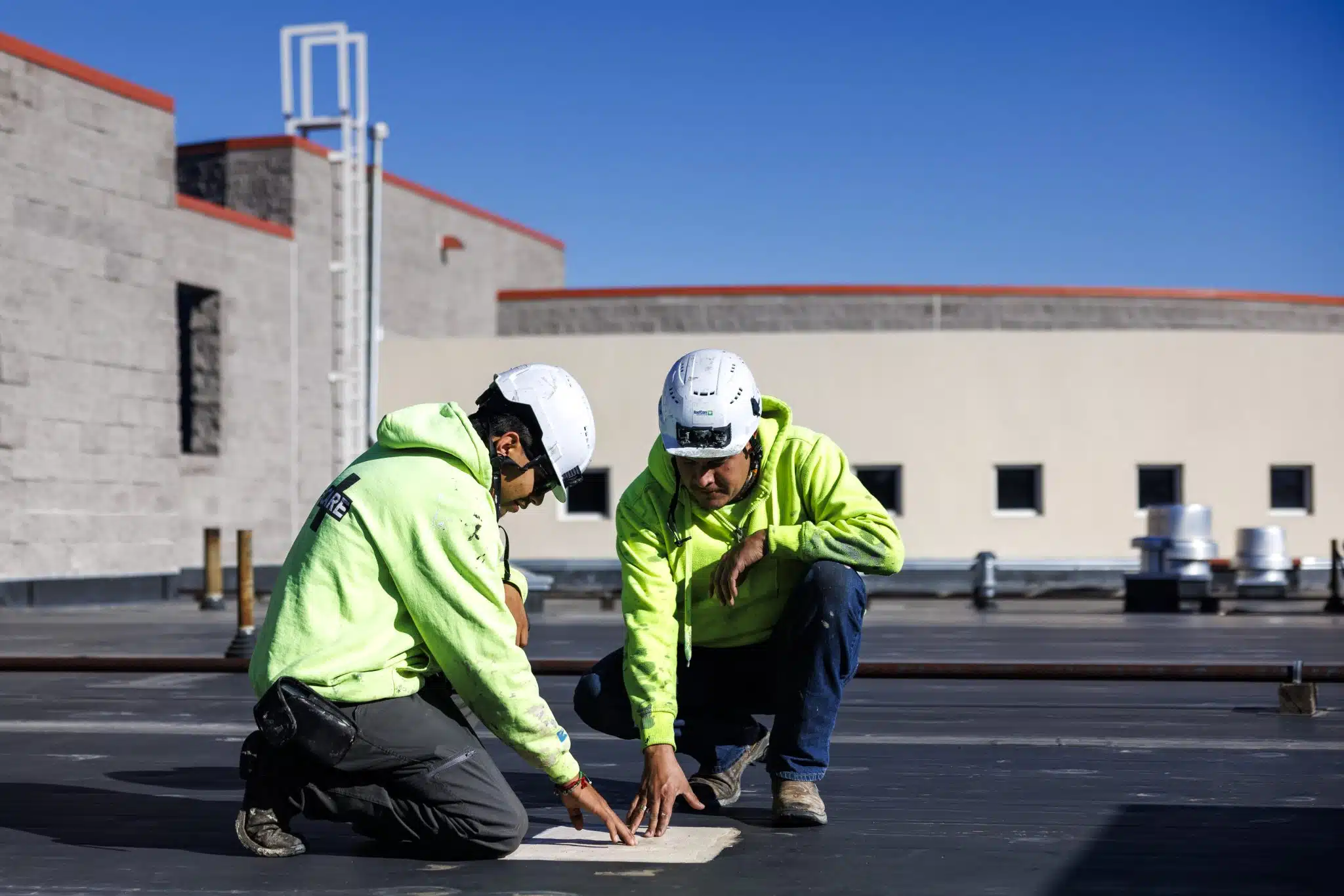
Storm damage roof repair in Raleigh follows the same sequence for most commercial properties: assess and document the damage, work through the insurance claim on the documentation side, then perform repair or replacement to the approved scope. Skipping straight to repair before the damage is documented is one of the most common reasons property owners end up with an underpaid or disputed claim later.
Our storm-damage assessment covers hail impact, wind-related membrane displacement, flashing damage, and equipment damage, all recorded with photography referenced to a roof plan, impact or displacement measurements, and a written assessment formatted the way commercial property adjusters expect to review it. That documentation is what a full insurance-claims assessment produces before any repair work is scheduled — see our commercial roof insurance claim page for the full documentation process.
Hail damage to commercial TPO and PVC membranes in Raleigh often isn't visible at ground level. Impact impressions from moderate hail compress the membrane and underlying insulation in ways that are easy to miss on a quick walkover, and the effect on seam integrity and UV resistance can take months to surface as a visible failure. We document impact density with close-range photography and flag any section where subsurface damage is suspected before scheduling repair. For the full hail-claim documentation process, see our hail damage insurance claims page.
Wind damage claims at commercial properties in Raleigh typically involve membrane displacement or blow-off at laps, flashings, and edge metal — the first areas to fail under sustained wind load, and the areas we prioritize in a post-storm assessment. We identify the failure mode, confirm whether the damage is storm-related or pre-existing, and document accordingly so the repair scope matches what actually happened on the roof. Related wind and thunderstorm documentation is covered on our wind & storm damage insurance claims page, and ice-related roof damage is covered on our snow & ice damage insurance claims page.
We're your roofing contractor, not a public adjuster — we document and substantiate the roof damage so you and your adjuster work from an accurate, complete scope, and we perform the repair once that scope is approved. If a scheduled adjuster walkthrough is set, we're on the roof for it to answer technical questions directly.
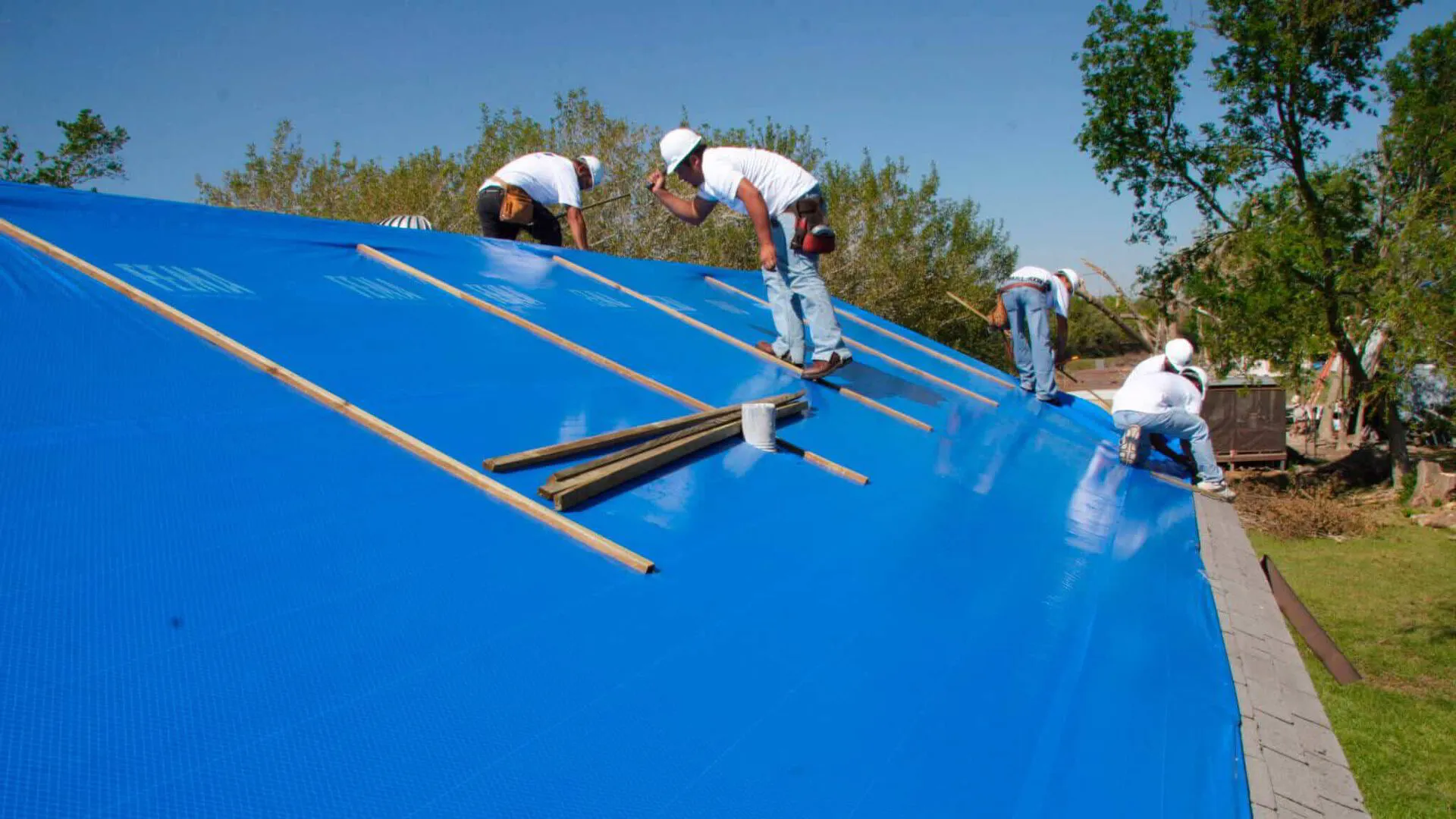
Once repair work begins, sequencing matters on occupied buildings. We stage material and crew access to minimize disruption to tenants and operations, prioritize any active leak with temporary protection before permanent repair begins, and document repair completion with the same level of detail as the original damage assessment — closeout photography, materials used, and warranty documentation where applicable.
Repair scope decisions come down to what the documentation actually shows, not a rule of thumb applied across every storm. A roof with isolated hail impact and years of remaining service life is a repair. A roof with roof-wide impact density, wind-lifted membrane across multiple sections, or damage layered on top of an already-aging system is more often a full-scope replacement claim, and the assessment needs to show that distinction clearly enough that the carrier's review doesn't stall on scope disagreement.
Manufacturer warranty status is part of that scope conversation. If the existing roof carries an active manufacturer warranty, storm repair performed outside the manufacturer's specification can void coverage on the surrounding, undamaged sections of the roof — so we confirm the manufacturer, membrane type, and any warranty registration on file before specifying repair materials and methods, and we flag it early if a repair approach would put existing warranty coverage at risk.
Raleigh's storm-damage repair volume tracks the region's growth. As warehouse and distribution construction continues along I-40 and I-540 and RTP's office and lab campus keeps adding roof area, more low-slope membrane sits exposed to the Triangle's severe thunderstorm season, hurricane remnant systems, and periodic ice events every year. Documented storm-damage repair, done to manufacturer specification and matched to the approved claim scope, is what keeps that growing roof stock performing to its warranted service life.
Storm Damage Repair Questions
How do you document hail damage on a commercial roof?
We photograph impact locations across the full roof surface, measure impact density by section, and, where the adjuster needs physical evidence, sample the membrane at impact locations. The written assessment documents impact pattern, estimated hail size based on impact geometry, and the membrane's remaining serviceable life.
What does hail damage look like on a TPO or PVC commercial roof?
On TPO and PVC membranes, moderate hail leaves impact impressions in the membrane surface — circular depressions where the hail compressed the membrane and underlying insulation. The impressions are often not visible without close-range inspection on a dry surface in low-angle light, and the damage weakens the membrane at each impact point.
Do you work directly with my insurance adjuster?
We communicate with the adjuster on documentation and roofing-specific questions, and we participate in joint roof inspections when requested. We're your roofing contractor, not a public adjuster — we don't file the claim or negotiate settlement value on your behalf.
What happens if the approved repair scope needs to change once work starts?
If tear-off or repair reveals damage beyond what was visible during the initial assessment — saturated insulation or deck damage under a repaired section, for example — we document the additional damage with the same photography and measurement standard as the original assessment and provide that documentation to you and your adjuster before proceeding with the added scope.
How quickly can you respond after a major storm event?
We prioritize post-storm response in Raleigh. Emergency dry-in and temporary protection can typically be deployed within 24-48 hours of a major event to stop active leaking while the full damage assessment and repair scope are finalized.