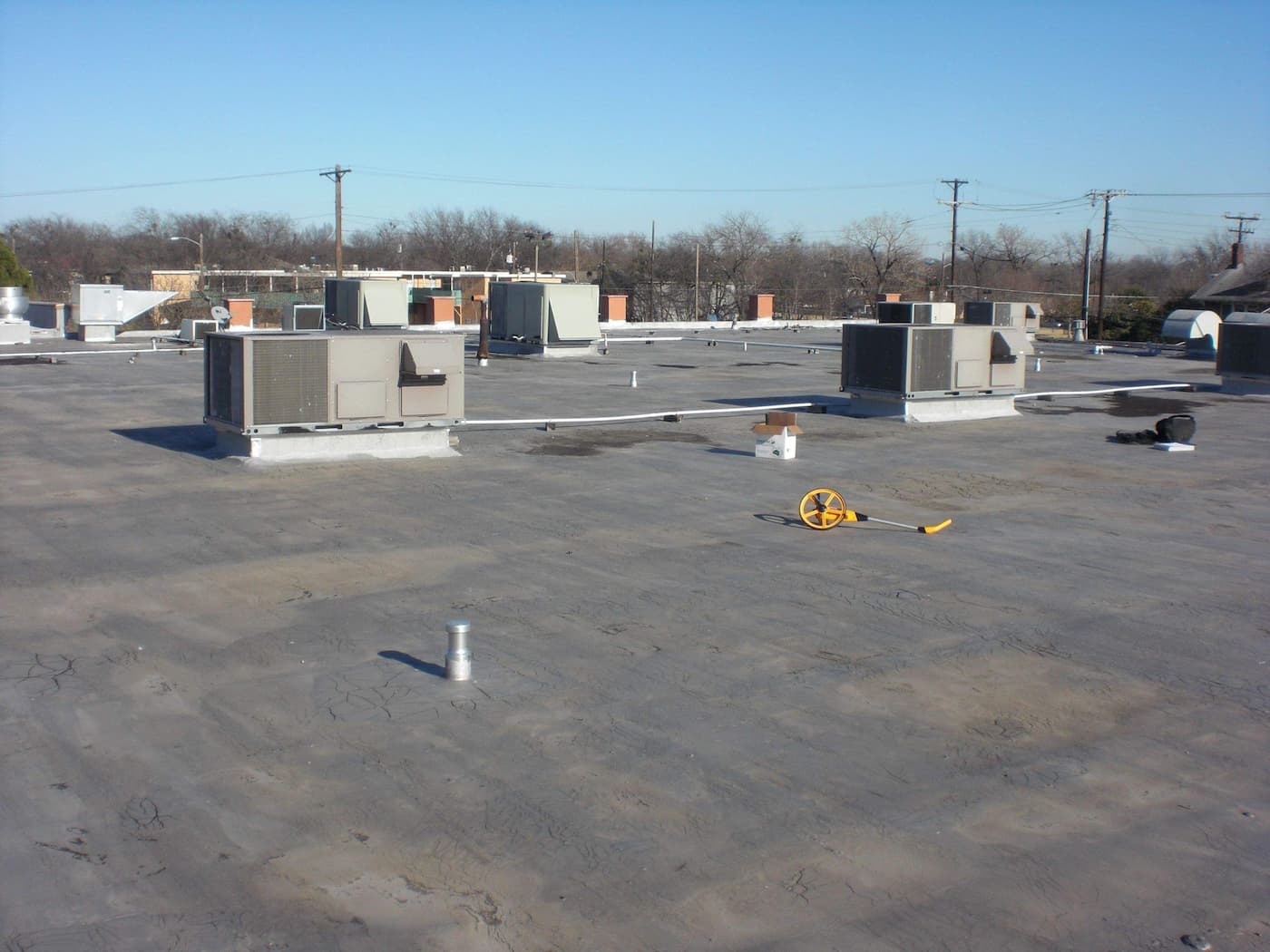
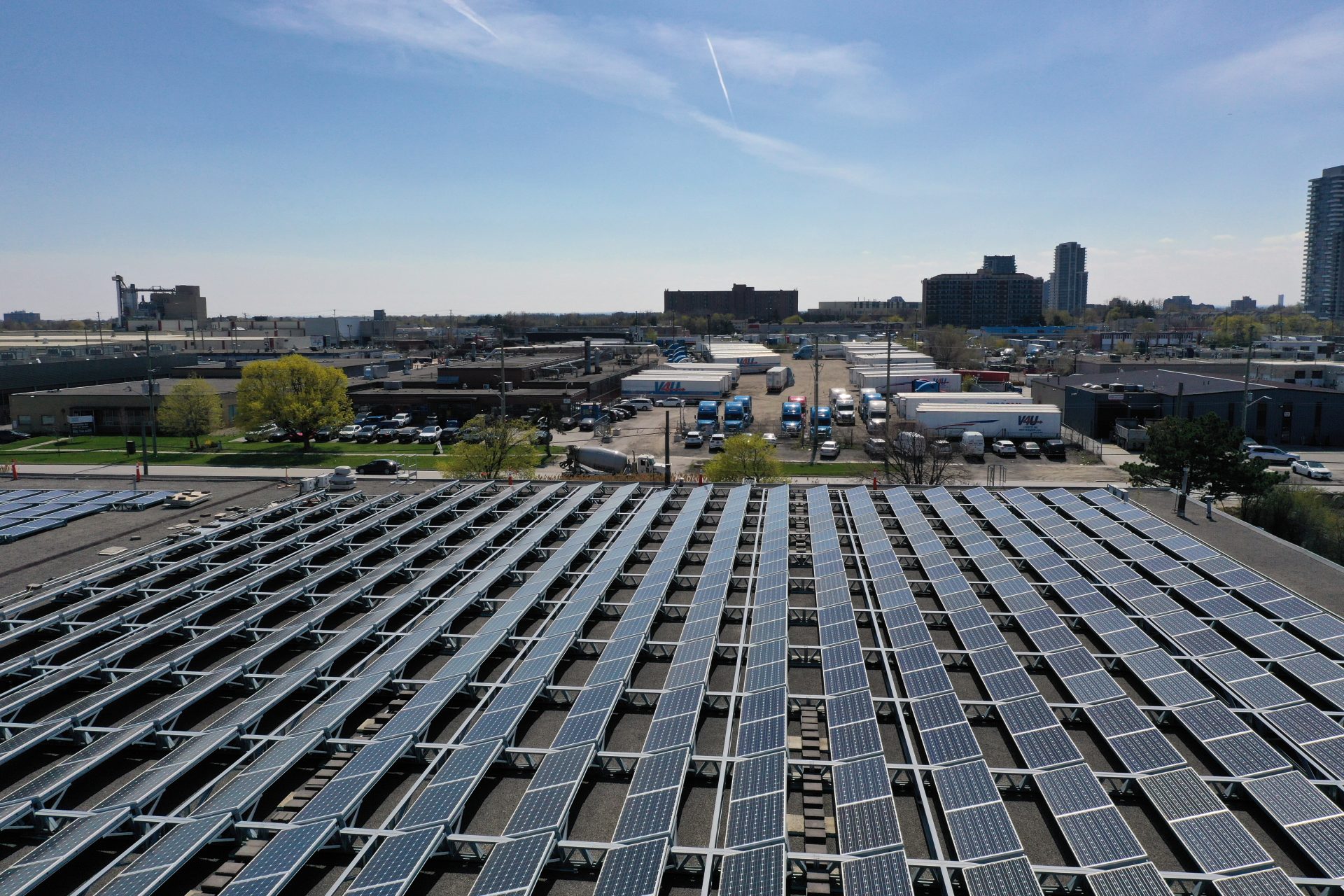
Spring and early-summer severe thunderstorms bring real hail risk to Raleigh and the Triangle, and commercial low-slope roofs absorb that impact differently than a shingle roof does. On TPO and PVC membranes, hail impact doesn't always tear the surface — moderate hail commonly leaves compression impressions in the membrane and underlying insulation that are difficult to see without close-range inspection in low-angle light, and the resulting membrane fatigue can take months to show up as a seam or surface failure.
That delayed-failure pattern is the core documentation challenge on a hail claim. A roof that looks intact weeks after a hailstorm can still be carrying impact damage that's actively degrading seam integrity and UV resistance at each impact point. We document hail impact density across the full roof surface, not a sample area, with close-range photography referenced to a roof plan, and where impact is suspected but not visually obvious, we use supplemental inspection methods to confirm subsurface damage before it becomes a leak.
Research Triangle Park's office and lab buildings, along with the growing base of warehouse and distribution roofs along I-40 and I-540, carry large expanses of exposed single-ply membrane with few interruptions — the kind of roof surface where hail impact density is easiest to document consistently, since there's less roof-mounted equipment and fewer transitions to complicate the impact map. Older built-up and modified bitumen roofs in Downtown and North Hills need a different documentation approach, since granule loss and surface cratering read differently on those systems than compression impressions do on single-ply membrane.
Impact density and hail size estimation both matter to a carrier's claim review. We measure impact spacing across representative sections of each roof plane, note impact diameter and depth where the membrane allows measurement, and connect that data to a written assessment an adjuster can compare against regional hail-size reporting for the storm date in question.
Once hail damage is documented, the scope question becomes repair versus full recover or replacement. Isolated, low-density impact on a roof with years of remaining service life is usually a repair scope. Dense, roof-wide impact — or impact on a membrane already near the end of its warranted life — typically supports full-scope replacement, since repairing storm damage doesn't extend a roof's remaining service life.
We're your roofing contractor, not a public adjuster — we produce the impact documentation and meet the adjuster on the roof to walk through it, and we don't negotiate settlement value or file the claim on your behalf.
Hail size and density vary block to block in a single storm cell, which is why we don't rely on a single reference photo or a single roof section to characterize damage across an entire property. On multi-building sites — a business park off Six Forks Road, a distribution campus near RDU, a multi-tenant retail center — each roof gets its own impact map, since one building's exposure and impact pattern can look meaningfully different from its neighbor's even a few hundred feet away.
We also document pre-existing conditions as part of every hail assessment, alongside the storm damage itself. Prior repairs, patched areas, and normal membrane wear get noted and photographed separately from fresh hail impact, since an adjuster reviewing the claim needs to see that distinction clearly to avoid attributing older wear to the current storm event, which can complicate or delay claim approval either way.
Roof color and surfacing also affect how hail impact reads on inspection. Light-colored TPO shows compression marks differently than a darker EPDM or a gravel-surfaced built-up roof, where impact can dislodge or bury surfacing granules instead of leaving a clean impression. We adjust the inspection method to the roof surface in front of us rather than applying one impact-photography standard across every membrane type on a mixed-portfolio inspection.
Hail Claim Questions
What does hail damage look like on a TPO or PVC commercial roof?
Moderate hail leaves circular compression impressions in the membrane surface and underlying insulation, most visible on a dry surface in low-angle light. It's often mistaken for cosmetic wear rather than storm damage, which is why a close inspection matters more than a quick rooftop look.
Does minor hail damage need to be repaired right away?
Left undocumented and unaddressed, hail impact points become stress concentration locations that accelerate seam and surface failure well after the storm. Documenting the damage promptly, even if repair happens on a normal maintenance schedule afterward, is what protects the claim window and the roof.
How do you document hail impact that isn't visible at ground level?
We combine close-range photography referenced to a roof plan with impact density measurement across representative sections of each roof plane, and use supplemental inspection methods where subsurface impact is suspected but not visually confirmed.
Will a hail claim affect my manufacturer roof warranty?
A properly documented and repaired hail claim generally doesn't void manufacturer warranty coverage, provided the repair is performed to manufacturer specification. We coordinate repair work with the applicable manufacturer requirements so warranty coverage stays intact.
How soon after a hailstorm should a commercial roof be inspected?
As soon as reasonably possible after the storm. Impact patterns are easiest to document clearly in the days following an event, before weather and normal roof traffic obscure the impressions, and prompt documentation supports a stronger claim file.
Do multiple buildings in the same business park need separate hail inspections?
Yes. Hail intensity varies within a single storm cell, so neighboring buildings on the same property or business park can show different impact density even when they were hit by the same storm. We inspect and document each roof individually rather than assuming uniform damage across a portfolio.