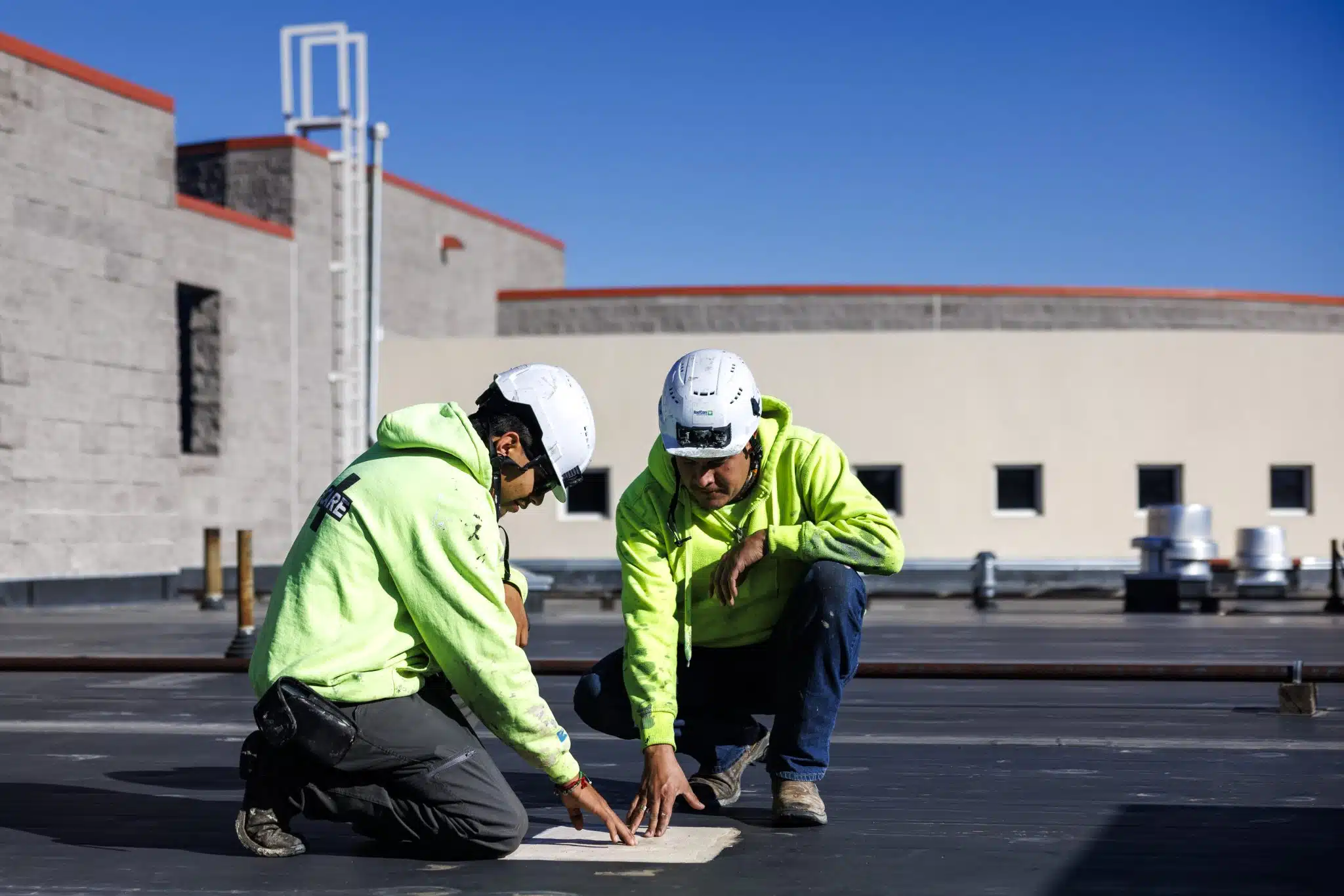
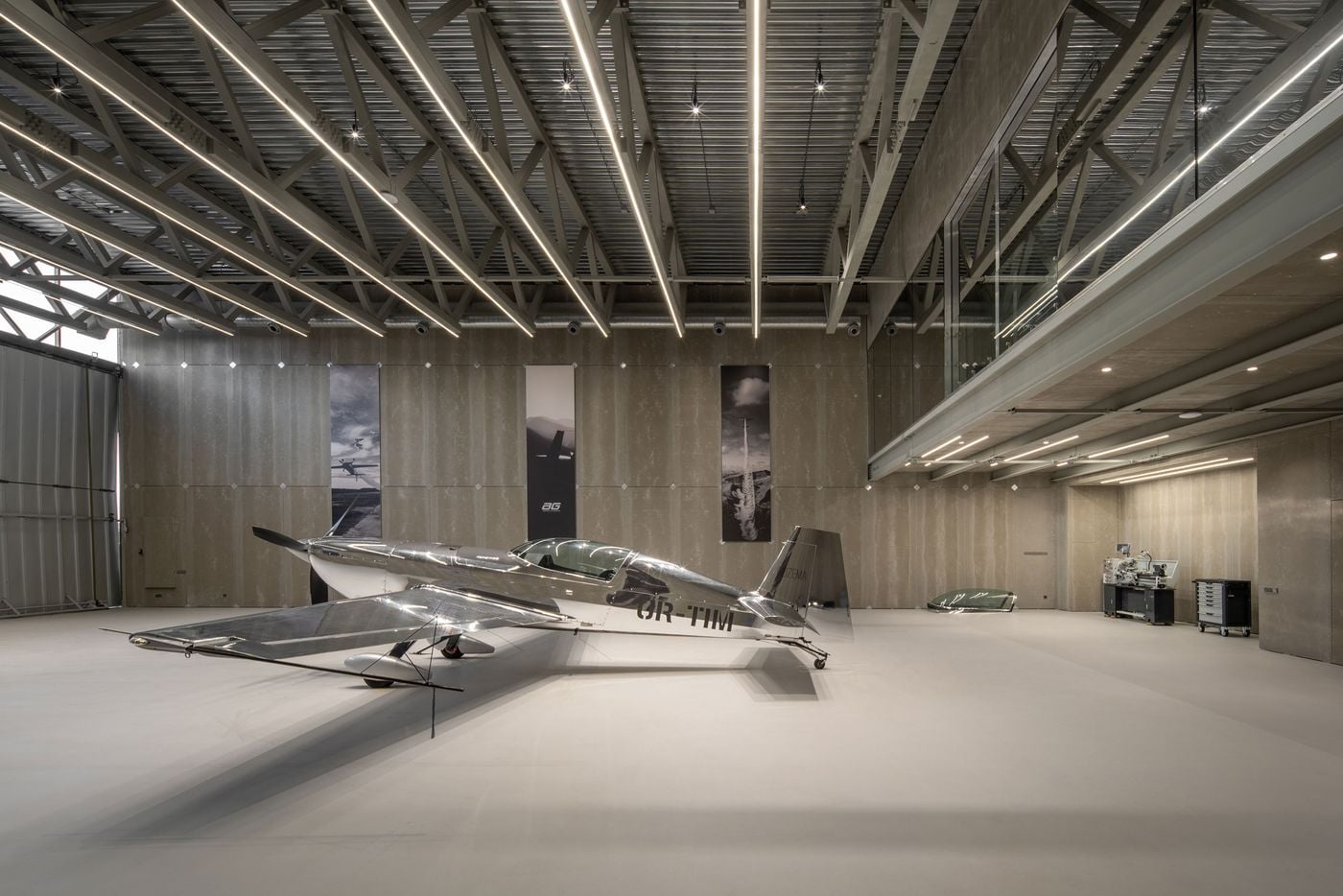
Airport terminal and aviation facility roofing in Raleigh, NC starts with an understanding that these structures can't follow a standard commercial timeline. Raleigh-Durham International Airport (RDU) - Research Triangle's primary commercial hub with $4B+ terminal modernization program underway - operates around the clock, and every work access point, material lift, and crew deployment must be coordinated with the airport's facilities department, the FAA Part 139 safety program, and in some cases TSA security protocols. We build that coordination into the project scope before the contract is signed, not after mobilization.
RDU's $4B+ transformation - new Terminal 2, parking decks, and international concourse upgrades - driven by the Research Triangle's technology and life-sciences boom, makes this one of the Southeast's most active airport commercial roofing markets.
Secondary and Reliever Airports Serving Raleigh:
- Raleigh Executive Jetport (TTA) - general aviation reliever south of Raleigh in Sanford
- Henderson-Oxford Airport (HNZ) - general aviation north of Raleigh
The roofing systems on airport terminals and aviation support structures carry requirements beyond standard commercial membranes. Jet blast exposure on airside roofs requires membrane adhesion and ballast specifications that exceed what you'd specify for a comparable logistics building. HVAC systems on terminals are denser and heavier than standard commercial, requiring a higher number of curbed penetrations and more frequent flashing maintenance touchpoints. Terminal roofs often span long, flat expanses with minimal slope - which means drainage design is critical and ponding tolerance is near zero. We've done this work, and we don't learn those lessons on your project.
Aviation-adjacent commercial roofing - cargo facilities, rental car centers, FBO hangars, aircraft maintenance facilities, hotel structures on airport campuses - presents a different set of challenges than the terminal building itself, but the airport coordination requirement doesn't go away. Our crews understand that badging and security access at any part of an airport campus is non-negotiable and is planned for, not discovered onsite.
For general aviation facilities - FBOs, private hangars, and reliever airport structures - the security protocols are less intensive but the building type is often more demanding. High-bay hangar structures with large clear-span roofs require specific fastening patterns and seam geometry to handle the wind uplift loads these buildings generate. We spec and install those systems in Raleigh and throughout NC.
Airport & Aviation Roofing Questions
How do you handle project scheduling at an operational airport like Raleigh-Durham International Airport?
We work with the airport facilities department and FAA Part 139 coordinator to develop a phased work plan approved by airport operations. Material deliveries, crane lifts, and any work near airside areas are scheduled during approved windows and coordinated with the FAA NOTAM process if required. We've done this at multiple airports and it's a standard part of our project setup - not an exception.
What roof systems are standard for large-span airport terminal roofs?
Most terminal re-roofing in Raleigh uses a TPO or PVC single-ply membrane on a tapered insulation system designed to improve drainage and address ponding. For new high-bay aviation structures and hangars, standing seam metal is often specified. The selection depends on the existing deck, load capacity, and operational constraints - we develop a spec after walking the roof with your facilities engineer.
How do you deal with the density of HVAC and mechanical penetrations on airport terminals?
Terminal HVAC density is significantly higher than standard commercial. Our pre-project survey documents every penetration, curb height, and mechanical clearance before we develop the work plan. Flashing details for oversized equipment curbs and complex through-penetrations are engineered individually - we don't use standard commercial-pattern flashing details on aviation structures.
Can you work on airside structures (cargo aprons, gate structures near active runways)?
Yes, with appropriate badging and in full coordination with airfield operations. Airside work requires a higher level of pre-planning and crew credentialing, which we factor into the bid timeline. We do not mobilize crew members without confirmed airside authorization - that's a baseline requirement we enforce, not a favor we ask.
Do you handle hangar roofing for FBOs and general aviation facilities?
Yes. General aviation hangar roofing - whether for a single-bay private hangar or a multi-unit FBO complex - is a regular part of our commercial project mix in Raleigh. High-bay hangars with wide-flange steel or pre-engineered building systems require roofing contractors who understand those structures' specific uplift and thermal movement characteristics. We do.
Airport terminal and aviation facility roofing in Raleigh, NC - Raleigh-Durham International Airport and surrounding general aviation and cargo facilities.
Warehouse roofing in the Triangle is a volume problem. The buildings are large - 200,000 to 500, distribution corridor in Research Triangle Park - the rooflines are uninterrupted flat planes with minimal architectural complexity, and the occupants running receiving docks, racking systems, and fork traffic underneath cannot absorb an unplanned interior water event without direct operational consequences.
The RTP industrial zone along Davis Drive and the airport-adjacent industrial parcels north and west of RDU serve as logistics hubs for the same tech and pharma companies that anchor the park. A leak into a pharma distribution facility or an electronics receiving dock creates compliance and liability exposure that goes well beyond a roofing repair ticket. That context shapes everything about how we scope, sequence, and close out warehouse roof work.
I work on warehouse buildings specifically because the work rewards precision. A 300,000 square foot flat roof with one unprepared drain or one compromised field seam is a slow failure waiting to be found by the wrong rainstorm. We find those conditions on the front end - during inspection - not after mobilization.
Davis Drive and RTP Distribution Facilities
The Davis Drive corridor through Research Triangle Park runs through one of the most active industrial real estate zones in the Southeast. Distribution facilities here serve the pharma, biotech, and electronics tenants whose corporate campuses occupy the park's interior. Loading dock configuration, 24-hour receiving operations, and tenant lease structures with strict operational continuity clauses shape every aspect of a roofing scope on these buildings.
Most of the warehouse stock along Davis Drive and the adjacent O'Kelly Chapel Road and Raleigh Boulevard industrial clusters was built between the 1990s and 2010s. Many of these roofs - originally installed with 45-mil EPDM or early TPO systems - are now approaching or past their warranted service life. We have walked a significant number of these buildings and found the same patterns repeatedly: ponding at interior drains that have settled below the surrounding field membrane, compromised laps at pipe penetrations where mastics have shrunk and cracked, and parapet flashings that have delaminated from repeated thermal cycling.
For active distribution facilities, we scope work in sections - typically 50,000 to 100,000 square foot zones - that allow the facility to continue operating in the balance of the building while we work. Crane positioning, debris removal, and material staging are coordinated directly with the facility manager before mobilization. We do not position staging where it interferes with dock access or truck maneuvering in active receiving yards.
RDU Airport-Adjacent Industrial Zone
The industrial and warehouse parcels clustered north and west of RDU Airport - in Morrisville, off Aviation Parkway, and along the NC-540 triangle - sit in high-exposure terrain. The open ground plane around the airport produces sustained wind speeds and directional loading that the more sheltered Raleigh urban core does not see. We design fastener patterns and perimeter attachment in this zone against IBC wind-uplift requirements for Exposure Category C, not the default assumptions applied to buildings in developed suburban terrain.
Rooftop HVAC equipment on airport-adjacent warehouse buildings is often larger and more mechanically complex than comparable retail or office buildings - these facilities run climate-controlled environments for perishable freight or sensitive electronics, and the rooftop equipment footprints reflect that. We route work around active mechanical equipment, schedule equipment lifts in coordination with the facility's mechanical contractor, and document every penetration before and after work.
Several logistics facilities in this corridor have added rooftop photovoltaic arrays as part of corporate sustainability programs. Solar-equipped warehouse roofs require disconnection and temporary panel protection before tear-off, and re-commissioning verification before manufacturer warranty inspection. We treat PV coordination as a standard pre-construction item, not an extra sale.
What a Warehouse Roof Inspection Covers
A warehouse roof inspection that produces useful information is more than a drone flyover and a PDF. We walk every drain, every penetration, every parapet corner, and every expansion joint. We pull moisture cores in five to ten locations based on interior water stain patterns and visible surface anomalies. We check deck condition at the corners and at any location where interior framing suggests settlement.
The output is a roof zone diagram with every deficiency photographed and keyed to a grid reference, a moisture core log with readings and GPS coordinates, and a written recommendation that distinguishes maintenance-level repairs from conditions that require section replacement from conditions that require full replacement. That document is useful to a building owner making a capital decision. A four-page PDF with stock photos is not.
For multi-tenant warehouse buildings, the inspection report also notes which deficiencies fall within each tenant's demised premises versus the landlord's common roof area - useful for cost allocation under most commercial lease structures.
Frequently asked questions
Can you work on a warehouse roof while the facility is operating?
Yes - this is the standard condition for most warehouse roof projects. We section the roof and sequence work so that active operations continue in the remainder of the building. Tear-off, which generates the most noise and debris, is scheduled during shifts when the dock operation is reduced where possible. We dry-in each section by end of day. If interior operations cannot tolerate any overhead activity in a specific zone - active freeze storage, sensitive electronics handling - we schedule that zone last and plan it against the facility's maintenance window.
How do you handle large roof drains on a distribution center?
Internal drains on large warehouse roofs are one of the most common failure points we find in inspection. We pull drain covers, check drain bodies for settlement and cracking, inspect the membrane termination around each drain, and camera-scope internal drain lines if ponding depth at the drain rim suggests partial blockage. Drain raises - where a settled drain body needs to be brought back to field membrane elevation - are a standard repair item, not a specialty. We scope them before mobilization and include them in the replacement or maintenance work, not as a change order.
What membrane system do you recommend for large flat warehouse roofs?
For most warehouse and distribution buildings in the Triangle, 60-mil mechanically attached TPO is the standard specification. It provides good UV resistance for Raleigh's high-summer conditions, its heat-welded seams perform well against the sustained rainfall events the region receives, and its reflective white surface reduces summer cooling loads on climate-controlled facilities. For high-traffic roofs with significant mechanical access, we specify 80-mil TPO. For buildings with heavy chemical exhaust or aggressive roof-level atmospheric conditions, EPDM or PVC may be the better fit - we assess and recommend based on the actual building conditions, not a default preference.