One Building, Several Roofs: Mixed-Use Work in Raleigh
A mixed-use development is not one roof, it is a stack of different roof conditions sharing an address. Shops and a parking deck at the street, apartments or offices above, a landscaped amenity terrace tucked in somewhere on the podium, and a cap of low-slope membrane over the top floor and the mechanical penthouse, each of those zones drains differently, carries different loads, and fails in different ways. Raleigh has built a lot of these in the last decade, and roofing them well means understanding how the uses stack vertically rather than treating the whole thing as one flat plane.
The form is everywhere in the city now. The North Hills district rebuilt itself around retail, commercial towers, and structured parking woven together; downtown infill along the Glenwood South, Warehouse, and Fayetteville Street corridors keeps adding ground-floor retail under apartments; and transit-oriented and adaptive-reuse projects are filling in along Hillsborough Street and the emerging corridors that Raleigh's growth has pushed outward. The combined retail and commercial roof areas on these buildings are exactly what makes the warranty coordination so demanding, and that coordination is where most mixed-use roofing goes wrong.
The Podium Is Not a Roof, It's Waterproofing
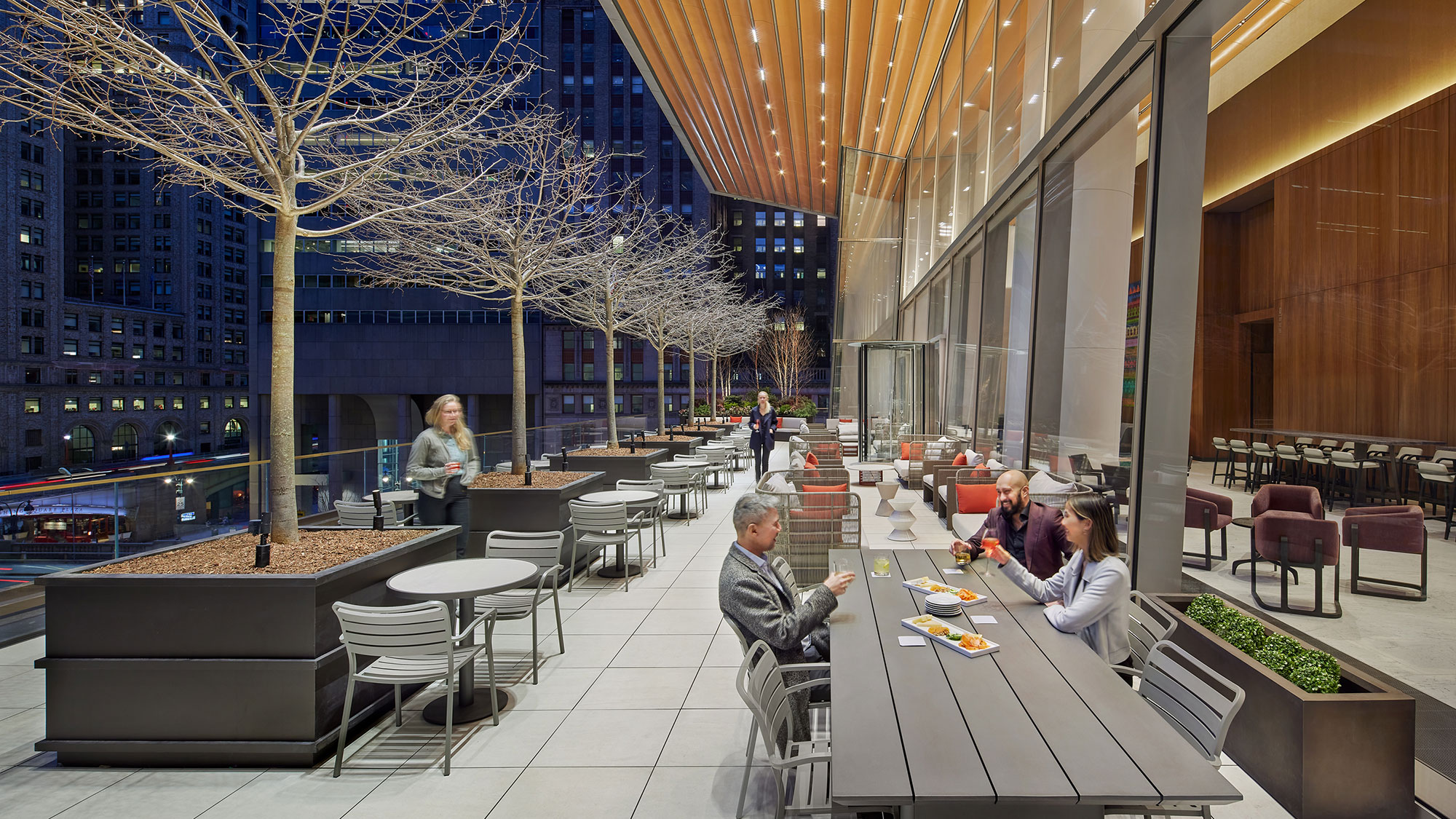
The single most consequential distinction on a mixed-use building is the podium deck. The horizontal slab between the parking or retail at grade and the commercial floors above is occupied space, often a plaza, a pool deck, or a planted courtyard, and it has to be waterproofed, not roofed. A standard low-slope membrane is built for drainage and the occasional maintenance worker; a podium has to handle structural deflection, constant hydrostatic pressure under planters, root intrusion from landscaping, and the weight of people, furniture, and sometimes vehicles riding directly on top of it. Putting a roofing membrane where a traffic-bearing waterproofing assembly belongs is a specification error that typically shows up as leaks into the parking level within a few years.
On Raleigh podium decks we specify the full waterproofing build-up: a traffic-bearing or hot-applied membrane, drainage composite, protection board, root barrier where there is landscaping, and the insulation load path coordinated with the structural engineer. These assemblies are buried under finishes once they are done, which is precisely why they have to be detailed and tested correctly the first time, because a failure means demolishing whatever was built on top to reach the leak.
Roofs at the Top, and Everything Between
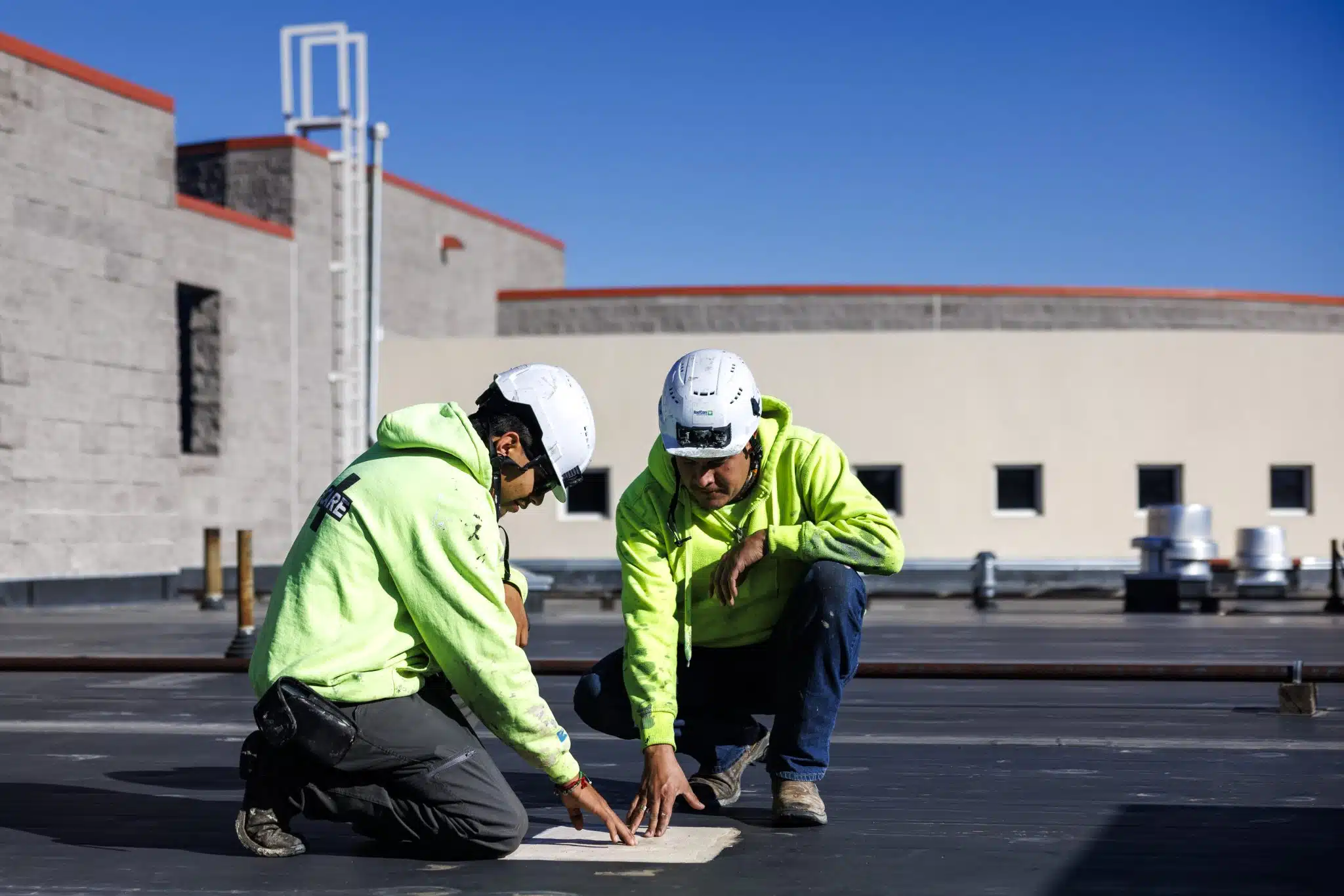
The uppermost roof of a mixed-use building brings its own complications: parapet drainage on a tall structure where wind drives rain sideways, the flash-through details around a mechanical penthouse, elevator overruns and stair bulkheads punching through the membrane, and rooftop amenity decks where residents gather over a waterproofing assembly that has to read as both a floor and a roof. Between the podium and the cap there are often intermediate setback roofs, balconies, and terraces, each a small roof area with its own edge conditions. A mixed-use scope has to name and detail every one of these rather than treating the building as a single deck.
Warranty Coordination Across Mismatched Systems
Because a mixed-use building combines a podium waterproofing assembly, multiple membrane roof areas, and amenity-deck systems, it often carries products from more than one manufacturer, with different warranty terms, different inspection requirements, and different transition details where one system meets another. Those transitions, where the podium waterproofing turns up into a wall that a membrane roof also ties into, are where warranties get voided and responsibility gets disputed if the detailing is sloppy. We coordinate the systems and their warranties so the transitions are detailed to satisfy both manufacturers, and so the owner ends up with coverage that actually holds at the seams between zones rather than a stack of certificates that each stop at a different line.
Building While People Live and Shop Below
Most mixed-use roofing in Raleigh happens on occupied buildings, with residents asleep above and retail open below, and that drives the entire approach. We build a phasing plan before mobilizing: noise, vibration, and dust containment for the commercial floors, daily dry-in confirmed in writing before each workday ends, and elevator and common-area access coordinated with building management so deliveries and debris removal do not collide with residents or shoppers. Raleigh's noise ordinance and the realities of working at height over occupied sidewalks and storefronts shape the working hours and the protection plan, and we never leave a section open overnight on a building full of people.
Finding the Leak Under the Finishes
Tracking a leak on a mixed-use building is genuinely hard, because water entering at the top floor or through a podium can travel laterally through insulation and across structural transitions before it appears two zones away, often above a retail tenant or a resident's ceiling far from the actual breach. Chasing those visually wastes money and tears up finishes. We use infrared moisture scanning to map where water has actually saturated the assembly, surveying the roof and deck areas to find the wet footprint rather than guessing from the stain below. On a building where opening up a podium means demolishing a plaza, knowing exactly where to cut is worth more than anywhere else we work.
Drainage Across Stacked Roof Areas
A mixed-use building drains in layers, and water shed from an upper roof or a setback terrace has to be carried past the commercial and retail floors below without finding its way inside. Internal drains and overflow scuppers on the upper roofs, deck drains buried in the podium build-up, and the leaders that run down through the structure all have to be sized and detailed to handle Raleigh's intense Piedmont downpours. We check that the drainage on each zone is independent and adequate, and that a blocked podium drain cannot back up under a planter and into the parking level, because a clogged deck drain on a mixed-use building is not a puddle, it is an interior flood.
Working Inside the Project Team
Mixed-use roofing is rarely a standalone contract. On new construction and major renovations we work alongside the general contractor, the MEP trades, the structural engineer, and the building-envelope consultant at the same time, inside the submittal and quality-control framework the architect and owner set. That means manufacturer-approved submittals, waterproofing sample assemblies tested before full installation, flood testing on podium and plaza decks, and manufacturer field inspections at the critical phases, all the way through to the no-dollar-limit warranty registration at closeout. For lenders and developers, that documentation trail is part of the deliverable, not an afterthought.
Get a Mixed-Use Roofing Plan That Covers Every Zone
If you are developing or managing a mixed-use building anywhere from North Hills to the downtown corridors, we will walk every roof and deck condition, sort the membrane areas from the podium waterproofing, and give you a coordinated scope and warranty strategy for the whole stack. Reach out and we will get the team on your building.