The roof is acres wide and the line below it cannot stop
An automotive plant roof is a logistics problem before it is a roofing problem. The decks run from hundreds of thousands of square feet up into the millions under a single envelope, the building runs multiple shifts where every hour of downtime carries a number the plant's facility engineers can quote you exactly, and the process equipment underneath punches the roof full of ventilation, exhaust, and utility penetrations. Raleigh and the broader region's manufacturing base - feeding the auto industry through stamping, machining, plastics, electronics, and the growing electric-vehicle and battery supply chain expanding across central North Carolina - runs buildings on exactly that scale. We approach them as phased construction projects, not roof repairs.
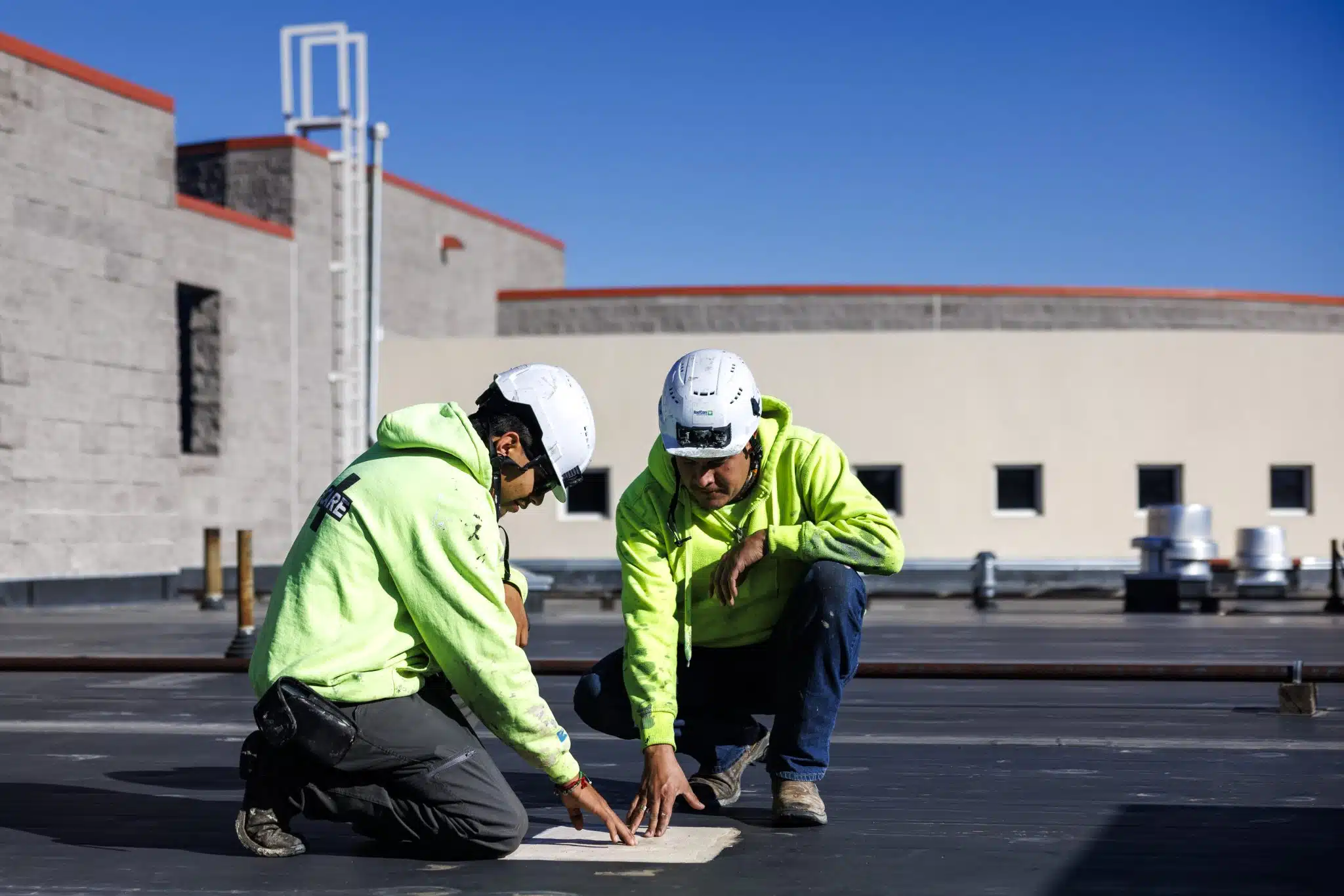
The defining constraint is production continuity. Before we put a crew on the roof, we sit with the plant's facility engineering group, document the shift schedule, map which roof zones sit over live production, and build a zone-by-zone phasing plan that keeps work clear of the running line. We confirm dry-in before every shift change and stay in direct contact with the maintenance foreman the entire job.
What a manufacturing roof demands that other buildings don't
Scale forces real phasing and material logistics
You cannot reroof a million-square-foot deck the way you reroof a strip center. We section the roof into manageable zones, sequence tear-off and material delivery to stay inside crane reach and staging limits, and keep adjacent zones in production while we work the active one. Material gets staged where it does not block dock traffic, fire lanes, or plant logistics - coordinated with the facility before mobilization.
Paint and finishing zones change how we attach the membrane
Paint shops and finishing lines generate solvent vapor and carry strict fire-suppression and hot-work rules. Over those zones, torch application and solvent-based adhesives are off the table. We build a hot-work plan with the plant's EH&S team in pre-construction and specify cold-applied adhesive or mechanical attachment above paint-adjacent areas. These are known constraints we plan for, not surprises we discover.
Process loads and vibration shape the membrane and the seams
Stamping presses, casting, and heavy machining transmit vibration into the structure, and at the frequencies a large press line produces, that vibration can fatigue a poorly welded or adhesive-bonded seam over time. We account for vibration exposure in the membrane choice and welding procedures over press-adjacent zones, and we treat the building's expansion joints as engineered details rather than caulk lines.
Ventilation and process exhaust dominate the rooftop
Plants run heavy roof-level ventilation to move process heat, weld smoke, and fumes, which means a dense field of large curbs, fans, and stacks. We verify the deck carries it all, flash each penetration as its own detail to match the equipment and its operating conditions, and document every one before and after.
Wind, structure, and the realities of a huge deck
A roof this large is mostly perimeter and corner once you account for uplift, and the broad open expanse around a plant site often sits in higher wind exposure than a sheltered urban building. We design the attachment and perimeter to the actual exposure category and uplift requirement rather than a default field pattern, and we evaluate the existing deck capacity before adding insulation thickness. On older plants we expect to find settled drains, fatigued seams, and parapet flashings that have cycled loose - and we scope those conditions on the front end.
What a manufacturing roof inspection covers
- Roof zoning mapped against production lines, with phasing planned around the shift schedule
- Membrane and seam condition by zone, with attention to press-adjacent and high-vibration areas
- Hot-work and adhesive constraints identified over paint and finishing operations
- Every ventilation, exhaust, and utility penetration logged and flashed individually
- Drainage and ponding across the deck, including settled interior drains
- Perimeter and corner attachment evaluated against the site's wind exposure, plus expansion-joint condition
You get a roof diagram keyed to a grid, photographed deficiencies, a moisture log, and a recommendation that separates repair from section replacement from full replacement - formatted to fit the plant's facility-management documentation.
Questions we hear from Raleigh-area manufacturers
How do you keep production running while you reroof?
Production continuity governs every decision. We document your shift schedule with facility engineering, identify which zones are over active lines, and phase the work zone by zone to stay clear of production. Dry-in is confirmed before each shift change and we keep direct contact with your maintenance foreman throughout.
How do you handle hot-work restrictions over the paint shop?
We build the hot-work permit plan with your EH&S team in pre-construction and specify cold adhesive or mechanical attachment over paint-adjacent zones where torch work is excluded. We plan for it rather than running into it mid-project.
What membrane do you use on a large-span plant roof?
Usually 60- or 80-mil TPO mechanically attached, with fully adhered assemblies over paint zones where fastening conflicts with hot-work rules. We add tapered insulation where drainage is deficient and confirm deck capacity before specifying insulation thickness.
Do you work on Tier 1 and Tier 2 suppliers, not just assembly plants?
Yes. Supplier plants bring the same coordination demands as an assembly plant, often with just-in-time schedules that tolerate zero interruption. We document the production schedule, sequence around it, and keep daily contact with the facilities contact the same way.
What documentation do you provide at closeout?
A full package: contractor safety qualification, a site-specific safety plan, safety-record summaries, warranty registration, a roof diagram with penetration inventory, daily work logs, permit records, and a photographed condition survey - delivered in the format your engineering department requires.
Get a manufacturing roof assessment in Raleigh
If you run an assembly, stamping, machining, or supplier plant in the Raleigh region, we will walk the deck, map it against your production lines, and deliver a phased, documented scope that protects continuity and accounts for the process and ventilation loads on your roof. Reach out through our contact page to schedule a pre-construction walk.