Roof replacement, repair, and maintenance for educational facilities across the Triangle - Wake County Public Schools, NC State, Duke University, UNC-Chapel Hill, NCCU - scoped around academic calendars and institutional procurement frameworks.
Educational facilities in the Triangle represent the largest single-owner concentrated roofing inventory in Wake County. Wake County Public Schools operates more than 190 schools across the county, and the school system's capital improvement program is a consistent presence in the Raleigh commercial roofing market. NC State University's main campus and Centennial Campus, Duke University in Durham, UNC-Chapel Hill, and NC Central University together add hundreds of additional buildings to the institutional education segment.
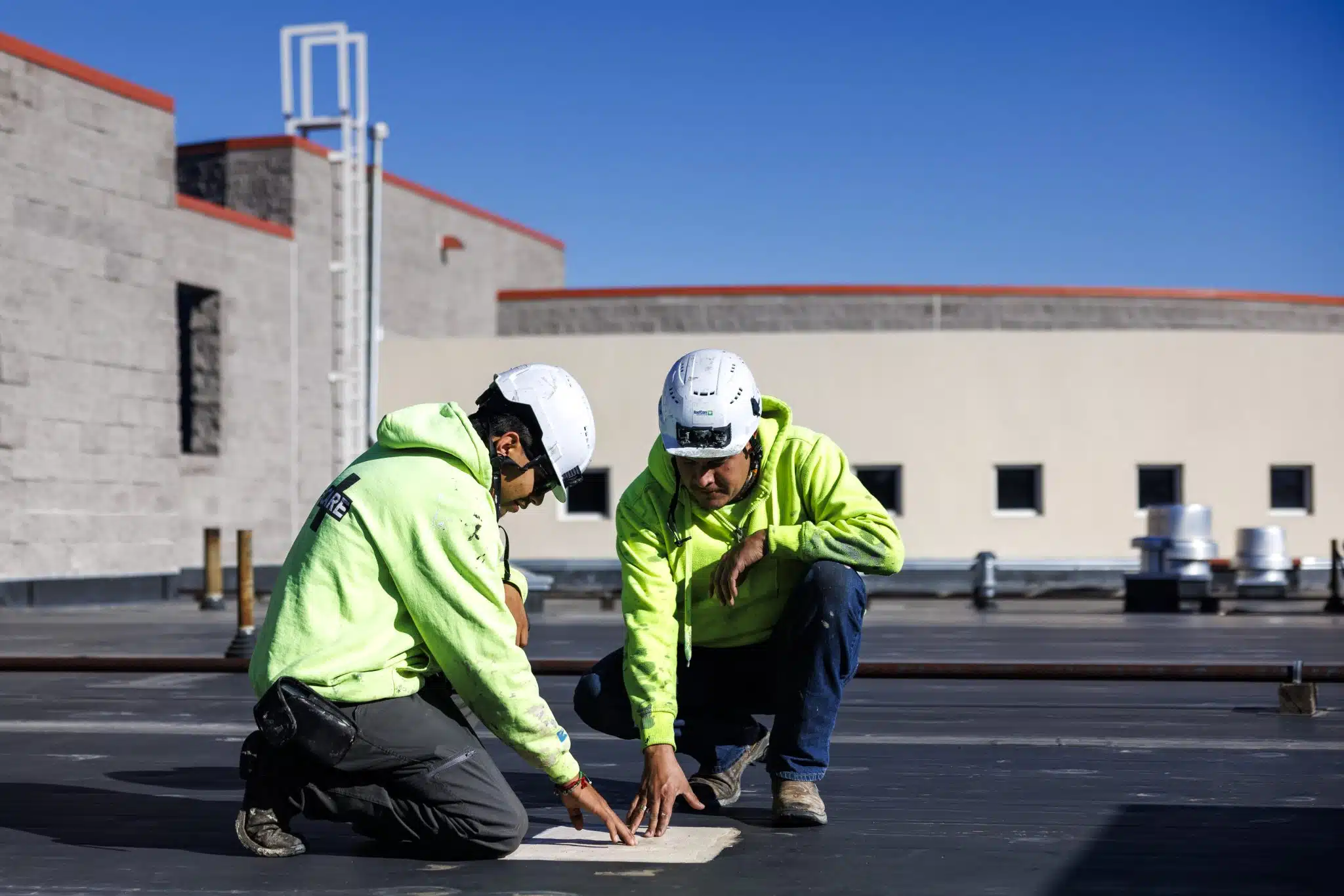
The defining constraint in school roofing is the academic calendar. The production window for most school building work runs June through August - roughly twelve weeks between the last day of classes and the first day of the next school year. In that window, buildings that would otherwise require three to four weeks of production need to be assessed, scoped, permitted, mobilized, produced, and closed out before students return. Every delay in pre-construction has a cost that is measured in classroom availability, not just money.
I approach school roofing with the same calendar discipline that the buildings demand. Pre-construction work - permit applications, material procurement, subcontractor coordination - begins the moment the scope is approved, not when the crew is available. For Wake County Public Schools contracts, that means aligning the pre-construction timeline to the system's spring capital planning cycle so that permits are in hand by mid-May and material is on site before school lets out.
Wake County Public Schools
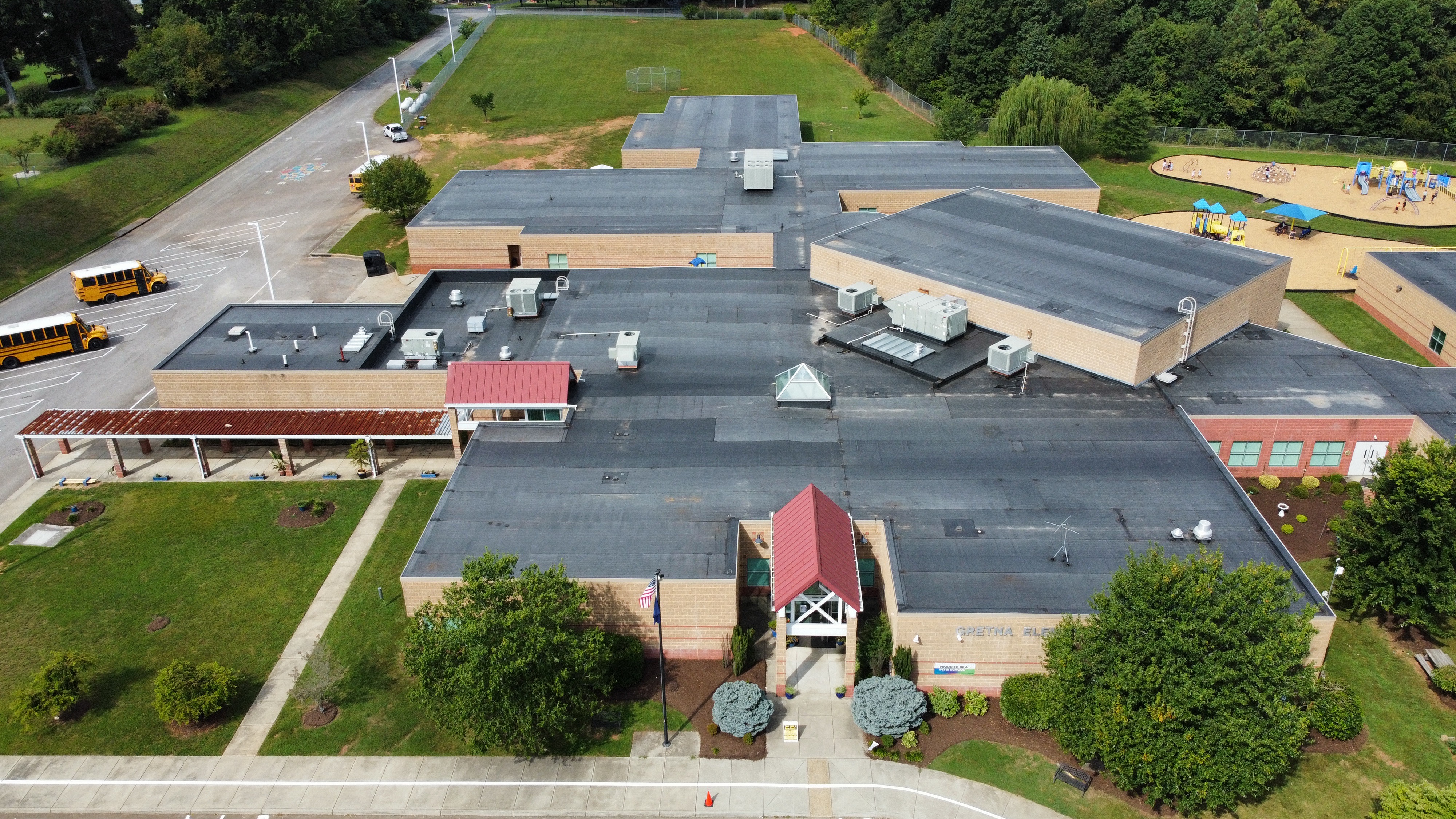
Wake County Public Schools' facilities division manages one of the largest institutional real estate portfolios in North Carolina. The school system's capital improvement program for roofing is driven by a facilities condition assessment that the system updates on a rolling basis, identifying buildings approaching the end of their roof system's useful life and prioritizing them for replacement in the next capital cycle.
Most Wake County school buildings constructed since the 1990s carry TPO or EPDM flat membrane systems on their main roof sections, with standing seam metal or modified bitumen on auxiliary sections. Older buildings - particularly the 1960s and 1970s elementary and middle school stock in the established Raleigh neighborhoods - carry BUR systems or early single-ply systems that have been maintained and recovered through multiple cycles. Many are candidates for tear-off replacement under the current capital program.
Working within the Wake County school system's procurement framework requires compliance with the system's approved vendor list, adherence to its project documentation standards, and coordination with the system's project managers who manage multiple simultaneous projects across the county during the summer production window. We work within that framework and deliver documentation in the format the system's facilities management system requires.
NC State, Duke, UNC, and NCCU
Each of the major Triangle universities has its own facilities procurement process, design standards, and capital planning cycle. NC State's facilities division - headquartered on the main campus on Western Boulevard - manages both the historic main campus buildings and the research and corporate buildings on Centennial Campus. Centennial Campus buildings often carry sustainability targets and rooftop photovoltaic systems that make roof replacement more complex than a standard commercial project.
Duke University in Durham manages a campus with significant historic preservation requirements on its West Campus gothic buildings and more standard commercial building stock on the East Campus, medical center, and research park facilities. Duke University Health System buildings - Duke University Hospital, Duke Clinics, and the research buildings on Research Drive - carry the full healthcare facility requirements described in our medical building section, in addition to the institutional procurement requirements.
UNC-Chapel Hill and NC Central University in Durham complete the Triangle university segment. NCCU's campus on Fayetteville Street in Durham has a mix of historic building stock and post-1990 construction. UNC's main campus in Chapel Hill includes some of the oldest university buildings in the state, with Franklin Street-facing historic structures that carry preservation considerations alongside the post-2000 research and science buildings on the south campus.
Summer Production Window Management
The summer production window for school buildings is non-negotiable. When classes resume in August, the building must be complete - roof closed out, manufacturer warranty inspection completed, punch list resolved. There is no two-week extension, no partial-completion option. If the building is not complete, students return to a construction site, which is unacceptable from both a safety and an operational standpoint.
Managing the summer production window means treating the pre-construction phase with the same urgency as the production phase. Permit applications go in on the first day the scope is approved. Material procurement begins immediately - for large projects on multiple school buildings, TPO and insulation materials need to be on order before the school year ends to ensure availability from the manufacturer's distribution network without premium lead-time cost.
Weather is the variable that cannot be managed away. The Triangle's summer afternoon convective storm pattern - predictable in its pattern, unpredictable in its daily timing - affects dry-in sequencing on large-footprint school roofs. We build storm buffer into the production schedule rather than assuming maximum daily output. For a 100,000 square foot school building with a June 10 mobilization and an August 1 completion requirement, that buffer planning is the difference between a successful closeout and a compromised production finish.
Frequently asked questions
Do you work within Wake County Public Schools' capital improvement procurement process?
Yes. Wake County Public Schools' procurement process for roofing capital work requires compliance with the system's approved contractor requirements, specific insurance and bonding levels, and project documentation standards. We work within those requirements and deliver documentation - permit closeouts, manufacturer warranty documents, maintenance contracts - in the format the system's facilities management infrastructure requires. If you are a project manager or facilities director at Wake County Schools, contact us early in the spring capital planning cycle, not after school lets out.
Can you complete a large school building roof replacement within the summer window?
The summer window for most of the Wake County area runs from the last week of May through the first week of August - roughly ten weeks. For a 100,000 square foot school building with no deck replacement required, that is sufficient production time with normal Triangle summer weather cooperation. For buildings with complex geometry, deck replacement conditions, or permit delays, the window gets tight. The mitigation is pre-construction discipline: permits in hand by mid-May, materials on order in April. We treat the permit application and material procurement timeline as part of our project responsibility, not as the owner's problem to manage.
How do you handle NC State Centennial Campus buildings with rooftop solar arrays?
Rooftop photovoltaic arrays on Centennial Campus buildings are a standard pre-construction coordination item. Before mobilization, we confirm the array's disconnection with the building's licensed electrical contractor and the university's electrical facilities team, install temporary protection panels over the array during tear-off in adjacent zones, and verify re-commissioning before the manufacturer warranty inspection. We document the PV system's pre- and post-construction condition in the closeout package. If the array is owned by a third-party solar provider under a PPA, we coordinate the disconnection and re-commissioning with that provider as part of pre-construction, not as a field-day decision.