PVC is the right membrane for commercial buildings in Raleigh with chemical exposure, grease exhaust, or high-value tenants where the 25-year manufacturer warranty term justifies the premium over TPO. We install 50-mil and 60-mil PVC systems to manufacturer specification with NDL warranty closeout.
PVC - polyvinyl chloride - is a heat-welded single-ply membrane that has been in commercial roofing service since the 1970s. Its primary advantages over TPO and EPDM are chemical and grease resistance and the longest available manufacturer warranty terms in the single-ply membrane category. Its disadvantages are cost - typically 15-25% more per square than comparable TPO - and brittleness at low temperatures as it ages, which can create issues with thermal movement in the Triangle's winter freeze-thaw cycles.
In the Raleigh commercial market, PVC is most commonly specified for three building types: restaurants and food service establishments where rooftop grease exhaust attacks TPO and EPDM over time; chemical and industrial facilities where solvent or reagent exhaust from rooftop ventilation systems degrades other membranes; and high-value commercial buildings where the 25-year manufacturer warranty term aligns with the building's long capital horizon.
The Research Triangle Park campus environment includes a significant inventory of pharmaceutical and chemical research facilities - GSK's campus in Research Triangle Park has been a major employer in the region for decades; NIEHS operates major laboratory facilities within the park. Buildings like these often have rooftop exhaust systems that discharge chemical vapors, solvents, or reactive gases at concentrations that accelerate membrane degradation. PVC's resistance to these compounds is the reason it remains specified despite the cost premium.
Where PVC Makes Sense in the Triangle Market
Restaurant and food service buildings are the most common PVC application we encounter across Raleigh's commercial inventory. Grease exhaust from rooftop kitchen ventilation attacks TPO by softening the membrane and accelerating UV degradation at the area surrounding the exhaust termination. EPDM is more resistant but not immune. PVC maintains structural integrity and dimensional stability in grease exhaust environments that degrade other membranes within 3-5 years of installation. The Glenwood South restaurant corridor in Downtown Raleigh, the North Hills mixed-use dining and entertainment district, and the Five Points commercial area all contain food service buildings where PVC is the appropriate specification.
Laboratory and life science facilities are the second major PVC application category. NC State University's Centennial Campus research buildings, the Centennial Biomedical Campus along Western Boulevard, and the growing biotech and pharmaceutical cluster in the RTP south quadrant near US-54 all operate buildings with rooftop exhaust systems that discharge materials incompatible with standard single-ply membranes. PVC's chemical resistance profile - it holds up against a wide range of organic solvents, acids, and base compounds - makes it the specification of record for building operators who cannot afford to replace their roof membrane every 5-7 years due to chemical degradation.
High-durability commercial applications - buildings with extended capital horizons, corporate headquarters buildings, institutional facilities - benefit from PVC's available 25-year NDL warranty terms. The Apple campus development in the RTP area, announced in 2021 and in various phases of development, represents the kind of long-horizon institutional commitment where the warranty term of the roof system is a material business consideration. We can spec PVC systems on these buildings with the manufacturer warranty documentation that corporate facilities teams require.
Installation: What We Specify and Why
We install 50-mil PVC as the standard commercial specification and 60-mil PVC for buildings with high mechanical traffic or chemical exposure where the additional thickness buys meaningful longevity. Manufacturers we work with include Sarnafil, Duro-Last, and Versico; system selection is driven by the building's specific exposure conditions and the warranty term the owner needs.
Substrate preparation is critical for PVC because PVC bonding adhesive is solvent-based and reacts with incompatible substrates. Over polyiso insulation, we install a cover board - typically gypsum or high-density polyiso - to create a compatible bonding surface. We do not install PVC directly over open-cell polyiso; the incompatibility between solvent adhesive and open-cell polyiso can cause insulation degradation beneath the membrane.
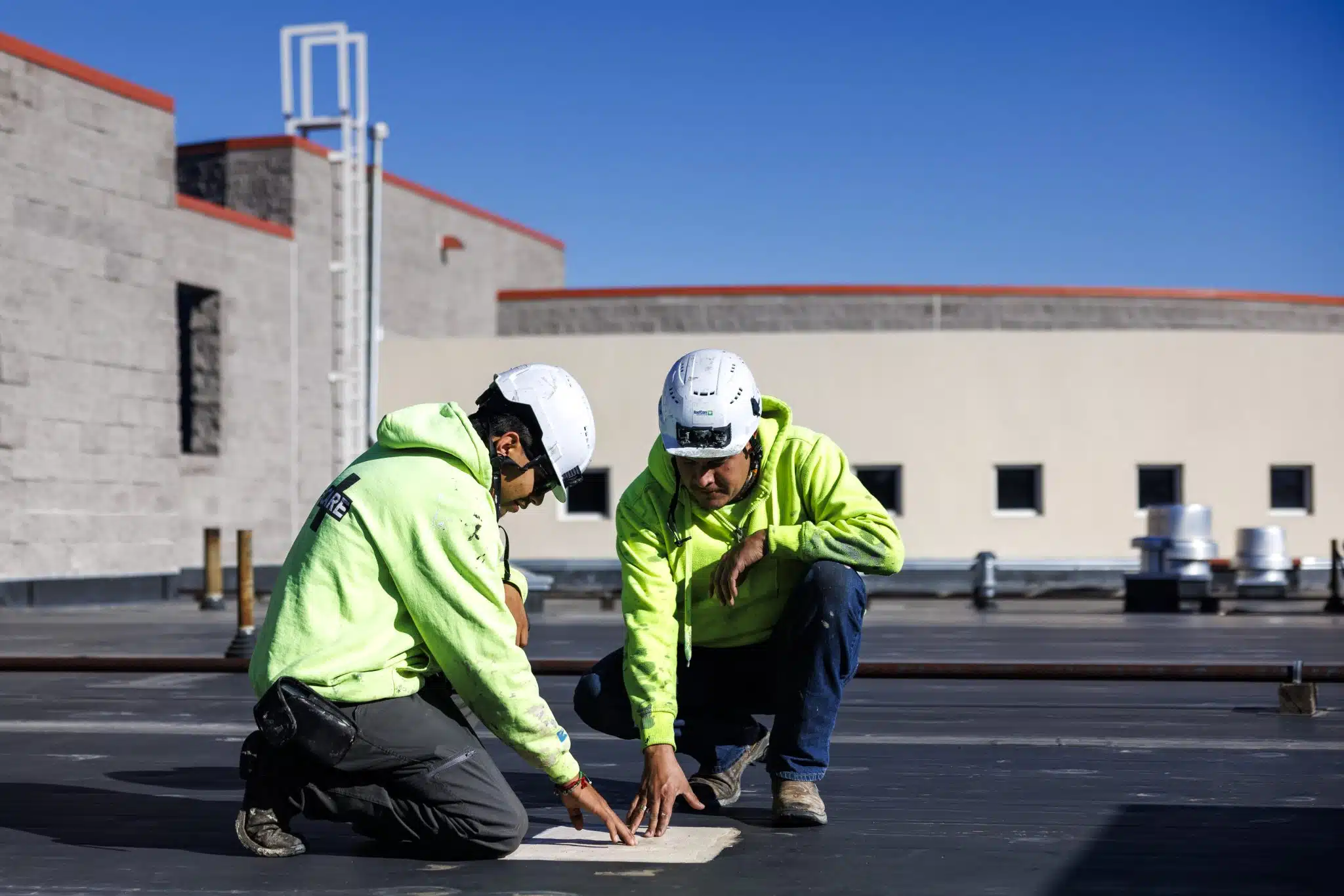
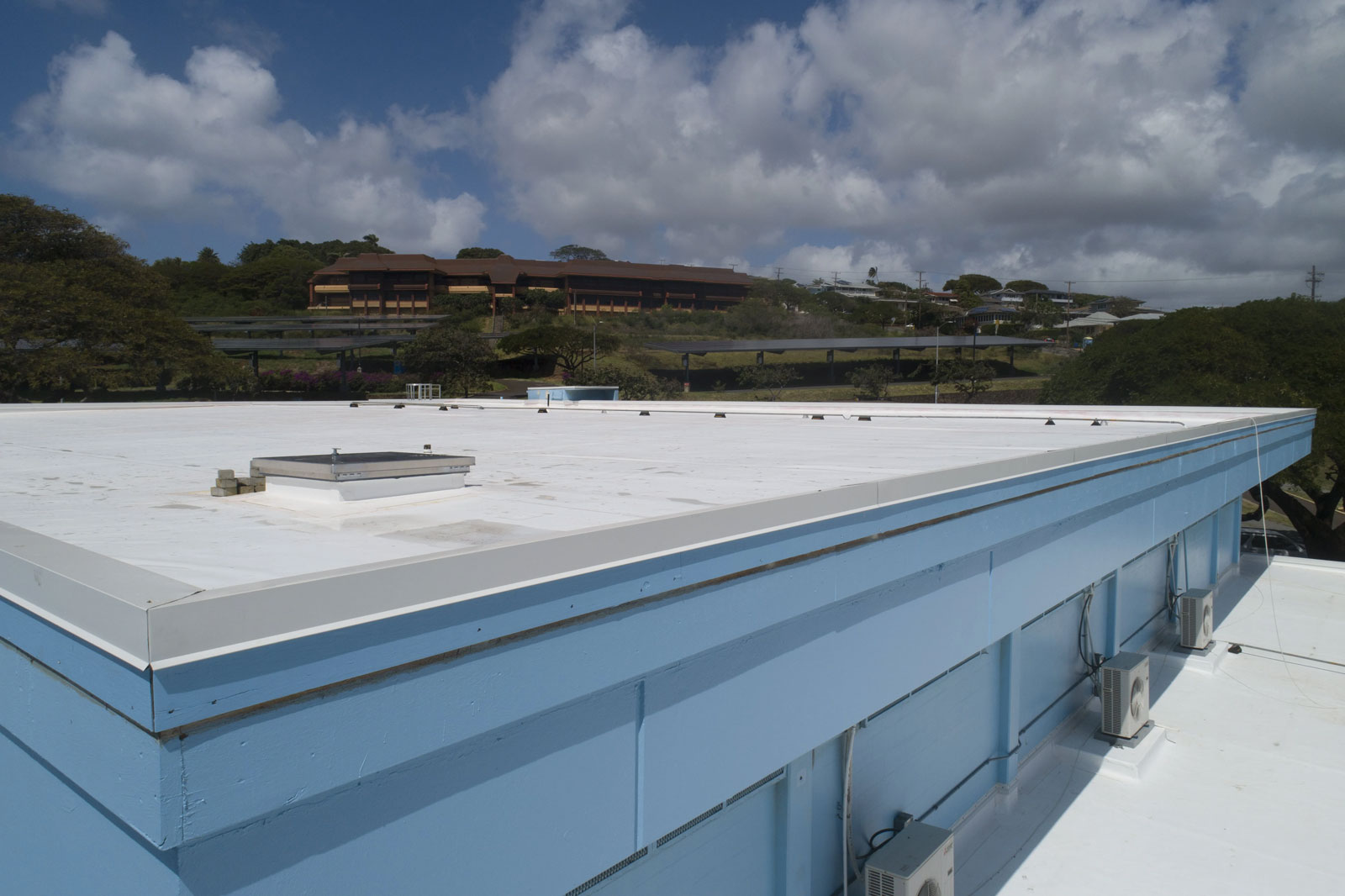
Heat-welded seams on PVC perform at least as well as TPO seams and are the industry benchmark for single-ply seam strength. We weld to manufacturer-specified temperature and speed settings and probe seams throughout the project. Flashings on PVC systems - at parapets, curbs, drains, and penetrations - are heat-welded PVC-coated metal or PVC membrane, not lap-taped details. The flashing quality on a PVC installation is what separates a warranted system from a commodity installation.
PVC and the Triangle's Winter Temperature Cycling
PVC membranes become stiffer at low temperatures as they age - a property called plasticizer migration. On newer PVC systems, this is not a significant concern at Triangle winter temperatures. On PVC systems that are 15-20 years old, thermal movement in the January-February freeze-thaw cycle can cause cracking at mechanically attached seam edges if the membrane has lost flexibility.
The January 2022 ice storm that shut down the Triangle for three days was a stress test for older PVC installations. We inspected a number of buildings post-event and found that PVC systems installed before 2005 - particularly those in their second decade and mechanically attached with wider seam spacing - showed significantly more thermal cracking and lap edge separation than newer systems or fully adhered installations. This is a factor in the recover-versus-replace conversation for any aging PVC system approaching its second decade.
For buildings in the Raleigh-Durham area that need PVC replacement due to age-related plasticizer loss, the current-generation PVC formulations from Sarnafil and Versico have improved plasticizer retention profiles compared to early 2000s formulations. An aging PVC building is typically replaced with current-spec PVC or, if the chemical exposure driver is no longer present, with 80-mil TPO as a lower-cost alternative.
Frequently asked questions
Is PVC more expensive than TPO for Raleigh commercial buildings?
Yes, typically 15-25% more per installed square for equivalent warranty terms. The cost premium is justified when the building has chemical or grease exposure that would degrade TPO within 5-10 years - in that scenario, the higher upfront cost of PVC is recovered in extended service life. For buildings without chemical exposure, TPO at 60-mil or 80-mil with a 20-year NDL warranty is the more economical choice. We present both options during scope development so the building owner can make the comparison with actual numbers.
How does PVC perform under Hurricane Florence or Hurricane Helene type rainfall events?
PVC performs well under sustained water loading. Its heat-welded seams are genuinely watertight at a level comparable to TPO. The failure mode in the Raleigh-area PVC systems we inspected after the Florence and Helene remnant rainfall events was concentrated at drain flashings and parapet transitions - not at field seams. This is consistent with PVC's known performance profile: the membrane field holds; the detail work at transitions is where failures initiate. We spec and install PVC flashings at manufacturer detail standards to prevent this.
What is the minimum slope for a PVC roof?
PVC can be installed on roofs with as little as 1/4 inch per foot of slope with positive drainage. For zero-slope applications - common on older commercial buildings in Downtown Raleigh and the North Hills area - we evaluate drainage against the ponding tolerance of the specific PVC system. Ponding against PVC lap edges is less problematic than with EPDM tape seams, but long-term standing water against aged PVC flashings accelerates their deterioration. We design drainage improvements as part of any PVC installation scope on buildings with demonstrated ponding history.