Commercial roofing for mixed-use buildings, urban infill developments, and live-work-play properties throughout Raleigh, NC.
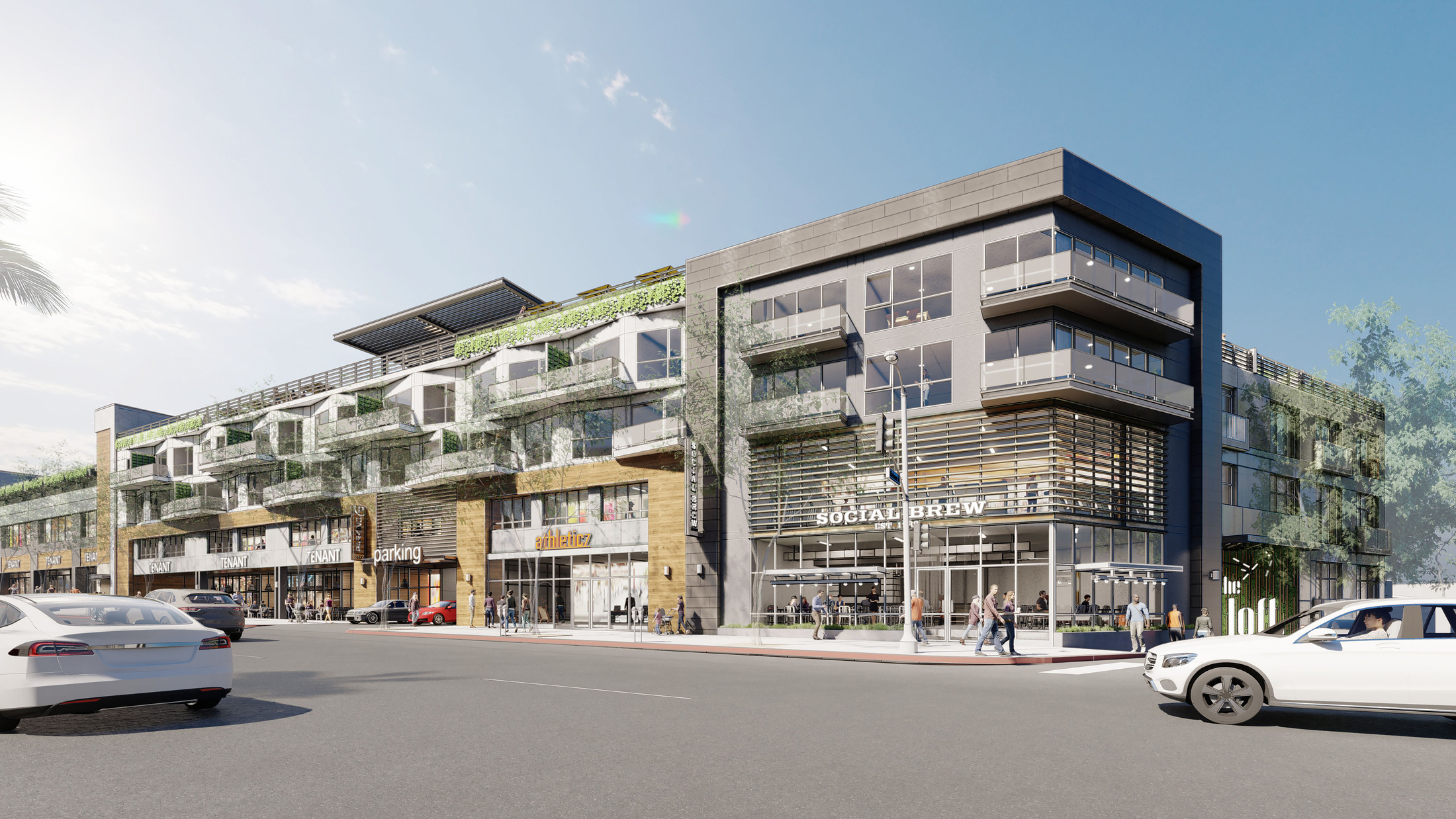
Raleigh's Glenwood South corridor, the West Street mixed-use spine north of the convention center, and the transit-oriented development projects clustering around the proposed BRT corridors have positioned the Triangle's capital city as one of the Southeast's most active mixed-use construction markets. A seven-story building on Hillsborough Street near the NC State campus - with a coffee shop, brewery tap room, and fast-casual dining at street level, tech startup office space above, and a commercial tower at the top - is now a standard project typology in Raleigh's development pipeline, and the roofing requirements that accompany it are substantially more demanding than the suburban office park and apartment complex work that Raleigh contractors built their expertise on a decade ago.
North Carolina's climate zone places Raleigh in a hot-humid classification with a full four-season thermal range, and that combination creates a roofing environment where neither strictly cold-climate nor strictly hot-climate specifications are quite right. Summer heat indexes exceed 105F regularly and drive significant cooling loads through the roof system on commercial floors above commercial spaces, while winter ice storms - the kind of freezing rain events that Raleigh experiences every few years - create roof loading and drain icing conditions that catch building owners unprepared. Mixed-use buildings with multi-level rooflines and step conditions between the retail podium roof and the commercial tower above face differential thermal movement challenges that require expansion joint detailing and transition membrane specifications calibrated for this specific climate envelope rather than borrowed from a national template.
Green roofs and rooftop amenity decks have become standard components of Raleigh's upper-market mixed-use projects, particularly in the Glenwood South and Warehouse District neighborhoods where rooftop bars and commercial terraces are established competitive amenities. The waterproofing beneath those decks must handle Raleigh's summer afternoon thunderstorms - which can deliver two inches of rain in 30 minutes - as well as the freeze-thaw events that occur a dozen or more times each winter. Protected membrane assemblies with pedestal-set pavers are the appropriate configuration, but the drainage composite must be sized for Raleigh's peak storm intensity rather than a national average. Drain sumps with strainers rated for the debris load from Raleigh's deciduous street tree canopy should be checked in fall before the leaf-drop season creates obstruction risk heading into winter ice events.
Fire-rated assembly requirements in Raleigh mixed-use buildings are enforced by the City of Raleigh Development Services Department under North Carolina Building Code, which adopts IBC with state-specific amendments. The plan review process for mixed-use projects requires documented assembly listings for each occupancy-separating roof-ceiling, and North Carolina's code has specific requirements for buildings in fire districts that affect the construction type and thus the required hourly ratings for occupancy separations. Contractors submitting permit packages for mixed-use projects in Raleigh's downtown fire district should verify that the proposed assembly carries the required hourly rating for the building's construction type and occupancy classification - a rating that may differ from what the same contractor would specify for a non-fire-district project in suburban Wake County.
Waterproofing at the use-transition zones in Raleigh mixed-use buildings must account for the specific vapor behavior in North Carolina's climate: hot and humid summers create an inward vapor drive toward the air-conditioned interior, while cold winters produce the outward vapor drive more familiar to northern climate design. The roof assembly's vapor retarder position and permeability must be optimized for the dominant summer drive without creating winter condensation accumulation. A common mistake in Raleigh mixed-use buildings is specifying the vapor retarder position appropriate for a northern climate - placing a low-permeability layer on the underside of the insulation - which works against the inward drive prevention in summer and contributes to moisture accumulation over time. A hygrothermal analysis specific to Raleigh's climate zone determines the correct configuration.
The Raleigh mixed-use pipeline includes a significant adaptive reuse component in the Warehouse District between Cabarrus Street and the railroad tracks, where former tobacco warehouses and industrial buildings are being converted to mixed commercial and creative office uses. Existing roof assemblies on those buildings are typically aged built-up roofing or modified bitumen over concrete or steel decks with varying degrees of moisture infiltration from years of deferred maintenance. North Carolina's summer humidity means that rooftop moisture surveys on these buildings should be conducted in the spring before peak humidity season - a wet insulation survey conducted in August will undercount wet zones because high ambient humidity confounds the temperature differential used in infrared scanning. Spring surveys provide more reliable moisture mapping and more defensible substrate characterization before a new roofing system is specified.
Noise isolation from commercial tenants is directly relevant to Raleigh's mixed-use success in the Glenwood South entertainment corridor, where the concentration of bars, clubs, and live music venues beneath commercial lofts and condominiums creates the most acute acoustic conflict in the Triangle's rental market. Rooftop mechanical equipment serving those commercial uses - particularly the large condensing units required for commercial refrigeration in food-and-beverage tenants - generates sustained high-frequency vibration that transmits through rigidly connected curbs into the building structure. The standard intervention is spring-isolated curbs specified for the equipment weight and vibration frequency, combined with flexible duct and refrigerant line connections that break the transmission path at the roof penetration. A Raleigh developer who gets these details right at construction avoids the lease-up problems and legal exposure that follow commercial tenants who discover they can hear commercial HVAC equipment through their floors.
Raleigh's rapid population growth and the corresponding demand for urban mixed-use housing has created a contractor market where roofing bid pools for downtown mixed-use projects sometimes include contractors without adequate experience in the specific technical requirements of occupancy-stacked buildings. The consequence is change orders, warranty failures, and permitting delays that are disproportionately expensive on projects where construction loan carrying costs and pre-leasing commitments create schedule pressure. Developers who specify roofing contractor qualifications as part of their bid documents - requiring demonstrated experience with Raleigh Development Services mixed-use permitting, documented references from similar occupancy-stacked projects, and a design-assist pre-construction process - produce buildings that perform as specified and close without the deferred roofing problems that have characterized some of the Triangle's earlier mixed-use generation.
Long-term maintenance planning for Raleigh mixed-use roofs benefits from the city's growing sophistication in commercial property management infrastructure. The concentration of institutional mixed-use ownership in the downtown core - national and regional REITs, institutional developers - has normalized annual roof inspection and maintenance contracts as a standard lease and HOA document requirement rather than an optional add-on. Building owners who establish those contracts at certificate of occupancy, fund appropriate reserves in the HOA or property management structure, and maintain digital inspection records accessible to lenders and insurance carriers find that their buildings perform better over the 20-year membrane life and support better long-term financing terms than buildings whose maintenance history is opaque or deferred.
- What roofing assembly is best for a Raleigh mixed-use building given the hot-humid climate?
- White or light-colored 60-mil TPO fully adhered over polyisocyanurate insulation performs well in Raleigh's climate because it addresses the cooling load reduction need in summer while maintaining adequate R-value for winter energy performance. The vapor retarder should be positioned based on a hygrothermal analysis for North Carolina's climate zone, which typically results in a retarder at or near the top of the insulation layer to resist the dominant inward summer vapor drive. Adhesive selection should account for the elevated humidity during installation and the high substrate temperatures that occur in summer.
- How does Raleigh's ice storm history affect roofing system requirements?
- Raleigh's occasional freezing rain events create roof loading conditions and drain icing problems that are not typically designed for in coastal Southeast markets. Roof systems on Raleigh mixed-use buildings should include ice-and-water shield at all valleys, transitions, and parapet intersections to provide redundant protection where ice damming can drive water under the membrane. Roof drains should be insulated on the underside to reduce the risk of drain freezing, and overflow scuppers should be positioned and sized to function even if primary drains are blocked by ice accumulation.
- What documentation does Raleigh Development Services require for mixed-use roof permits?
- Raleigh Development Services requires UL or FM assembly listing documentation for all occupancy-separating roof-ceiling assemblies, submitted with the building permit application. Projects in Raleigh's downtown fire district must verify that the proposed assembly meets the required hourly rating for the applicable construction type under North Carolina's state-adopted building code, which may differ from the national IBC default. North Carolina has specific state building code amendments that contractors from other states may not be aware of, and a pre-application meeting with the plan reviewer on complex mixed-use projects is worth the time investment to identify code compliance questions before they become revision requests.
- Are there stormwater incentives for green roofs on Raleigh mixed-use buildings?
- City of Raleigh stormwater regulations require that new development and substantial redevelopment manage stormwater on-site to meet post-development runoff rate limits. Green roofs can contribute to meeting the on-site management requirement and may allow reduction of required detention pond sizing - which is a real space and cost benefit on dense urban infill sites where land area for stormwater infrastructure is limited. Raleigh's stormwater program should be consulted early in the project, as the credit calculation methodology determines the green roof area needed to achieve a given benefit.
- What is the best practice for rooftop amenity deck waterproofing on a Raleigh mixed-use building?
- A protected membrane assembly with the waterproofing layer beneath drainage composite, protection board, and a pedestal paver system is the preferred approach for Raleigh rooftop terraces. This configuration protects the membrane from UV degradation, physical damage from furniture and foot traffic, and freeze-thaw cycling while maintaining access for inspection at the paver system level. The pedestal system should allow water drainage through the assembly even in heavy rain events, and primary drains should be supplemented by overflow scuppers sized for Raleigh's peak design storm intensity.
Frequently asked questions
Is built-up roofing still installed on new commercial buildings in Raleigh?
Rarely, and effectively not at all for new construction. The hot-mopping logistics, equipment requirements, and fume management make new BUR installation noncompetitive against TPO, modified bitumen, and EPDM for comparable service life. The entire BUR market in the Triangle is assessment, repair, and replacement of the existing inventory - primarily the 1960s through 1980s commercial building stock that predates the single-ply era.
How do I know if my Raleigh building's BUR system needs replacement versus repair?
Core pull data is the only honest answer. A BUR surface that looks marginal may have dry insulation and be a legitimate recover candidate. A surface that looks serviceable may have 40 percent saturation and need full replacement. Visual assessment of BUR by any contractor cannot substitute for core pulls. We pull cores, show you the data, and make a recommendation based on what we find - not based on the project size we want to close.
My building has had multiple BUR patches applied over the years. Does that affect the replacement decision?
Patch history often complicates the recover option more than it affects the replace decision. Repeated patches with incompatible materials - asphalt over coal tar, cold-process over hot BUR - create adhesion problems for any recover system. If the patch history is complex and the new system cannot achieve adequate adhesion to the existing substrate, full tear-off is the only path to a warranted installation. We document patch history during inspection and flag incompatibility risks before any recover scope is proposed.
Do you handle BUR replacement on large industrial buildings along the I-40 and US-1 corridors?
Yes. Large-footprint BUR replacement on industrial buildings in the southwest Wake County and Johnston County markets - buildings of 100,000 to 400,000 square feet - is a significant part of our work. These projects require detailed pre-construction staging plans, sequenced tear-off and daily dry-in to protect active operations below, and sometimes multi-season project scheduling for facilities that cannot absorb a full roof disruption in a single mobilization.