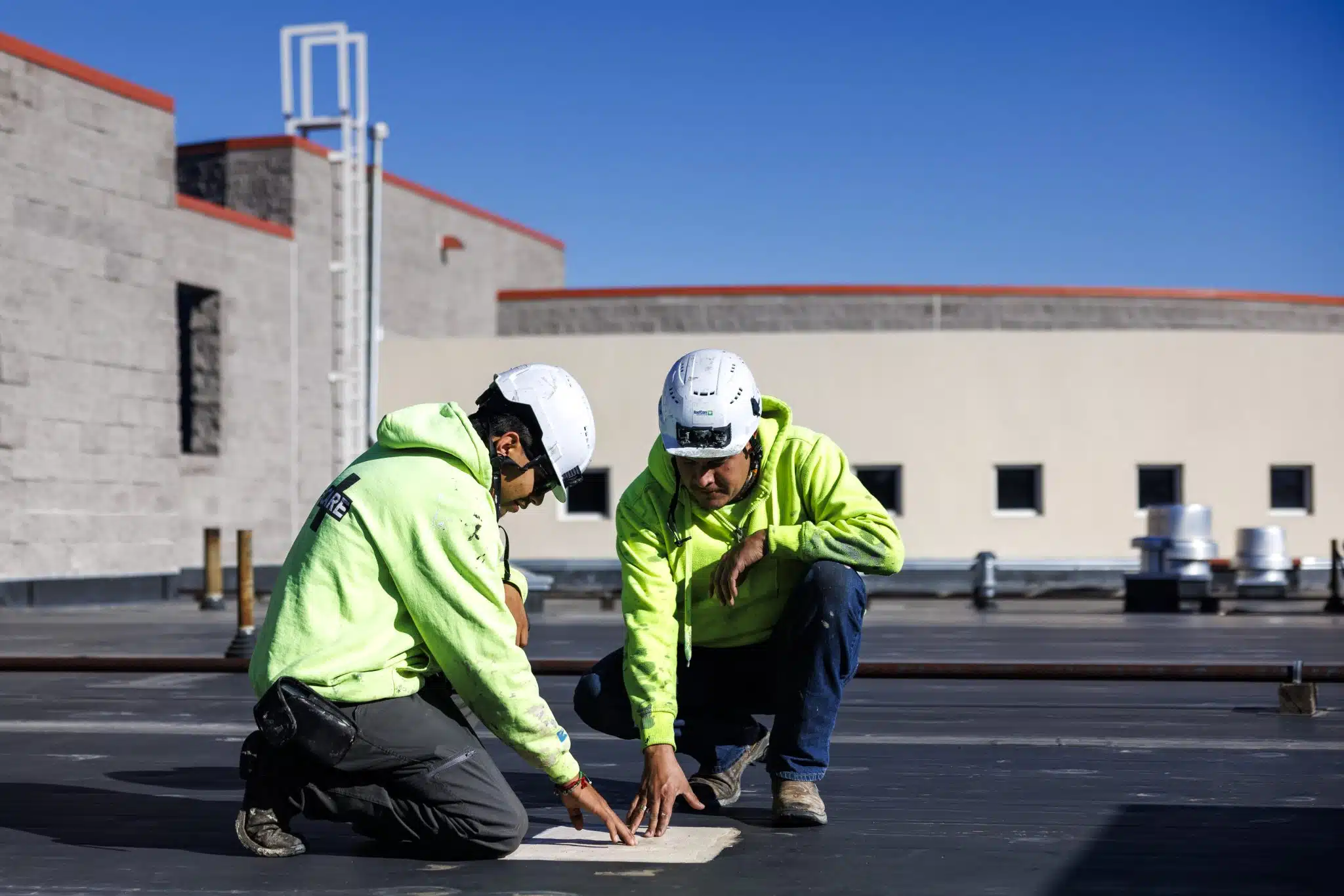
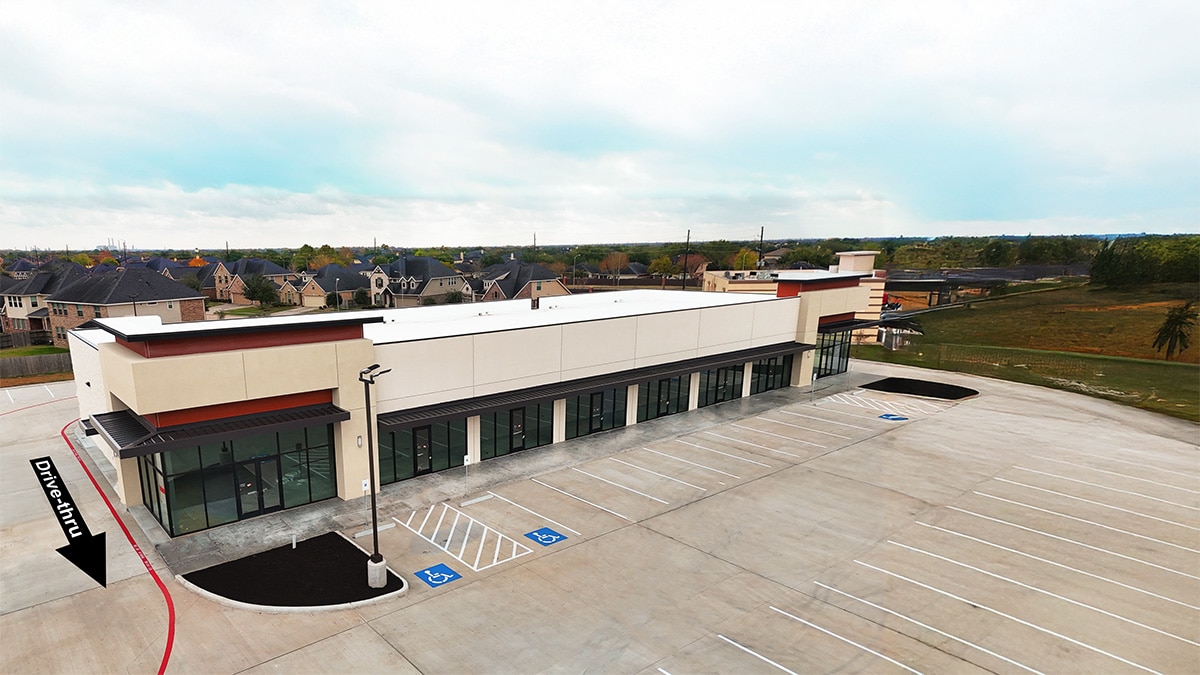
Commercial roofing for strip malls, shopping centers, anchor stores, and standalone retail buildings throughout Raleigh, NC.
Raleigh's retail market has undergone a decade of rapid expansion, with new strip centers, lifestyle centers, and power anchors spreading across Cary, Morrisville, Wake Forest, and the Garner corridor as the Triangle's population growth drives suburban retail development at a pace few other metros can match. But alongside the new construction, there's an older generation of strip malls along Capital Boulevard, New Bern Avenue, and the Crabtree Valley area that are reaching the age where roof systems installed in the 1990s and early 2000s need full replacement. Understanding roofing for Raleigh retail means serving both segments - the new builds demanding quality installation from the start, and the aging assets where the roof is suddenly the highest-priority capital item on the balance sheet.
TPO roofing is the standard specification for Raleigh's retail properties, favored for its reflective surface, heat-welded seam integrity, and competitive installed cost. The Triangle's climate drives the specification in both directions - summer temperatures regularly reach the mid-90s with high humidity, putting a premium on reflective surfaces that reduce HVAC load, while the region's occasional ice storms and the periodic hurricane remnants that track inland from the coast demand the seam strength that TPO's heat-welded joints provide. A 60-mil TPO system on a well-drained flat retail roof should deliver 20 or more years of service in the Raleigh climate with a documented maintenance program.
Hurricane remnants represent the most acute weather risk for Raleigh retail roofs. When tropical systems track inland through eastern North Carolina - as Florence, Dorian, and others have demonstrated - the Triangle receives extended heavy rain events of 10 or more inches over 24 to 48 hours combined with sustained high winds. Flat retail roofs that have any open seams, compromised flashing, or partially blocked drainage are at serious risk during these events. Pre-storm season inspections - ideally completed by late May before the Atlantic hurricane season peaks - are the most important annual maintenance activity for retail property managers in the Raleigh metro.
HVAC penetration density on Raleigh's retail properties varies significantly with property age. Buildings constructed during the 1980s and 1990s in older shopping centers along Six Forks Road or in the Crabtree area were designed for equipment loads that have often been exceeded as tenants have added equipment over the years. Unauthorized rooftop penetrations - added by tenants or their HVAC contractors without landlord approval - are a common finding on retail roof assessments in this market. Any re-roofing project is an opportunity to audit and document every penetration, bring unauthorized penetrations into code compliance, and establish a landlord-approval process for future tenant rooftop work.
Raleigh's retail tenant disruption management has to navigate the Triangle's competitive retail environment. The RTP-adjacent shopping centers in Morrisville and Cary serve a tech-sector workforce with demanding schedules and strong consumer expectations. Grocery-anchored centers along Glenwood Avenue or in North Raleigh can't tolerate staging equipment that reduces parking availability during weekend peak hours. Experienced local contractors schedule crane work and large material drops on weekday mornings, maintain clean and organized job staging areas, and ensure that tenant storefronts are never obstructed by materials or debris at any point during the project.
Flat roof drainage on Raleigh retail properties has to perform under both the slow, extended rain of hurricane remnants and the intense convective storms that roll through the Triangle in summer. Internal drain systems need to be verified for both capacity and leader line condition - PVC leader lines in older Raleigh strip centers can crack from tree root intrusion or settling, reducing effective drain capacity significantly. Overflow scuppers that were installed to code when the building was constructed may now be blocked by parapet extensions added during signage or facade upgrades. Drainage systems deserve their own dedicated inspection scope, separate from the membrane assessment.
The Research Triangle's strong economic growth means Raleigh retail properties increasingly carry national anchor tenants - Target, Whole Foods, REI, and the full complement of national chain restaurants and service retailers that follow population growth. These tenants bring detailed rooftop standards in their lease exhibits, including specifications for equipment screening, access hatch requirements, and in some cases membrane product preferences tied to corporate sustainability commitments. Wake County's active commercial permitting department also means that roofing projects require proper permit applications with manufacturer specifications, and inspectors are familiar enough with quality systems to catch inadequate installation details.
CAM budget management for roofing in Raleigh's retail market reflects the Triangle's sophistication as a real estate environment. Institutional landlords managing larger centers in Cary and Morrisville maintain detailed roof asset registers and fund replacement reserves as a matter of standard practice. Smaller independent landlords with strip malls along the older Capital Boulevard and Garner corridors sometimes lack this infrastructure, and their roofing decisions are reactive rather than planned. The cost differential between a proactively managed roof replacement and an emergency repair after a significant leak event - including tenant damage claims and the premium pricing for urgent scheduling - is substantial enough to make the investment in proactive management clearly worthwhile.
Selecting a commercial roofing contractor in the Raleigh market means evaluating firms with demonstrated experience on occupied retail properties in the Triangle, not just commercial or light commercial credentials. The local contractor market has grown significantly alongside the region's development boom, and not every firm that has completed high-volume commercial or light industrial work has the project management infrastructure for coordinated multi-tenant retail roofing. References from comparable retail properties - strip malls, grocery-anchored centers, and pad-site buildings - in Wake, Durham, and Johnston counties provide the most relevant baseline for evaluating contractor capability in this specific market.
- How should Raleigh retail landlords prepare for hurricane remnants that track inland?
- Pre-season inspections completed by late May allow enough time to repair any identified seam or flashing deficiencies before hurricane season peaks. Drain bowl cleaning, overflow scupper verification, and a review of all penetration flashings are the key inspection components. Properties with documented maintenance programs and clean inspection records also tend to fare better in insurance discussions after storm events when damage claims are filed.
- What are unauthorized rooftop penetrations and why do they matter?
- Tenant HVAC contractors sometimes add rooftop equipment penetrations without obtaining landlord approval or proper permits, creating warranty violations on the membrane and potentially voiding the landlord's insurance coverage if those areas leak. A re-roofing project is the ideal opportunity to conduct a full penetration audit, bring all openings into proper flashing compliance, and document a going-forward approval process for tenant rooftop work requests. Addressing this proactively avoids disputes over liability when an unauthorized penetration causes a tenant interior damage claim.
- Why is overflow drainage so important on Raleigh retail roofs?
- Hurricane remnants can deliver 10-plus inches over 48 hours, and if primary internal drains are overwhelmed or partially blocked, only properly sized and unobstructed overflow scuppers prevent dangerous ponding loads from accumulating. Parapet modifications for signage or facades sometimes inadvertently block or raise overflow scuppers above the effective drainage level. Verifying that every overflow drainage point is functional and correctly positioned relative to the current roof membrane level is a critical inspection item for Raleigh retail properties.
- Do Raleigh's national retail tenants specify particular roofing materials?
- Several national retailers operating in the Triangle market include roof membrane specifications or minimum insulation R-value requirements in their lease exhibits, reflecting corporate sustainability standards. Grocery anchors and home improvement chains in particular have detailed rooftop standards. Landlords should route proposed specifications through tenant facilities teams before finalizing bid packages on any re-roofing project that covers space leased to national tenants with known sustainability commitments.
- What is a reasonable service life expectation for a new TPO system on a Raleigh retail building?
- A properly installed 60-mil TPO system on a Raleigh retail building with adequate drainage and a documented annual maintenance program should deliver 18-22 years of service life. The Triangle's combination of summer UV intensity and periodic severe weather tests membranes more than drier or cooler markets, making maintenance compliance more directly correlated with achieving full system life. Manufacturer warranties of 15-20 years are typical for qualified installations and provide a benchmark for comparing contractor credentials.
Frequently asked questions
Is built-up roofing still installed on new commercial buildings in Raleigh?
Rarely, and effectively not at all for new construction. The hot-mopping logistics, equipment requirements, and fume management make new BUR installation noncompetitive against TPO, modified bitumen, and EPDM for comparable service life. The entire BUR market in the Triangle is assessment, repair, and replacement of the existing inventory - primarily the 1960s through 1980s commercial building stock that predates the single-ply era.
How do I know if my Raleigh building's BUR system needs replacement versus repair?
Core pull data is the only honest answer. A BUR surface that looks marginal may have dry insulation and be a legitimate recover candidate. A surface that looks serviceable may have 40 percent saturation and need full replacement. Visual assessment of BUR by any contractor cannot substitute for core pulls. We pull cores, show you the data, and make a recommendation based on what we find - not based on the project size we want to close.
My building has had multiple BUR patches applied over the years. Does that affect the replacement decision?
Patch history often complicates the recover option more than it affects the replace decision. Repeated patches with incompatible materials - asphalt over coal tar, cold-process over hot BUR - create adhesion problems for any recover system. If the patch history is complex and the new system cannot achieve adequate adhesion to the existing substrate, full tear-off is the only path to a warranted installation. We document patch history during inspection and flag incompatibility risks before any recover scope is proposed.
Do you handle BUR replacement on large industrial buildings along the I-40 and US-1 corridors?
Yes. Large-footprint BUR replacement on industrial buildings in the southwest Wake County and Johnston County markets - buildings of 100,000 to 400,000 square feet - is a significant part of our work. These projects require detailed pre-construction staging plans, sequenced tear-off and daily dry-in to protect active operations below, and sometimes multi-season project scheduling for facilities that cannot absorb a full roof disruption in a single mobilization.