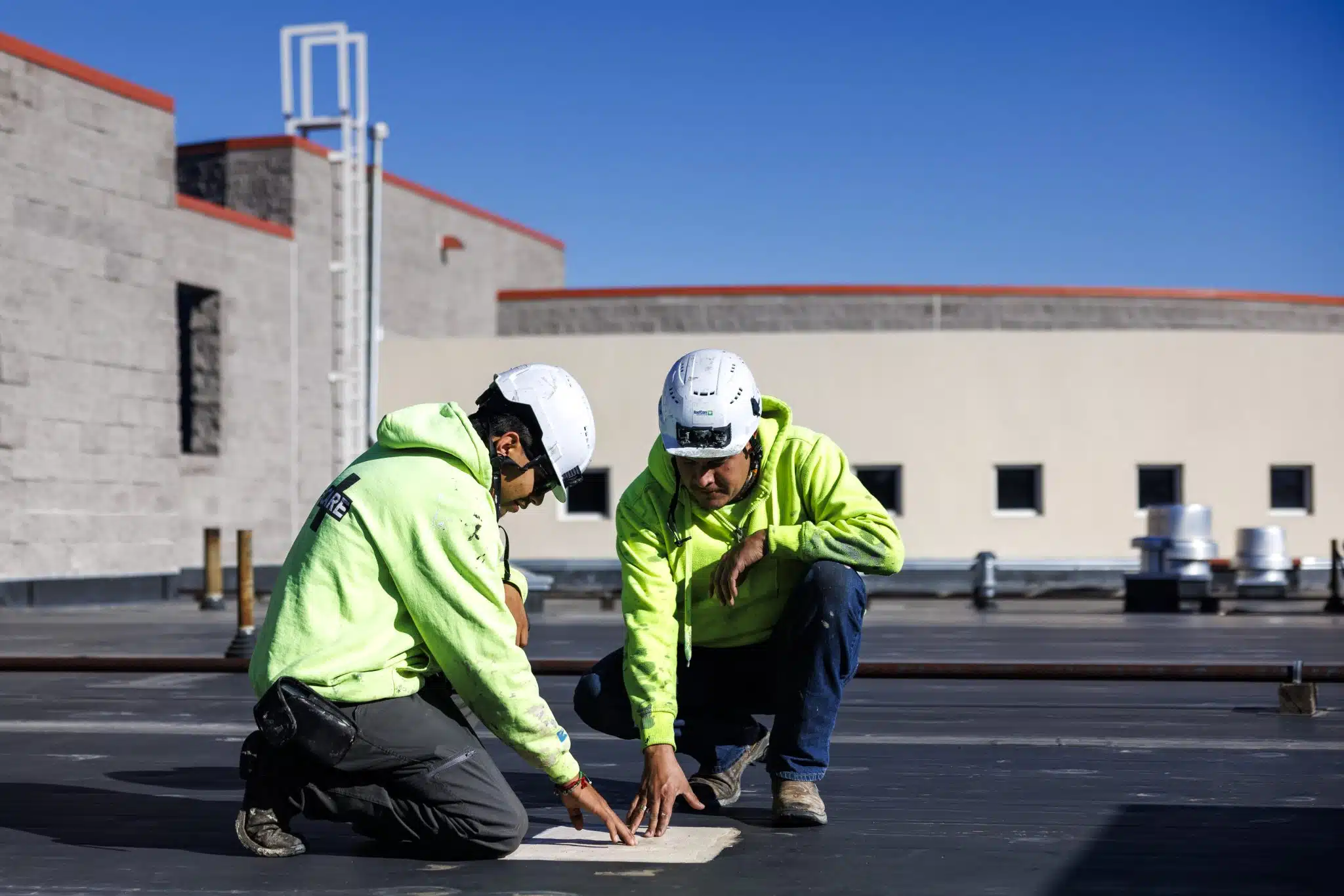
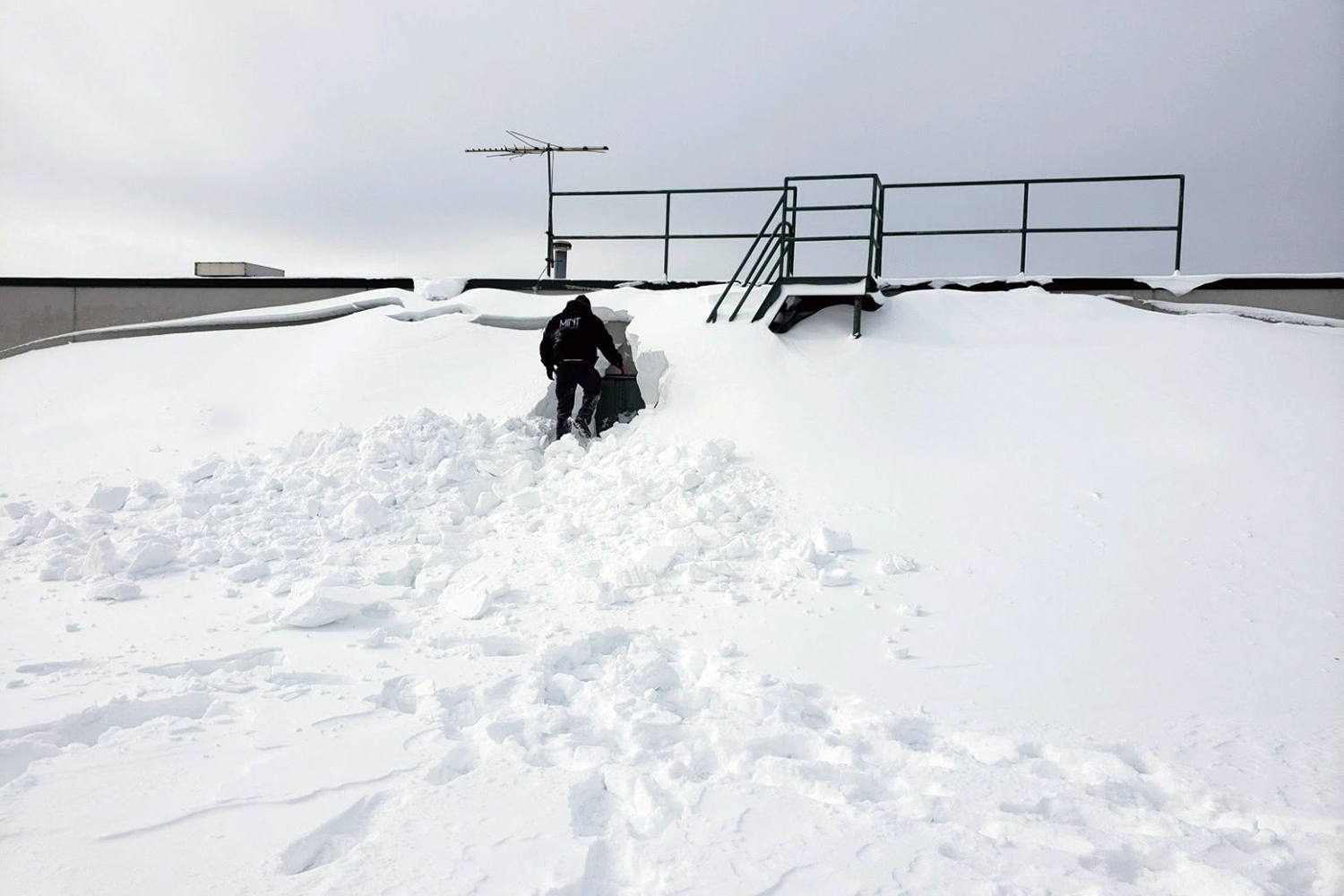
Carolina ice storms - the January 2002, February 2014, and January 2022 events are our roofing team points - load Raleigh commercial flat roofs with ice accumulation that refreezes in cycles and produces damage patterns distinct from any other weather event type.
Raleigh is in a climate zone where winter precipitation frequently arrives as freezing rain rather than snow. The warm air mass from the Atlantic coast and the cold air mass from the Appalachians collide across the Piedmont at temperatures that produce ice instead of snow - and that ice accumulates on commercial flat roofs at weights that can exceed 20 pounds per square foot in severe events. The January 2002 ice storm, the February 2014 ice storm that shut down the Triangle for several days, and the January 2022 ice event that produced two to four inches of ice accumulation across Wake County are the three defining events in recent memory.
Ice load on a commercial flat roof creates damage through several mechanisms. Weight accumulation in low areas - particularly where drains are blocked by ice - produces insulation compression that permanently reduces R-value and leaves the compressed zone a long-term moisture trap. The thermal cycling as ice melts partially and refreezes produces shear forces at parapet base flashings that exceed what adhered flashings can sustain. Icicle formation at parapet edges and scuppers creates mechanical load on those elements that was not part of their design criteria. And when the ice finally melts - typically over two to three days - the melt water overloads drain capacity and produces the same sustained ponding condition as a major rain event.
Ice storm damage on Raleigh commercial flat roofs is chronically under-assessed. The immediate visible damage - fallen parapet coping, displaced HVAC equipment, cracked skylight lenses - is addressed promptly. The non-visible damage - insulation compression, parapet base flashing shear separation, drain collar stress cracking - is often not discovered until the following spring rain season exposes it as active leaks. We assess the full damage pattern after ice events, not just the visible emergency items.
Ice Damage Patterns on Triangle Commercial Roofs
The 2014 ice storm produced a specific damage pattern on Raleigh commercial flat roofs that we documented extensively: parapet base flashing shear separation at inside corners on buildings with adhered base flashing. The mechanism is mechanical - ice accumulation at the parapet wall freezes against the vertical flashing face, and as the ice sheet shifts with thermal cycling, it applies outward and upward force on the flashing that exceeds the adhesive bond. Inside corners concentrate this force at the meeting of two parapet faces, and the corners are where the separations occur. The damage is not visible until the following rain event drives water past the separated bond.
The 2022 event produced a higher ice accumulation in the low areas of commercial flat roofs than the 2014 event, because the 2022 ice sheet was heavier and the freezing rain came in multiple cycles. Buildings in the North Hills corridor - where several commercial buildings constructed in the 2000s have larger flat roof sections with minimal slope - accumulated ice in drainage low areas at weights that produced measurable deck deflection. Buildings where deck deflection was observed after the 2022 event warranted structural inspection; we flagged those observations in writing to the building owners and recommended engineering review.
Metal roof systems - standing seam metal on retail and industrial buildings common in the Garner corridor and along Capital Boulevard - experience ice damage differently. The ice sheet that forms on a metal panel surface transmits shear force to the panel seams and to the anchoring system when it slides. Metal panel buildings where ice accumulation slides from a steep upper section onto a lower flat section can experience panel displacement or fastener pull-through at the transition.
Post-Ice Assessment Protocol
Ice storm assessment timing is constrained by access and safety. Roof walks on icy surfaces are not safe and are not attempted - we wait until the ice has melted sufficiently to provide safe footing, which in a typical Raleigh ice event means 48 to 72 hours post-event during daylight hours. The assessment that follows is conducted as promptly as the safe-access window allows, because the melt-water run-off period is when any previously separated flashings will be actively admitting water.
The assessment focuses on the damage categories most likely to have been produced by ice load: parapet inside corner base flashing condition (probed for separation); drain condition and drain collar condition (checked for ice-forced displacement); parapet coping and cap sheet condition (checked for ice-weight displacement or cracking); and HVAC curb flashing condition (checked for ice-shear displacement at curb faces). Field membrane condition is evaluated for any surface cracking or crazing produced by thermal stress during the freeze-thaw cycle - less common on modern TPO but a concern on older EPDM systems.
Insulation compression testing follows the visual assessment. In drainage low areas where significant ice accumulation was present, we probe the membrane surface for soft spots indicating compressed insulation. Compressed insulation is not a crisis failure but is a long-term performance and moisture-trap concern that belongs in the capital planning documentation if it is not addressed immediately in the repair scope.
Ice Storm Repair Scope and Capital Implications
Ice storm repair scope on a Raleigh commercial roof typically covers: parapet base flashing replacement at inside corners where separation was confirmed by probing; drain collar replacement at any drain collar where ice-force displacement was observed; parapet cap sheet replacement where ice weight cracked or displaced the cap; and HVAC curb flashing replacement where thermal cycling separated the curb face from the membrane.
Insulation replacement at ice-compressed low areas may be deferred to a scheduled repair window if the compression was not sufficient to drive active water entry - but the location and compression level should be documented now as a capital planning item and inspected again at the next spring assessment. Compressed insulation in a chronic ponding low area will become a leak source within one to three more full freeze-thaw cycles.
Ice storm damage claims are complicated by the fact that most commercial property policies treat ice damage under the same wind/storm coverage section as hurricane and hail damage - but the documentation standard is different. The key question for an ice damage claim is demonstrating that the damage was event-specific rather than the result of chronic thermal cycling over multiple winters. Our post-event assessment, conducted within the event window and documenting the specific damage mechanisms tied to ice accumulation, is the documentation that makes that distinction.
Frequently asked questions
Should I have my Raleigh commercial building's roof assessed after every significant ice storm?
For ice events with confirmed accumulation above one inch, yes - at minimum a visual parapet and drain inspection conducted after the ice has cleared. The 2014 and 2022 events both produced widespread flashing damage that was not apparent without a detailed roof walk. Minor ice events that do not produce accumulation or freeze-thaw cycling at the parapet face are lower priority. If your building is over 15 years old or has adhered base flashing, the bar for a post-ice assessment is lower - those flashings are more vulnerable to ice-shear separation.
My Raleigh building has a flat roof with poor drainage - is it at higher ice damage risk?
Yes, meaningfully so. Drainage low areas that pond water after a rain event will accumulate ice at the same low areas during a freezing rain event, because the ice sheet forms on the ponded water film. Higher ice accumulation at the low areas means more insulation compression, more lateral ice-shear force at adjacent parapet flashings, and more hydrostatic loading from melt water that cannot drain until the drain itself thaws. Drainage improvement at chronic ponding zones reduces ice damage exposure as well as rain damage exposure.
Do ice storm events void the manufacturer warranty on my Raleigh commercial roof?
Ice accumulation damage - like hail damage - is typically excluded from manufacturer material warranties, which cover defects in the material itself rather than force majeure loading events. However, the same rule applies here as with hail: repair work performed after ice damage must be executed to manufacturer installation specifications if the warranty is to remain in force over the unaffected portions of the roof. We repair to manufacturer spec and document accordingly.