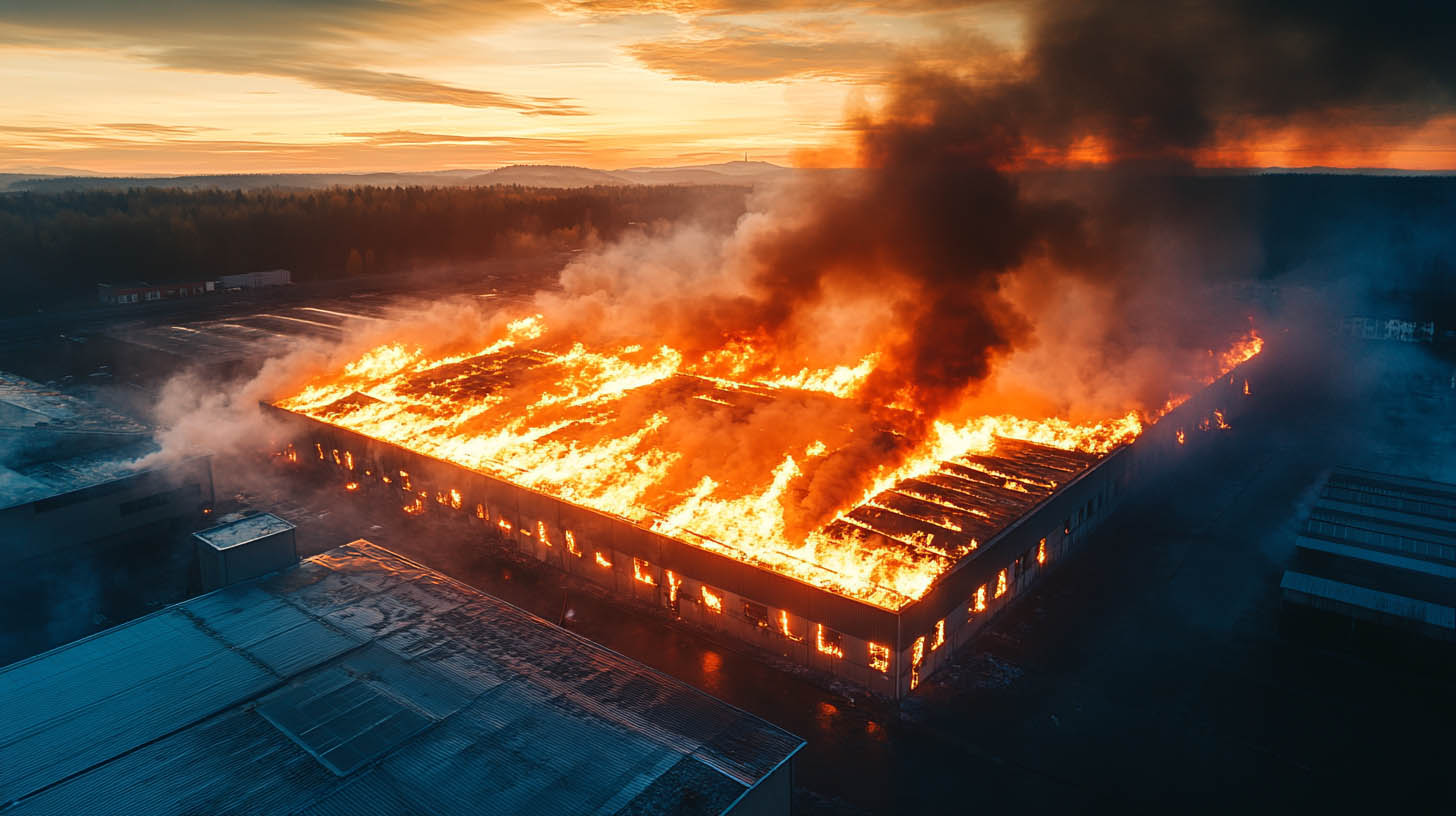
Fire damage on a commercial roof is a structural and moisture emergency simultaneously. We coordinate with structural engineers, provide emergency dry-in over intact structure, document the damage scope for insurance, and scope the permanent repair or replacement once the structure is cleared.
Commercial building fires in Raleigh - whether kitchen fires in restaurant buildings in Glenwood South, electrical fires in aging Downtown office buildings, or equipment fires in industrial and warehouse buildings along the US-1 or I-40 corridors - produce roof damage through two mechanisms: direct flame damage to the membrane and decking above the fire origin, and firefighting water damage to adjacent roof sections from suppression activity.
The structural priority comes first. After a commercial building fire, we do not access the roof until the responding fire marshal and the building's structural engineer have cleared the building for entry. Fire damage to roof decking - particularly metal decking that has been exposed to high heat - can produce structural compromise that is not visible on the underside of the deck without detailed inspection. Buildings where fire reached the roof level or where significant suppression water was applied from ladders require structural inspection before any roofing assessment or repair work begins.
The insurance documentation challenge after a fire is distinguishing fire-related roof damage from pre-existing roof condition. Adjusters examining fire-damaged commercial buildings are alert to situations where pre-existing membrane deterioration is being presented as fire damage. Our post-fire assessment documents each damage zone, identifies the mechanism of damage - direct flame, radiant heat, suppression water, debris impact - and separates those from any pre-existing conditions visible in adjacent undamaged areas.
Structural Clearance and Safety Protocol
We do not mobilize for roof assessment after a commercial building fire until we have verbal clearance from the responding fire marshal that the building has been cleared for re-entry, and we request a brief structural walk-around with the building owner or a licensed structural engineer before going on the roof. Signs of structural compromise - visible deflection in the roof plane, warped structural members visible through burn openings, wall displacement - stop the roofing assessment until structural engineering has cleared the specific roof area.
For Raleigh commercial buildings in the Downtown core that are served by the City of Raleigh Fire Department, clearance typically comes from the fire marshal's post-event inspection within 24 to 48 hours for smaller events. For larger events involving multi-story structures or significant structural compromise, the clearance process takes longer and may involve the City of Raleigh's building inspections division in addition to fire marshal clearance.
Once the structure is cleared, our assessment protocol follows the same zone-diagram and photo-documentation sequence as other damage categories - with the addition of thermal damage assessment at deck level. We identify deck sections where heat exposure may have compromised steel deck coating, fastener integrity, or deck gauge. Where deck condition is uncertain, we recommend a structural engineer's review of the specific deck section before proceeding with insulation and membrane installation.
Emergency Dry-In Over Fire-Damaged Structure
After a commercial building fire, the building is typically open to weather at the fire origin area while investigation and clearance are ongoing. Secondary weather events - Raleigh's summer afternoon thunderstorm pattern can produce a rain event within hours of a morning fire - will extend interior damage significantly if the roof is not covered. Emergency dry-in over intact adjacent structure is appropriate as soon as the fire marshal clears the building for access.
Emergency dry-in after fire is more complex than post-storm dry-in because the fire origin area may have compromised deck sections that cannot support workers or materials. We dry-in around the fire origin area, over intact structure, using structurally supported systems where deck condition is uncertain. The fire origin area remains open - or covered with a suspended tarp if structural conditions permit - until structural engineering clears it for deck replacement.
Suppression water damage to adjacent roof sections - membrane that was soaked but not burned - also requires early attention. Suppression water on a flat roof can pond for days after the fire, and the same insulation saturation dynamic that applies to storm water damage applies here: saturation that is not addressed early will migrate laterally through the insulation assembly. We provide emergency drain clearance and temporary drainage improvement in the suppression-water zone as part of the emergency dry-in scope.
Insurance Documentation and Permanent Repair Scope
Fire damage insurance documentation for commercial buildings involves the carrier's own adjuster, often a forensic engineer retained by the carrier, and sometimes a public adjuster retained by the building owner. Our role is to provide the professional roofing assessment - the technical condition of the roof assembly as found immediately post-event - that supports the overall claim documentation.
The permanent repair scope after fire damage typically involves: structural deck replacement at zones where heat compromise was confirmed by engineering; insulation replacement across all fire-damaged and suppression-water-saturated zones; membrane replacement across the affected area; flashing and penetration replacement at any unit that was damaged by heat or debris; and perimeter edge termination replacement where direct flame or radiant heat damaged the edge assembly.
For commercial buildings in Raleigh where fire damage triggers a code-compliance upgrade obligation - a renovation exceeding a certain percentage of building value triggers current code application in the City of Raleigh's jurisdiction - the repair scope must address code compliance as well as like-for-like replacement. This is particularly relevant for older commercial buildings along the Fayetteville Street corridor and in the Five Points commercial area, where buildings from the 1950s through 1980s may have roofing assemblies that no longer comply with current North Carolina energy or fire code requirements.
Frequently asked questions
How long does it typically take to get a fire-damaged Raleigh commercial building under a weather-tight cover?
Assuming the fire marshal clears the building within 24 hours - which is typical for smaller commercial fires - we can have emergency dry-in in place within office to any location inside the I-440 Beltline is two to three hours once equipment is loaded. Call 919-372-4890 directly for post-fire emergency response.
Does the City of Raleigh require a permit for fire-damage roof repair?
Yes. Fire-damage repair work on a commercial building in the City of Raleigh requires a building permit, and the scope of work triggers a mandatory inspection by the city's building inspections division at rough-in and at final. For projects in the Downtown core where the repair involves significant structural deck replacement, the permit package may require engineer-stamped drawings. We handle permit applications as part of pre-construction and coordinate all required inspections.
Can you work on a commercial building while it is still under fire investigation?
Not on the portions of the building that are within the fire origin investigation perimeter. The fire marshal's investigation area must remain undisturbed until investigation is complete and the scene is released. We coordinate with the fire marshal's office on the investigation release timeline and focus initial emergency dry-in work on adjacent areas outside the investigation perimeter. Once the scene is released, we can proceed with the full assessment and permanent repair scope.