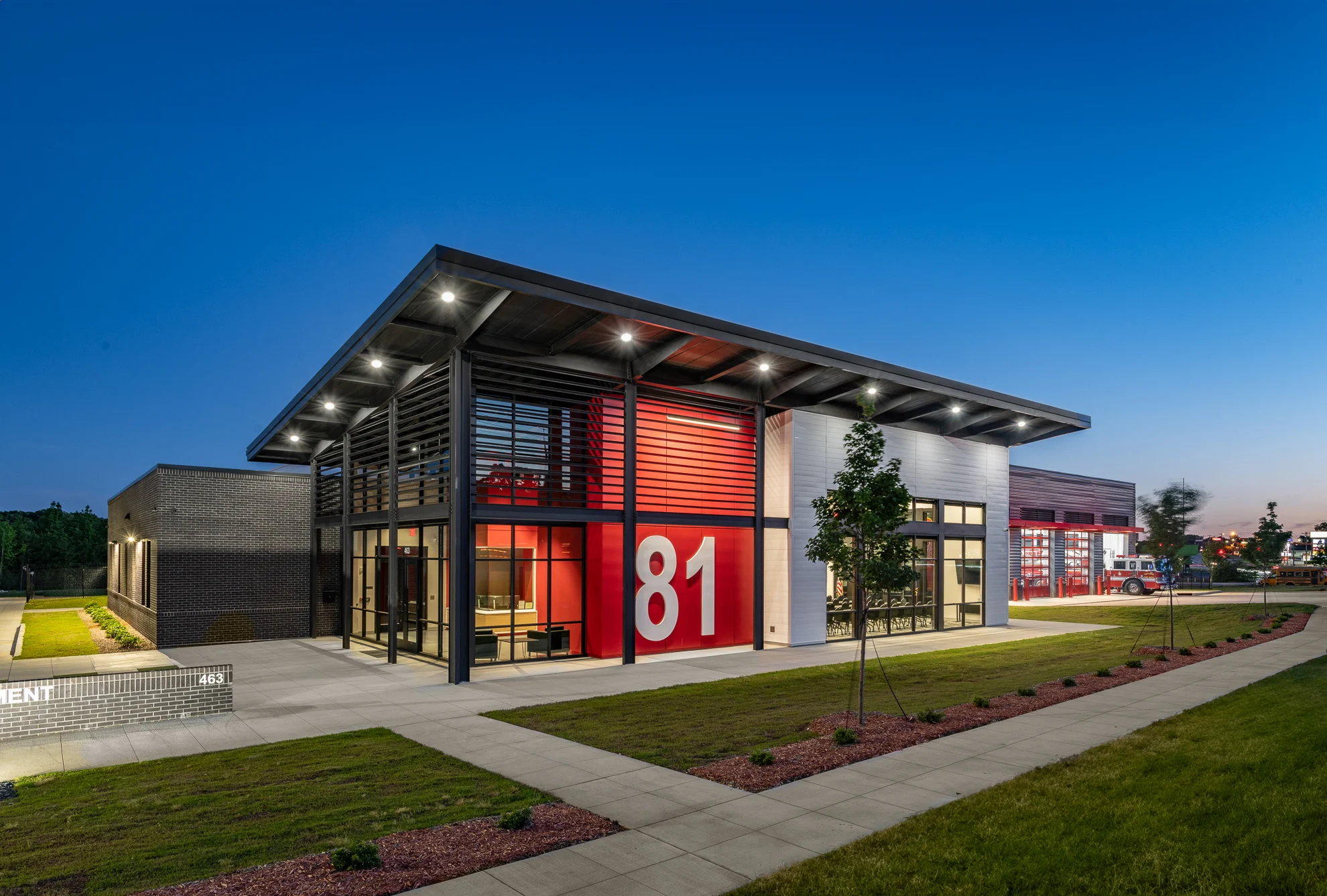
Raleigh's commercial corridors include the I-440 Beltline employment ring, the Research Triangle Park campus, the Glenwood South and West Street redevelopment zones, and the US-1 and US-64 commercial belts. Fire stations in this market are public facilities that require roofing contractors who can work around continuous emergency response operations - apparatus bay access, daily alarm protocols, and apparatus exhaust exposure conditions that affect product selection are all standard pre-conditions for fire station roofing in this jurisdiction.
Public competitive bidding requirements apply to fire station re-roofing projects in Raleigh above the jurisdiction's competitive bid threshold. Understanding the bidding process - from bid advertisement through contract selection - is as important as understanding the technical requirements. A fire station re-roofing bid that's technically complete but administratively incomplete (missing required certifications, incorrect bond form, wrong prevailing wage schedule) will be rejected, requiring the bid to be re-advertised and adding months to the schedule. We've managed the public procurement process for fire station roofing projects throughout NC and know what the documentation requirements are in each major jurisdiction.
Life-safety code compliance during fire station re-roofing in Raleigh goes beyond the standard assembly occupancy requirements. Fire stations are operational emergency response facilities - their own life-safety systems must remain fully functional during any construction activity. Smoke detection, CO detection, sprinkler coverage, emergency lighting, and communication systems in crew quarters and common areas cannot be temporarily compromised without documented alternate compliance measures approved in writing by the authority having jurisdiction (AHJ). We include AHJ coordination for any construction affecting station life-safety systems as a standard pre-construction deliverable.
Energy code compliance for fire station re-roofing in Raleigh follows NC's commercial energy code, which references ASHRAE 90.1 for minimum roof insulation requirements. Public facility projects - including fire stations - are typically required to meet or exceed the energy code minimum as a condition of the building permit. For older stations that were built before energy code requirements existed, a re-roofing project is often the first opportunity to bring the building's thermal performance up to current standards. We specify insulation levels that meet or exceed the current energy code requirements and include energy code compliance documentation in the permit submittal.
Fire Station Roofing - Regulatory Questions
What is the competitive bid threshold for fire station roofing in NC?
NC's public contract code establishes competitive bid thresholds that vary by project type and jurisdiction. For most municipal fire departments and fire districts, re-roofing projects above $50,000-100,000 (thresholds vary by jurisdiction) require competitive public bidding with bid advertisement, pre-bid conference, and public bid opening. We can confirm the specific threshold for the Raleigh fire department or fire district based on the applicable jurisdiction's procurement regulations. Informal quotes are sufficient below the threshold; formal competitive bids are required above it.
What licenses and certifications are required for public fire station roofing in NC?
Required credentials for fire station roofing in NC include: NC roofing contractor license (named on the permit application), general liability and workers' compensation insurance at the required limits, performance and payment bonds at 100% of contract value, certified payroll capability for prevailing wage compliance, and manufacturer certification for the specified system. Some jurisdictions also require a NC public works contractor registration separate from the roofing license. We hold all required credentials and maintain them current as a standard condition of doing public facility work.
What AHJ coordination is required for fire station re-roofing?
The Authority Having Jurisdiction for fire station construction is typically the city or county building department and the fire marshal - the same agencies that review all commercial building permits. However, fire stations may also be subject to review by the fire department's own apparatus and operations divisions, which have standing to comment on construction that affects operational capability. We confirm the AHJ structure for the specific project before permit application and ensure that all stakeholder reviews are completed before construction begins.
What are the ASHRAE 90.1 insulation requirements for fire stations in Raleigh's climate zone?
ASHRAE 90.1 minimum roof insulation requirements for commercial buildings in Raleigh's climate zone typically range from R-20 to R-30 continuous insulation depending on the specific climate zone designation. Most pre-2000 fire stations in Raleigh have existing insulation in the R-10 to R-15 range - significantly below current code. A re-roofing project provides the opportunity to bring insulation to current code levels. We include ASHRAE 90.1 compliance documentation in all permit submittals and specify insulation assemblies that meet the current requirement for the applicable climate zone.
What historic preservation requirements apply to Raleigh's older firehouses?
Fire stations built before 1960 - particularly in established urban neighborhoods - may be listed on the National Register of Historic Places, designated as local landmarks, or located within historic districts that regulate exterior modifications. Roofing replacement on a designated structure requires SHPO review under the Secretary of the Interior's Standards for Rehabilitation. The review process requires documentation of existing conditions, proposed materials, and a narrative explaining how the proposed approach preserves the historic character of the building. We initiate SHPO review as early as possible - at or before contract execution - to avoid delaying the construction schedule.
Commercial roofing for fire station & emergency services facility roofing in Raleigh, NC - specifications, scheduling, and project coordination for this building type.
Warehouse roofing in the Triangle is a volume problem. The buildings are large - 200,000 to 500, distribution corridor in Research Triangle Park - the rooflines are uninterrupted flat planes with minimal architectural complexity, and the occupants running receiving docks, racking systems, and fork traffic underneath cannot absorb an unplanned interior water event without direct operational consequences.
The RTP industrial zone along Davis Drive and the airport-adjacent industrial parcels north and west of RDU serve as logistics hubs for the same tech and pharma companies that anchor the park. A leak into a pharma distribution facility or an electronics receiving dock creates compliance and liability exposure that goes well beyond a roofing repair ticket. That context shapes everything about how we scope, sequence, and close out warehouse roof work.
I work on warehouse buildings specifically because the work rewards precision. A 300,000 square foot flat roof with one unprepared drain or one compromised field seam is a slow failure waiting to be found by the wrong rainstorm. We find those conditions on the front end - during inspection - not after mobilization.
Davis Drive and RTP Distribution Facilities
The Davis Drive corridor through Research Triangle Park runs through one of the most active industrial real estate zones in the Southeast. Distribution facilities here serve the pharma, biotech, and electronics tenants whose corporate campuses occupy the park's interior. Loading dock configuration, 24-hour receiving operations, and tenant lease structures with strict operational continuity clauses shape every aspect of a roofing scope on these buildings.
Most of the warehouse stock along Davis Drive and the adjacent O'Kelly Chapel Road and Raleigh Boulevard industrial clusters was built between the 1990s and 2010s. Many of these roofs - originally installed with 45-mil EPDM or early TPO systems - are now approaching or past their warranted service life. We have walked a significant number of these buildings and found the same patterns repeatedly: ponding at interior drains that have settled below the surrounding field membrane, compromised laps at pipe penetrations where mastics have shrunk and cracked, and parapet flashings that have delaminated from repeated thermal cycling.
For active distribution facilities, we scope work in sections - typically 50,000 to 100,000 square foot zones - that allow the facility to continue operating in the balance of the building while we work. Crane positioning, debris removal, and material staging are coordinated directly with the facility manager before mobilization. We do not position staging where it interferes with dock access or truck maneuvering in active receiving yards.
RDU Airport-Adjacent Industrial Zone
The industrial and warehouse parcels clustered north and west of RDU Airport - in Morrisville, off Aviation Parkway, and along the NC-540 triangle - sit in high-exposure terrain. The open ground plane around the airport produces sustained wind speeds and directional loading that the more sheltered Raleigh urban core does not see. We design fastener patterns and perimeter attachment in this zone against IBC wind-uplift requirements for Exposure Category C, not the default assumptions applied to buildings in developed suburban terrain.
Rooftop HVAC equipment on airport-adjacent warehouse buildings is often larger and more mechanically complex than comparable retail or office buildings - these facilities run climate-controlled environments for perishable freight or sensitive electronics, and the rooftop equipment footprints reflect that. We route work around active mechanical equipment, schedule equipment lifts in coordination with the facility's mechanical contractor, and document every penetration before and after work.
Several logistics facilities in this corridor have added rooftop photovoltaic arrays as part of corporate sustainability programs. Solar-equipped warehouse roofs require disconnection and temporary panel protection before tear-off, and re-commissioning verification before manufacturer warranty inspection. We treat PV coordination as a standard pre-construction item, not an extra sale.
What a Warehouse Roof Inspection Covers
A warehouse roof inspection that produces useful information is more than a drone flyover and a PDF. We walk every drain, every penetration, every parapet corner, and every expansion joint. We pull moisture cores in five to ten locations based on interior water stain patterns and visible surface anomalies. We check deck condition at the corners and at any location where interior framing suggests settlement.
The output is a roof zone diagram with every deficiency photographed and keyed to a grid reference, a moisture core log with readings and GPS coordinates, and a written recommendation that distinguishes maintenance-level repairs from conditions that require section replacement from conditions that require full replacement. That document is useful to a building owner making a capital decision. A four-page PDF with stock photos is not.
For multi-tenant warehouse buildings, the inspection report also notes which deficiencies fall within each tenant's demised premises versus the landlord's common roof area - useful for cost allocation under most commercial lease structures.
Frequently asked questions
Can you work on a warehouse roof while the facility is operating?
Yes - this is the standard condition for most warehouse roof projects. We section the roof and sequence work so that active operations continue in the remainder of the building. Tear-off, which generates the most noise and debris, is scheduled during shifts when the dock operation is reduced where possible. We dry-in each section by end of day. If interior operations cannot tolerate any overhead activity in a specific zone - active freeze storage, sensitive electronics handling - we schedule that zone last and plan it against the facility's maintenance window.
How do you handle large roof drains on a distribution center?
Internal drains on large warehouse roofs are one of the most common failure points we find in inspection. We pull drain covers, check drain bodies for settlement and cracking, inspect the membrane termination around each drain, and camera-scope internal drain lines if ponding depth at the drain rim suggests partial blockage. Drain raises - where a settled drain body needs to be brought back to field membrane elevation - are a standard repair item, not a specialty. We scope them before mobilization and include them in the replacement or maintenance work, not as a change order.
What membrane system do you recommend for large flat warehouse roofs?
For most warehouse and distribution buildings in the Triangle, 60-mil mechanically attached TPO is the standard specification. It provides good UV resistance for Raleigh's high-summer conditions, its heat-welded seams perform well against the sustained rainfall events the region receives, and its reflective white surface reduces summer cooling loads on climate-controlled facilities. For high-traffic roofs with significant mechanical access, we specify 80-mil TPO. For buildings with heavy chemical exhaust or aggressive roof-level atmospheric conditions, EPDM or PVC may be the better fit - we assess and recommend based on the actual building conditions, not a default preference.