Flex Roofing for Raleigh's Most Unpredictable Buildings
A flex building changes more often than its roof does. The same shell off Capital Boulevard might hold a sign shop in one bay, a physical therapy clinic in the next, and a small-batch coffee roaster behind a roll-up door at the end of the row, and within three lease cycles every one of those tenants will have moved, expanded, or swapped out their rooftop equipment. We work on multi-tenant flex roofs across Raleigh precisely because that churn is what wrecks them, and because the membrane has to survive a use that nobody can predict when the building goes up.
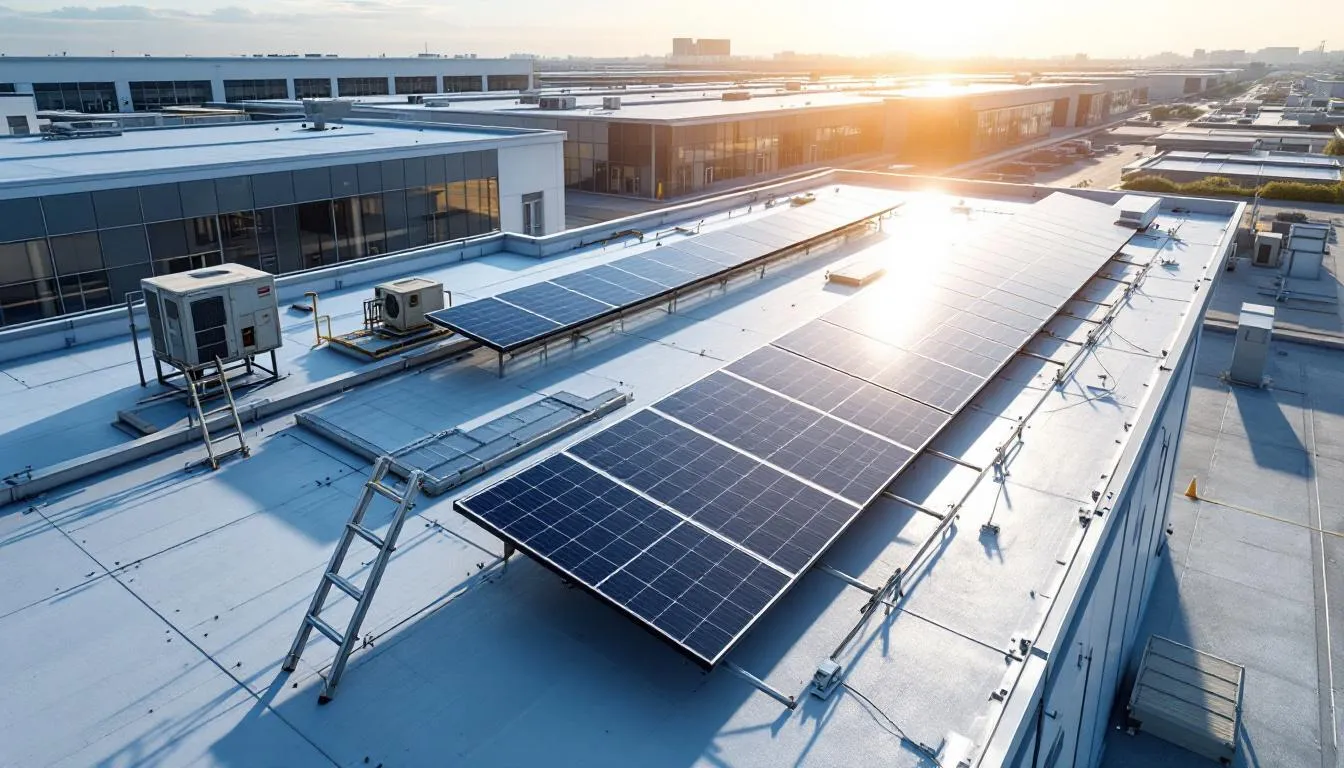
The defining roofing reality of flex space is penetration density. A single-user warehouse might have a dozen things sticking through the roof; a subdivided flex building of the same footprint can have fifty or more once you count every condensate line, exhaust fan, gas riser, conduit run, and rooftop unit that tenants have added one improvement at a time. Each of those penetrations is a separate place for water to find the deck, and most of them were flashed by whoever did that tenant's buildout rather than by a roofer. That is the condition we inspect for first.
Where Flex Buildings Cluster Around Raleigh
The flex inventory here concentrates in a few recognizable pockets. The Capital Boulevard corridor running north toward the Beltline is dense with older tilt-up and concrete-block flex, much of it built when the road was the city's main industrial spine. The Tri-Center and Tarheel Drive area off New Bern Avenue holds another large cluster, and newer pre-engineered metal flex has filled in around Brier Creek and the I-540 interchanges on the city's northwest edge. Tenants in these buildings range from contractors and distributors to lab incubators spilling out of the Research Triangle Park orbit, and that mix tells us a lot about what the roof is carrying before we ever climb up.
Construction era matters as much as location. A 1980s tilt-wall flex on Capital Boulevard usually started life under gravel-surfaced built-up roofing or early single-ply, and by now it is on its second or third system with layers stacked on top. The metal flex out near Brier Creek is a different animal entirely, with standing-seam or R-panel roofs that fail at the fasteners and laps rather than in the field. We scope these two building types in completely different ways, and lumping them together is how owners end up with the wrong specification.
The Tenant-Improvement Problem
The biggest difference between flex roofing and ordinary low-slope work is that the roof is a moving target. Every time a bay turns over, the incoming tenant's contractor may set a new rooftop HVAC unit, core a hole for a grease duct, or run electrical across the membrane to a new piece of equipment. None of it is in the original drawings, and most of it is sealed with whatever was in the truck that day. Six months later a curb is leaking and nobody can say who built it.
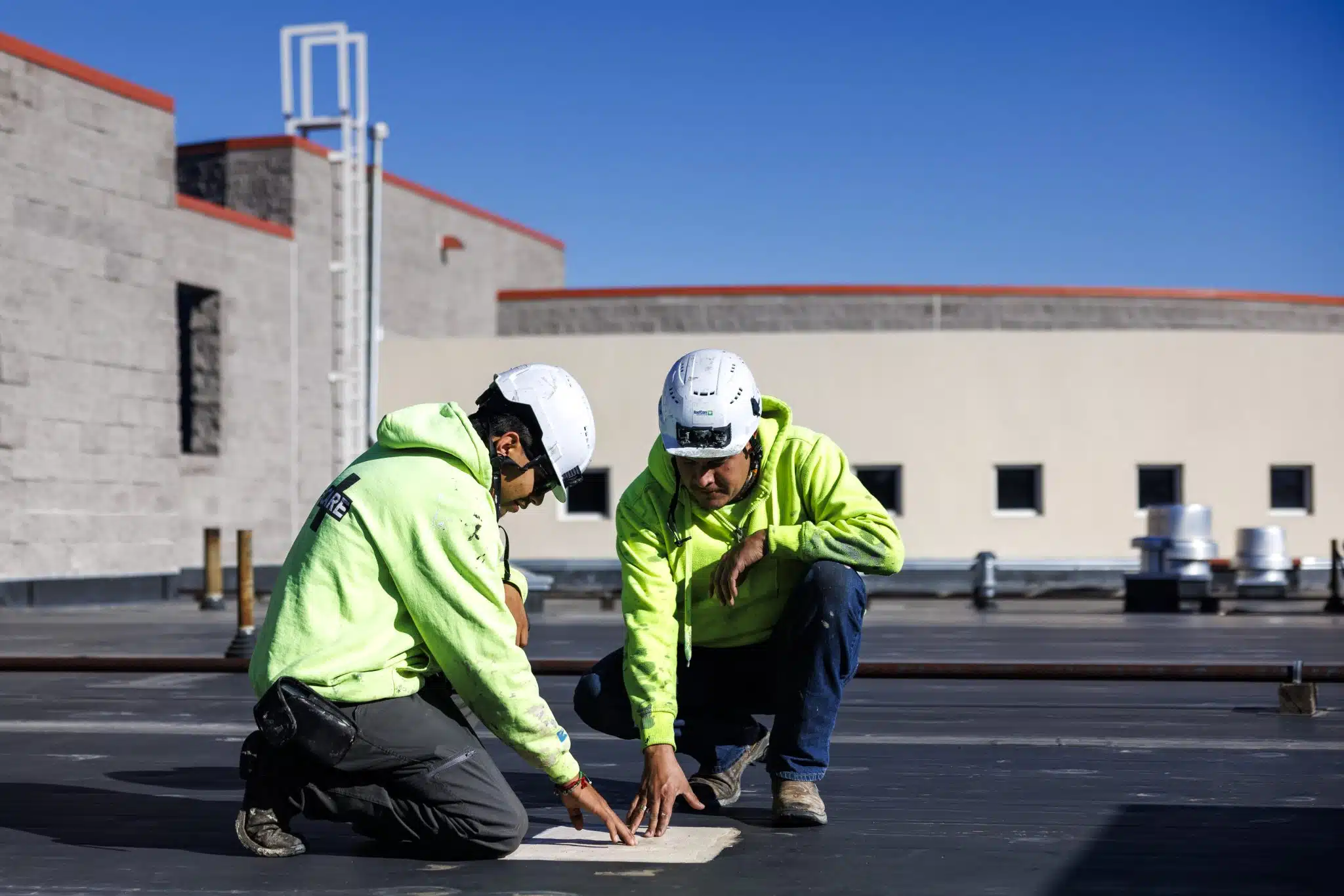
Before we price any flex project in Raleigh, we walk the roof and build a penetration inventory: every unit, curb, pipe, and conduit photographed and mapped against the bays below. That survey routinely turns up abandoned penetrations from tenants who left years ago, curbs that were never properly counter-flashed, and condensate lines draining straight onto the membrane instead of into a drain. We get those conditions corrected as part of the scope rather than welding a new membrane over problems that will resurface as warranty claims.
Vacancy Is When Flex Roofs Fail
Empty bays are where flex roofs quietly fall apart. When a tenant pulls out and takes their rooftop unit with them, the curb opening often gets capped with a sheet of something temporary that is supposed to last until the next lease, and instead it lasts until the next hard Piedmont thunderstorm. Nobody is inside to notice the ceiling staining, so the water sits in the insulation and spreads laterally into the occupied bays on either side. By the time it shows up at a paying tenant's drywall, the wet insulation footprint is far larger than the hole that caused it.
For owners and property managers carrying flex space through a lease transition, we recommend a roof check on every turnover: confirm that vacated curbs are properly closed, verify former-tenant penetrations are sealed, and clear the drains, which collect debris faster over empty bays than occupied ones. Catching an open curb during a vacancy is a one-afternoon repair. Catching it after it has migrated under two adjacent tenants is a tear-out.
Specifying the Right System
For tilt-wall and block flex buildings, our default is a 60-mil TPO membrane mechanically attached over new polyisocyanurate insulation, with tapered insulation added wherever the existing roof has settled into ponding birdbaths around interior drains. TPO's heat-welded seams hold up well against Raleigh's heavy summer rainfall, and the reflective surface takes load off the rooftop units that subdivided tenants run hard through August. On buildings where multiple tenants send HVAC service crews across the roof constantly, we step up to 80-mil membrane or add walkway pads on the traffic paths, because the punctures that kill flex roofs usually come from boots and dropped tools, not weather.
Pre-engineered metal flex calls for a separate playbook. Depending on panel condition and purlin spacing, a standing-seam recover or a fluid-applied silicone coating system can extend service life without a full tear-off, sealing the lap joints and fastener heads that leak first on metal roofs. We evaluate both against full replacement based on what the panels are actually doing, and we are candid when a coating is only buying a few years versus when it is the right long-term answer.
Working Around Multiple Tenants
Coordination is half the job on an occupied flex building. We start every project with a bay-by-bay occupancy map from property management so we know which tenants have live rooftop equipment, which bays sit empty, and who cannot tolerate noise or an HVAC shutdown during their hours. Sequencing and daily dry-in plans run through the property manager, and tenants get advance notice through that single channel rather than fielding questions from the crew directly. We close each section watertight before the end of the day, every day, because a building full of unrelated tenants has no tolerance for an overnight surprise.
Talk to a Roofer Who Knows Flex Buildings
If you own or manage multi-tenant flex space anywhere from the Capital Boulevard corridor to Brier Creek, we will walk the roof, inventory the penetrations, and give you a written scope that accounts for the tenants you have and the ones you will have next. Reach out and we will get on your roof.