
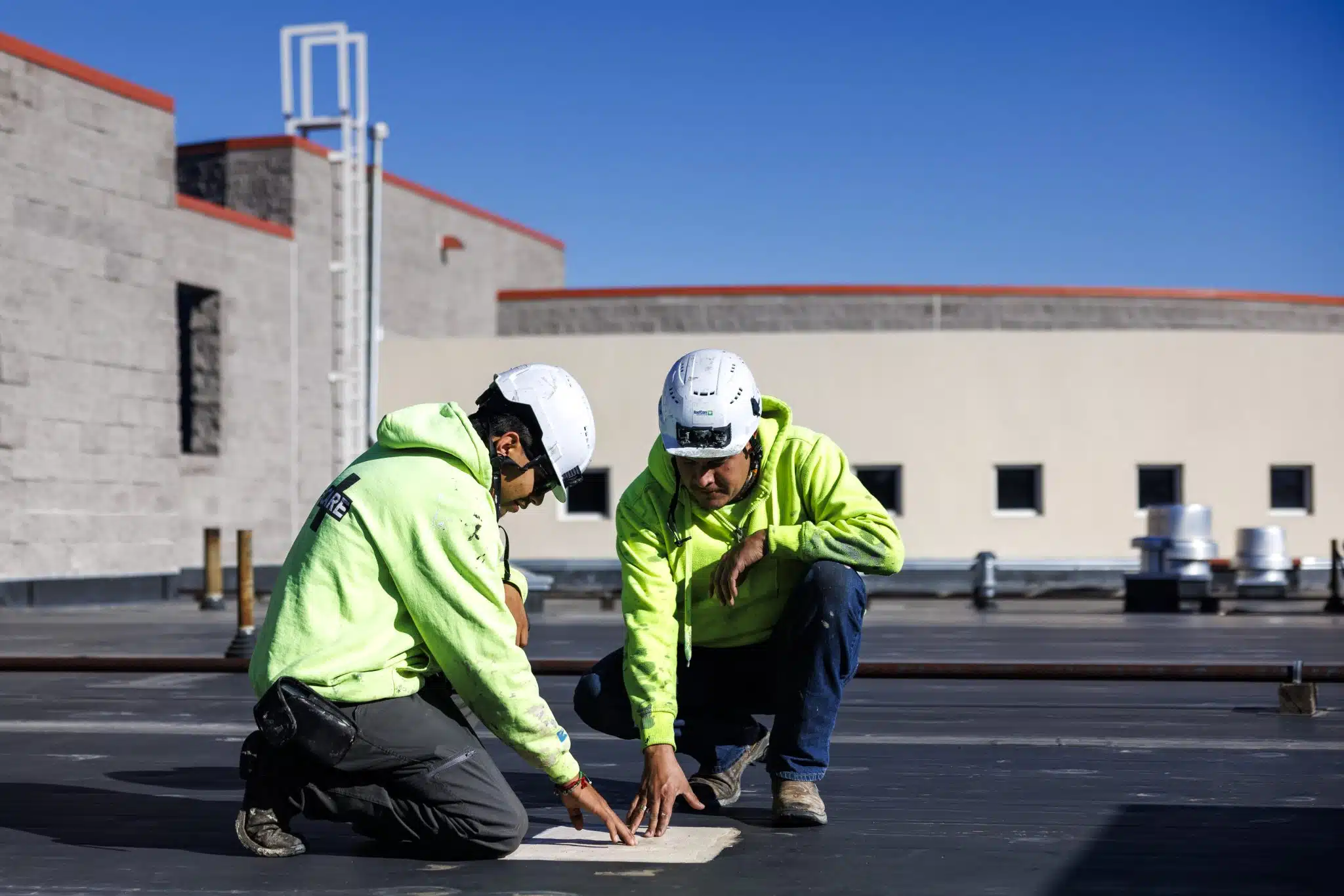
Your accountant depreciates the roof over 39 years. The roof itself has other plans - most commercial membranes in the Triangle come off between year 15 and year 25, and where a given roof lands inside that ten-year spread has less to do with the product than with whether anyone serviced it. A service agreement is how you land on the far end of the spread: scheduled rooftop visits, on the calendar, every year, whether or not anything looks wrong from the parking lot.
The arithmetic is lopsided. An annual agreement runs a rounding error against what a full tear-off and replacement costs on a mid-size Raleigh commercial building, and every year of service life it adds is a year that capital stays in the business instead of on the roof. Deferred replacement is not neglect when it is earned with documentation - it is the entire return on the agreement.
What Ages a Triangle Roof
Roofs here do not fail from age so much as from exposure that nobody interrupted. Summer rooftop temperatures north of 150 degrees work the seams and sealants through daily expansion cycles. The spring pollen drop mats into drains and scupper strainers, then the first big thunderstorm turns a blocked drain into a pond. And every few years a hurricane remnant - Fran, Florence, the Helene moisture plume - parks multi-day rain over Wake County and probes every lap, flashing, and termination the previous seasons loosened. None of that is preventable. All of the damage it causes is, if someone is on the roof at the right times.
The Visit Cadence
The agreement is two scheduled visits a year, timed to that exposure pattern. The late-spring visit comes after the pollen has dropped: strainers and drain bowls cleared, the sealant and flashing work the thermal cycling will attack all summer checked and touched up, and the membrane walked seam by seam. The early-fall visit lands ahead of the remnant-storm window: drainage confirmed end to end, edge metal and copings checked for movement, penetrations and curb flashings probed, and anything the summer opened up closed before sustained rain finds it.
Small repairs - splits, blisters, open laps, lifted flashings - are completed during the visit itself. Each visit ends with a photographed condition report delivered inside two business days: what was found, what was corrected, what to watch. File two of those a year and the roof stops being a mystery line item.
Replacement on Your Schedule, Not the Roof's
The condition history is what turns roof spending from reactive to planned. After a few cycles you know the membrane's trajectory - which sections are aging fastest, whether moisture is getting into the insulation, how many serviceable years remain. Replacement gets a target year and a budget line instead of arriving as an emergency in the middle of a lease term, and when that year comes the documented history supports the cheaper paths: a recover or a restoration coating is only on the table if the record shows the roof was kept dry and sound. Owners of office and flex buildings from the Beltline to RTP use exactly this file to walk into budget season with a number instead of a guess.
Service Agreement Questions
How many years can a service agreement realistically add?
On a structurally sound single-ply or modified bitumen roof, consistent twice-a-year service commonly adds five to ten years of serviceable life. The gains come from unglamorous places: drains that keep flowing, seams repaired at two inches instead of two feet, and flashings that never get the chance to let water into the insulation.
Is it worth starting an agreement on an older roof?
Usually, and sometimes it matters most there. The first walk establishes an honest baseline; if the membrane has years left, service protects them, and if it is closer to the end, the report tells you whether a restoration coating or recover can defer full replacement. Either way you make the call with evidence.
Does the agreement help with capital planning?
Yes - that is half its value. The visit history feeds a replacement-year forecast you can put in front of ownership or a lender, and it keeps the eventual project competitive: a documented roof gets bid as a defined scope, not padded for unknowns.
What if a visit finds damage beyond minor repair?
It gets photographed, written into the report, and priced as a separate recommendation - never folded into the agreement or performed without approval. Agreement holders also get priority scheduling when storm damage does hit, because the crew already knows the roof.
To put a Raleigh building on the service calendar, call 919-372-4890 or send the roof address through the contact page. We walk the roof, write the baseline report, and quote a flat annual price for the agreement.