Raleigh commercial roofs face wind events from multiple directions - derecho-class straight-line wind, late-summer tropical remnant wind, and spring squall lines. We document the damage, scope the repair, and produce the insurance package.
Wind damage on Raleigh commercial flat roofs does not always look like what property owners expect. The visible failure - a pulled membrane edge, a flapping parapet cap, material on the ground - represents the final stage of a process that typically begins at corners, at edge terminations, and at penetration flashings where the membrane is under the highest uplift stress. The field of the roof, where the membrane is fastened flat to the deck, usually holds. The perimeter and the details are where wind damage concentrates.
The Triangle's wind hazard profile includes several distinct event types. Derecho-class straight-line wind events - organized convective systems that can produce sustained winds above 60 mph across a corridor - have struck the Raleigh area multiple times in the past decade. Spring squall lines ahead of cold fronts routinely produce wind gusts above 50 mph across Wake County. Buildings near RDU Airport and along the I-40 western corridor, where terrain opens up and provides less shielding than the urban core, see higher average wind speeds and more frequent uplift events than buildings in sheltered Downtown locations.
The documentation challenge with wind damage is establishing that the failure occurred during the event rather than representing progressive edge deterioration. We inspect and photograph within the event window to create that documentation. A photo-keyed zone diagram showing edge termination displacement, fastener pull-through, or membrane blow-off, taken within 48 hours of the event and tied to weather service wind speed records for the date, is the documentation that makes a wind damage claim defensible.
How Wind Damages Raleigh Commercial Flat Roofs
Uplift on a flat or low-slope commercial roof acts through two mechanisms: direct positive pressure on the windward parapet face that drives wind under the membrane at edge terminations, and negative pressure (suction) on the leeward side and field of the roof that pulls the membrane up and away from the substrate. Perimeter zones - typically the first ten percent of the roof width from each edge - experience the highest uplift loads under IBC wind design methodology. That is why edge termination failure is the dominant wind damage failure mode.
Mechanically attached TPO and EPDM systems that were installed with fastener patterns designed to the minimum code requirement at the time of installation may not Buildings that were built before the 2010 editions of IBC tightened the exposure category maps for the Raleigh area, or buildings on open terrain that were originally classified at a lower exposure category than their actual conditions warrant, may be underspecified against current wind uplift requirements. That is an issue we identify during post-event assessment and report in writing - not as an immediate failure, but as a capital planning vulnerability.
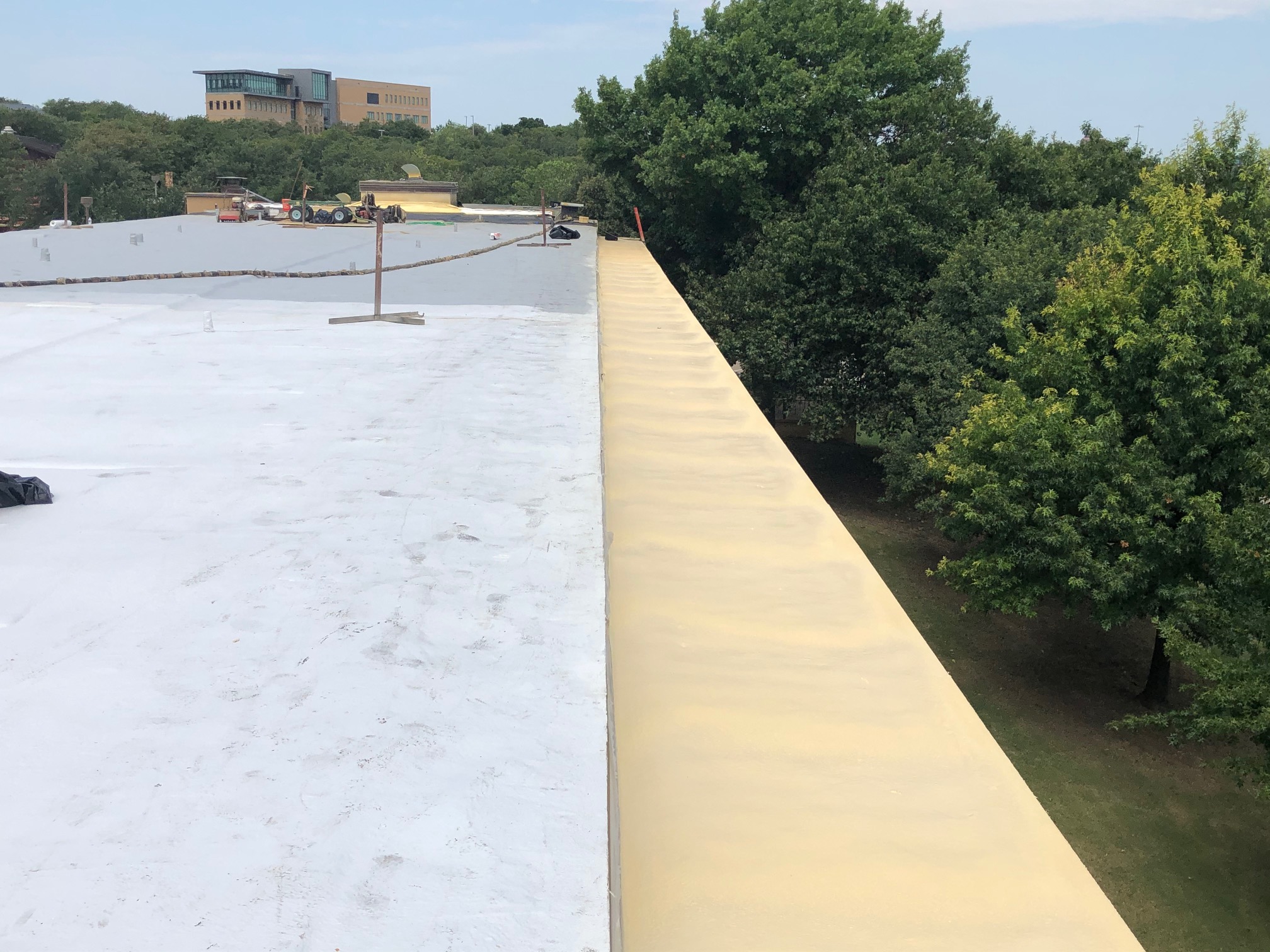
Parapet cap sheet and metal edge coping failure is the most visually obvious wind damage category. Cap sheet blow-off at parapet tops exposes the substrate to water entry at the most vulnerable location - the vertical-to-horizontal transition. Metal coping systems that were improperly clipped - under-fastened cleats, non-locking profiles - can dislodge in high-wind events and travel as projectiles. We inspect and document cap sheet and coping condition as part of every post-wind assessment.
Assessment and Scope Documentation
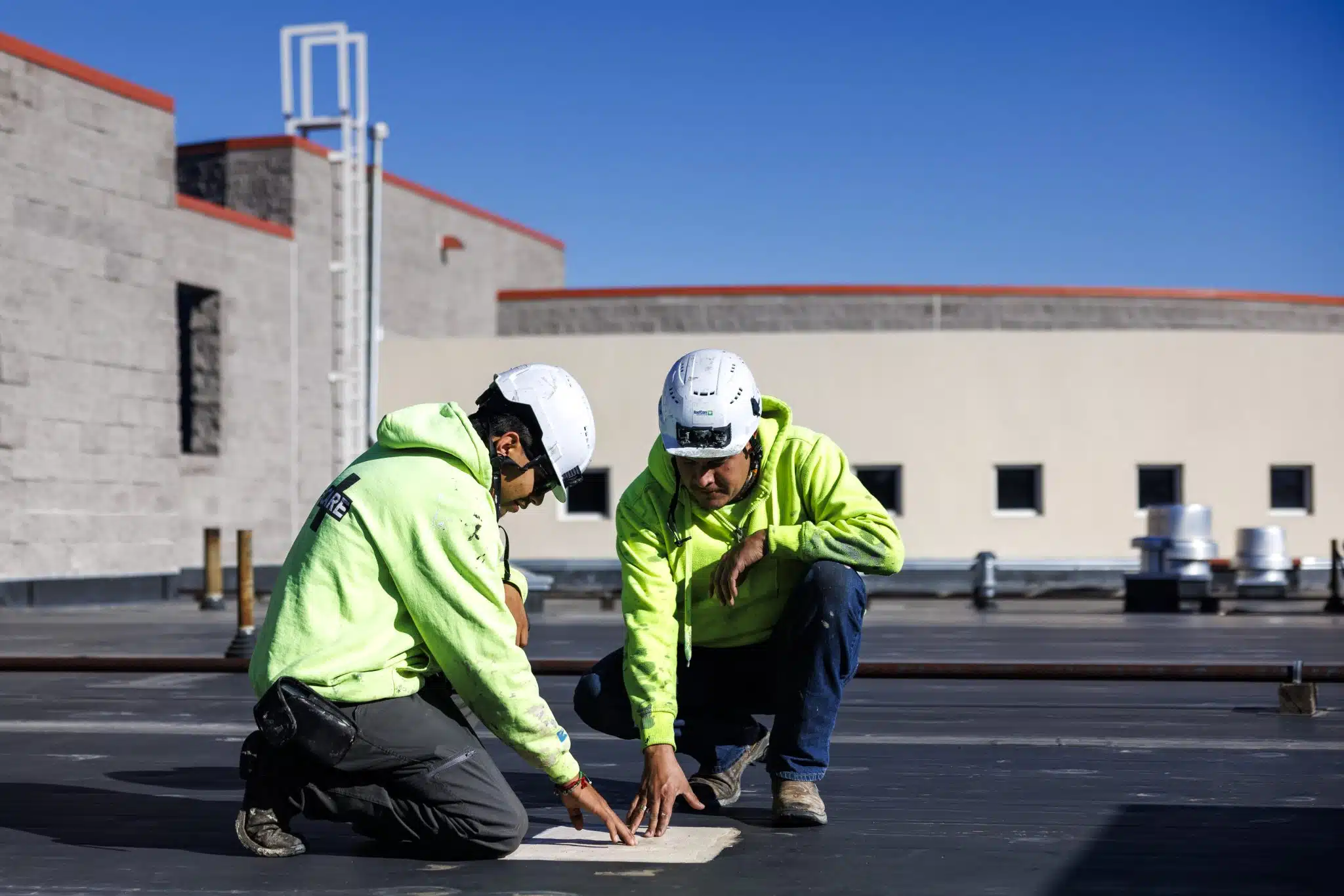
Our post-wind assessment starts at the perimeter: edge termination condition, coping condition, parapet inside and outside corner flashing condition, and any visible membrane pull-back from the edge. We probe field seams in areas downwind of identified edge failures to check for any uplift-driven seam stress. We check all penetration flashings for displacement - HVAC curbs, pipe penetrations, and equipment supports are common secondary wind-damage failure points when the primary edge failure creates a pressure change under the membrane.
Every assessment produces a photo-keyed zone diagram that maps identified damage by location. The written report distinguishes event-related damage from pre-existing edge deterioration. That distinction matters for your insurance claim; an adjuster who receives a report that mixes ten-year-old edge wear with current event damage cannot write a clean estimate. We separate them in the written scope.
Weather service documentation - NOAA storm reports, NWS Wake County surface observation data for the event date - is pulled and included in the assessment package where relevant. For events where a NWS post-storm damage report exists - common after derecho events and named storms - we reference that report in the assessment documentation.
Repair Scope and Closeout
Wind damage repair on a Raleigh commercial flat roof typically addresses: edge termination reinstallation or replacement with properly anchored termination bar or new drip-edge profile; cap sheet replacement at parapet tops where blow-off or delamination occurred; penetration flashing replacement at any HVAC curb or pipe penetration that displaced; and field seam repair at any probe-identified seam separations within the affected area. Where membrane pull-back exposed the substrate to rainfall before dry-in, insulation replacement at saturated zones is added to the scope.
Repair closeout includes re-photographing every repaired location and confirming that the repair matches manufacturer installation details - because properly repaired areas must We document the repair to that standard and include the documentation in the project closeout package.
For buildings where the post-event assessment identified edge fastening below current IBC wind-uplift requirements, we include a separate capital recommendation in the closeout package that describes the code requirement, the current condition, and the cost to upgrade - without inflating the immediate repair scope. That documentation belongs in the building owner's capital planning file, not in the emergency repair invoice.
Frequently asked questions
What wind speed constitutes a reportable wind event for commercial property insurance in NC?
Policy language varies, but most commercial property policies trigger coverage for wind-driven damage at any wind event, without a minimum speed threshold, as long as the damage can be tied to the event rather than to deferred maintenance or normal wear. The documentation challenge is demonstrating event causation - which is what the photo-keyed zone diagram and weather data package provides. We recommend reviewing your specific policy exclusions before the assessment so we can document against your coverage language.
Can wind damage be repaired without a full roof replacement on an older Raleigh building?
In most cases, yes. Wind damage is typically localized to perimeter zones and flashings. If the field membrane is in serviceable condition and moisture core sampling does not show saturation in the field, a repair limited to the damaged perimeter and flashing locations is appropriate. The exception is when the perimeter failure allowed sustained water entry and moisture cores show saturation extending into the field - at that point, the insulation replacement scope may be large enough that replacement is the more economical path.
How do you document wind damage for insurance purposes on Research Triangle Park buildings?
The same protocol applies across the Triangle - photo-keyed zone diagram, written scope distinguishing pre-existing from event-related, weather service data for the event date, and repair estimate with unit quantities. For RTP buildings where your corporate facilities group or property manager manages the claim, we deliver the documentation package in your required format and will present it to your insurance carrier's field adjuster directly if requested.