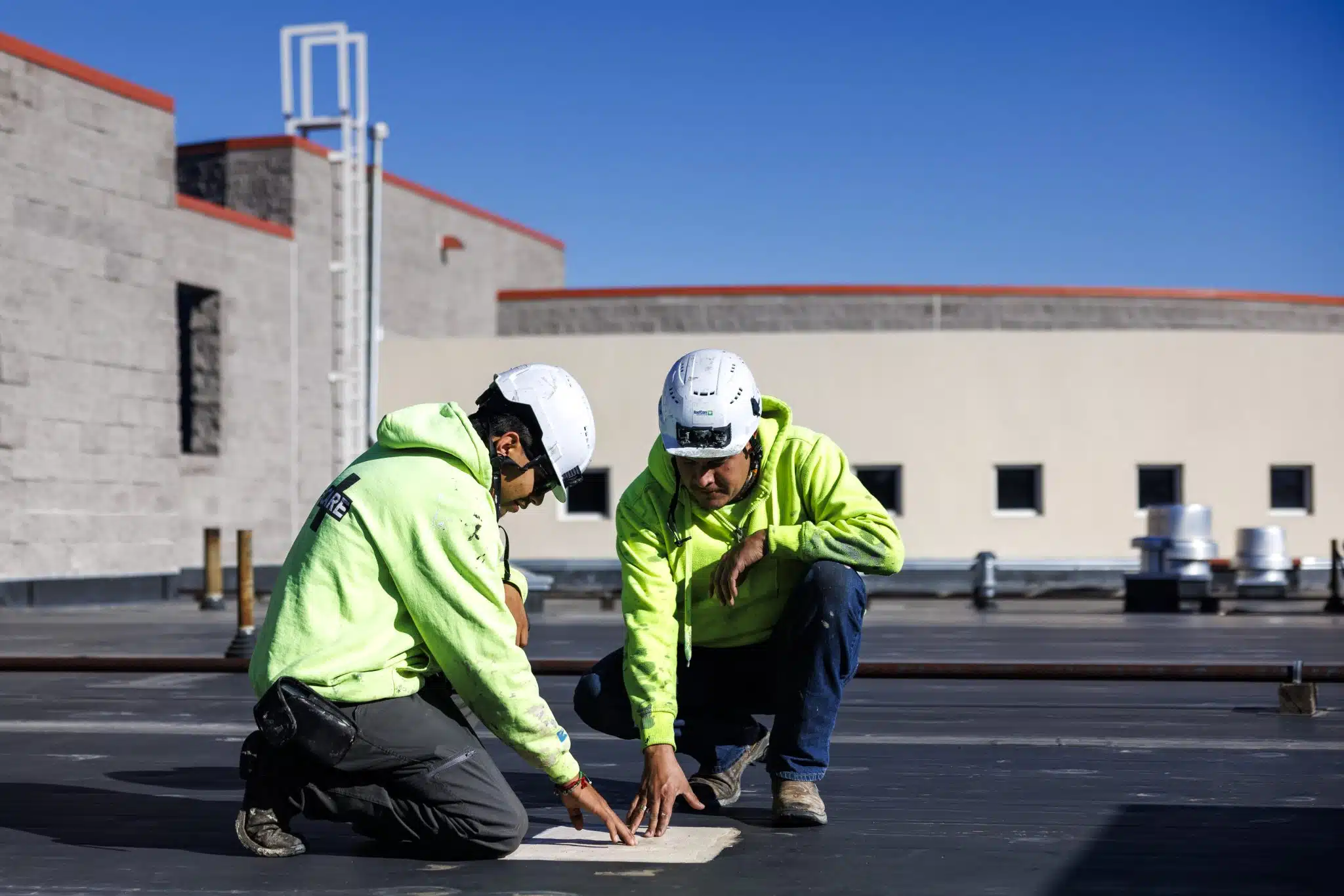
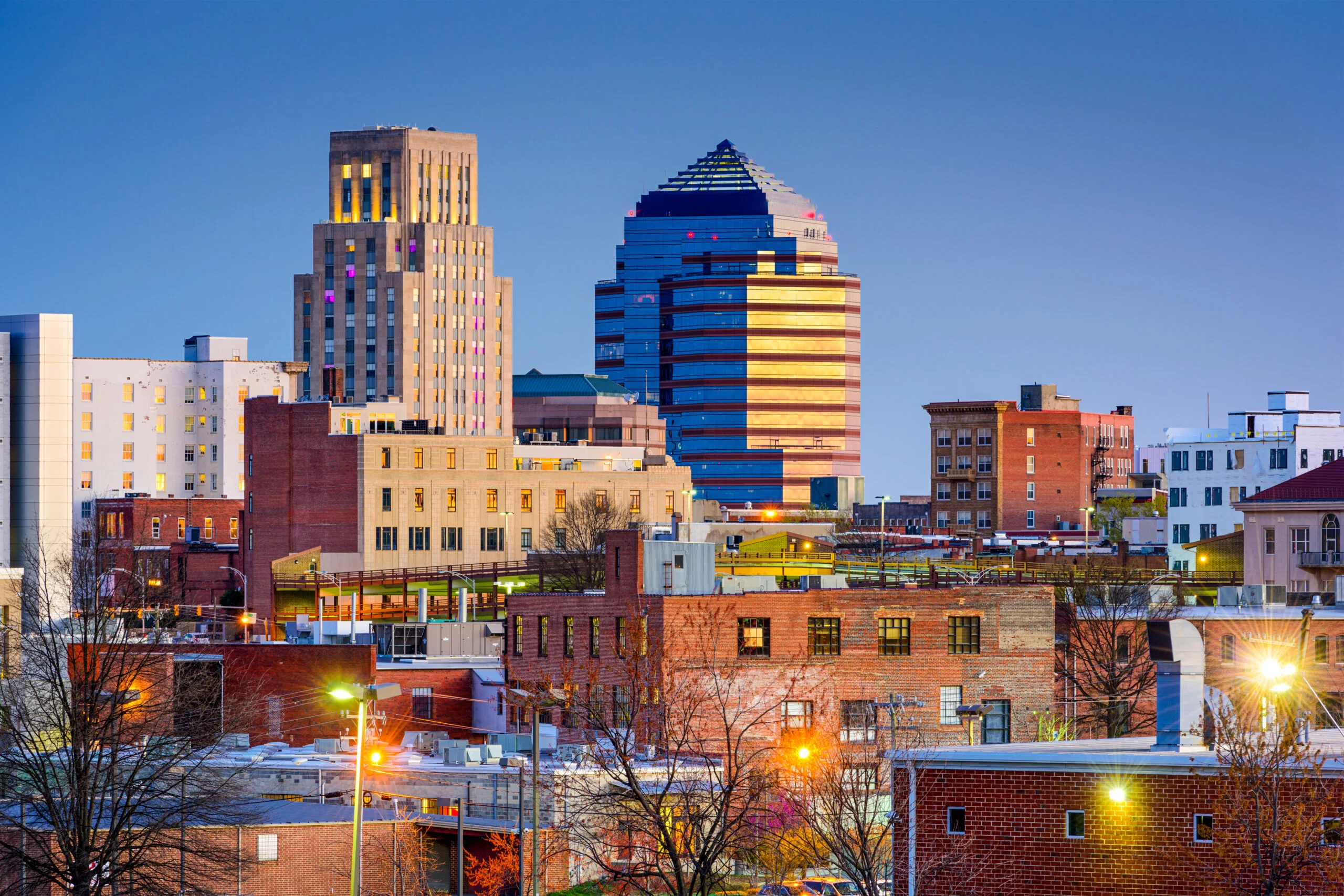
Durham's commercial real estate story has changed dramatically - the American Tobacco Campus brought hospitality and tech tenants downtown, regional institution's campus continues expanding, and Triangle research corridor's eastern edge anchors a dense cluster of mid-size commercial and life sciences buildings.
Durham is not the city it was fifteen years ago, and neither is its commercial building stock. The revitalization of the American Tobacco district along Blackwell Street and Pettigrew Street brought adaptive reuse of century-old industrial buildings alongside new construction - a mix of building types and roof systems that requires contractors who understand both historic building constraints and current energy code requirements. We work on both ends of that spectrum.
We serve commercial buildings across Durham from our Raleigh office on Fayetteville Street. The drive to downtown Durham runs about 28 minutes on I-40 under normal conditions, and we run regular inspection and service routes through Durham that make same-day response to most of the city straightforward. For emergency leak work, we treat Durham inside the I-885 / US-15-501 ring as equivalent response priority to inner Raleigh.
Durham's roofing environment is shaped by two things that most contractors gloss over. First, the regional university campus institutional procurement system has real requirements - licensed contractors, documented insurance, closeout formats that match regional institution's facilities management records system. Second, the brick industrial buildings throughout the American Tobacco district and the Brightleaf Square corridor have parapet and flashing geometries that require experienced detailing rather than a standard flat-roof template. We have worked in both environments.
regional university campus and Medical Center Area
regional institution's main campus on Chapel Hill Boulevard and its medical center complex along Erwin Road represent a significant concentration of institutional roofing work in Durham. The medical center's clinical and research buildings carry the same constraints as any large hospital environment: infection control during construction, HVAC integrity, and access coordination through regional institution Facilities Management.
regional institution's facilities management system requires contractors to hold current certificates of insurance, comply with regional institution's construction safety standards, and submit closeout documentation in a format compatible with regional institution's asset management records. We handle all of these as standard pre-construction steps rather than as items to be figured out mid-project.
The research buildings on regional institution's west campus and in the medical research park along Erwin Road frequently have rooftop laboratory exhaust systems, fume hoods, and specialized HVAC infrastructure that cannot be disrupted during a roof project. Sequencing work around these systems - and restoring them to verified operation before closeout - is a routine part of how we plan institutional roofing projects in Durham.
American Tobacco Campus and Downtown Durham
The American Tobacco Campus is one of the Triangle's most distinctive commercial environments. Buildings like the Lucky Strike tower, the water towers, and the former manufacturing halls now house tech companies, creative agencies, hospitality tenants, and startup offices - all in structures built between 1900 and the 1940s. Roofs on these buildings are a mix of original built-up systems, recover layers added over decades, and more recent single-ply work done during the adaptive reuse conversion.
These historic industrial buildings present specific detailing challenges. Brick parapet walls with embedded through-wall flashing require careful integration with new membrane systems. Original drain configurations are often inadequate by current code and create chronic ponding issues that a replacement scope has to address directly. We assess these conditions in writing before scoping any work - not during demo when stopping would cost the owner real money.
The broader downtown Durham commercial corridor along Main Street and Mangum Street is in a sustained development cycle. New mixed-use buildings are going up alongside 1960s and 1970s commercial office buildings whose original roofing systems are at or past end of life. We assess these buildings honestly - some are good recover candidates, some need full replacement - and we put that assessment in writing so the owner can make a capital decision against real data.
Triangle research corridor - Durham Side
Triangle research corridor's Durham footprint - the northern and western sections of the park along T.W. Alexander Drive and Raleigh Boulevard - contains some of the Triangle's largest and most mechanically complex commercial buildings. Pharmaceutical research facilities, technology operations centers, and corporate headquarters campus buildings in this part of Triangle research corridor are characterized by large flat roof footprints, dense rooftop mechanical equipment arrays, and uptime requirements that shape every aspect of project scheduling.
Pharmaceutical and life sciences buildings in particular have controlled-environment requirements that intersect directly with roofing work. Clean-room ventilation systems, chemical exhaust discharge, and lab HVAC balance are all affected by rooftop construction activity. We treat coordination with the building's mechanical systems operator as a pre-construction requirement, and we do not open roof sections that will affect controlled environments without a confirmed shutdown and restart sequence in place.
Triangle research corridor buildings in Durham are also among the more likely Triangle commercial buildings to carry rooftop solar arrays and integrated energy monitoring systems. We treat array disconnection, temporary protection, and re-commissioning as a coordinated pre-construction step - and we document array condition before and after work with photographs in the closeout package.
Frequently asked questions
How quickly can you get to a Durham commercial building for an emergency roof leak?
For buildings inside the US-15-501 / I-885 ring in Durham - which covers most of downtown, regional institution's campus, and the medical center area - we can typically have a crew on-site within four to five business hours. For Triangle research corridor buildings on the Durham side, response time is similar. Call 919-372-4890 directly for emergencies; don't submit through the contact form when you have active water intrusion.
Do you work within regional university campus's contractor requirements?
Yes. regional institution's facilities management system has real requirements around insurance documentation, safety training records, and closeout deliverable formats. We handle the credentialing process during pre-construction coordination and provide closeout documentation in regional institution's required format. Give us your regional institution facilities contact and we coordinate directly with them.
Can you work on historic industrial buildings in the American Tobacco district?
We have done this work. Historic industrial buildings - brick construction, original parapet configurations, complex drain histories - require assessment before scoping, not during demo. We walk the roof, document every condition, and deliver a written scope that addresses the actual building rather than a generic flat-roof template. That assessment is the right starting point for any adaptive reuse building in the American Tobacco or Brightleaf corridor.