A properly applied coating system can extend a sound commercial membrane 10-20 years, reduce cooling loads on Raleigh's sun-intensive summers, and carry a manufacturer warranty - at roughly 40-60% of replacement cost. The key word is sound: we assess before we coat.
Commercial roof coatings are one of the most oversold and under-specified services in the roofing industry. The pitch is simple - spray a coating over the existing roof, save money versus replacement, done. The problem is that coatings applied over compromised substrates, saturated insulation, or failed seams do not fix the underlying problems. They hide them temporarily while trapping moisture and voiding the possibility of a future warranted replacement.
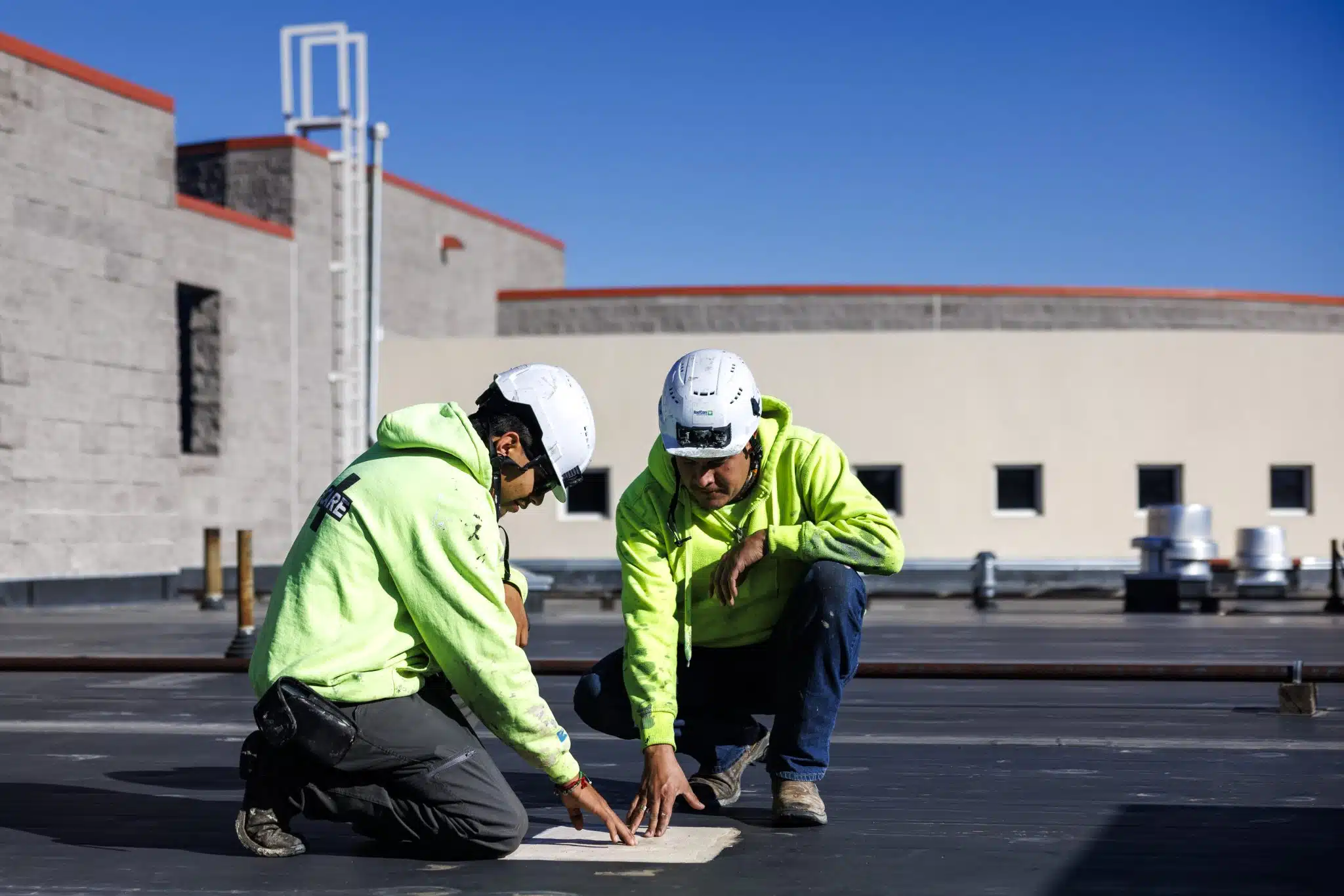
We install coatings on roofs that have passed our candidacy assessment. That assessment includes a moisture core pull in representative locations across the roof field, a seam and flashing inspection, a drain and ponding analysis, and a condition report on the existing membrane. If the roof is a sound candidate - less than 15% insulation saturation, seams intact or repairable, adequate drainage, membrane in good adhesion - a coating system is a legitimate capital-extending option with real warranty value.
We install silicone and acrylic systems from manufacturers including Carlisle, Garland, and GAF. Each system's specification - mil thickness, primer requirements, detail reinforcement at seams and flashings - is determined by the existing roof substrate and the manufacturer's requirements for the specific warranty term the building owner needs. A 10-year warranty has different spec requirements than a 20-year warranty, and we will explain the difference before the contract is signed.
Coatings in the Raleigh Climate
The Raleigh climate presents two scenarios where coatings perform well and one where they do not. They perform well on roofs with sound membranes that face intense UV degradation - the Triangle's subtropical summer sun drives rooftop surface temperatures above 160F on dark membranes, and a reflective silicone coating measurably reduces that thermal load. North Hills office buildings and the dense commercial inventory along US-1 south and US-401 have recorded 15-25% reductions in peak cooling demand after white silicone coating installation.
They also perform well on roofs that have faced the Triangle's recurring hurricane remnant rainfall events. The 2018 Hurricane Florence and 2024 Hurricane Helene events both stress-tested roof drainage and membrane integrity across Wake County. A silicone coating applied over a sound EPDM or TPO membrane provides an additional waterproofing layer that performs in ponded water - silicone does not degrade under standing water the way acrylic does, which is relevant given the flat terrain across the Downtown Raleigh and North Hills commercial corridors.
Where coatings do not perform: over saturated insulation, over failed seams that were not properly remediated before coating, and over roofs with inadequate drainage where ponding will exceed the coating system's tolerance. We identify these conditions in the candidacy assessment. If the roof does not pass, we will not propose a coating - we will tell you why and present the repair or replacement scope that makes sense.
Silicone vs. Acrylic: What We Specify and Why
Silicone coatings are our standard specification for most Raleigh commercial buildings. Silicone is inert in standing water - it does not wash off, sag, or degrade under the ponding conditions that are endemic to flat commercial roofs in the Triangle. It is UV-stable, it bonds well to cleaned EPDM and TPO, and it carries the longest warranty terms available in the coating category - up to 20 years on manufacturer-warranted systems. The downside: silicone is more expensive per square than acrylic and requires clean, dry conditions for application.
Acrylic coatings are appropriate for roofs with good drainage and slope, where ponding is not a chronic concern and where the shorter warranty term aligns with the building's capital horizon. Acrylic is water-based, lower in VOC emissions, and easier to apply at lower temperatures - relevant in the Triangle's shoulder season when overnight temperatures can dip below coating application minimums. We specify acrylic on metal roofs and on sloped commercial surfaces where drainage is demonstrably adequate.
Cary commercial buildings along the analytics campus Institute campus corridor and in the Weston Parkway tech cluster have seen increased interest in coating systems as part of corporate sustainability commitments. Reflective coatings reduce the urban heat island contribution of large commercial roof surfaces and can contribute to LEED or ENERGY STAR building ratings. We can document the reflectance performance of installed systems for sustainability reporting.
The Application Process
Candidacy assessment comes first. If the roof passes, we develop the coating specification - manufacturer, system, mil thickness, warranty term - and present it alongside the alternative capital scenario (repair vs. partial recover vs. full replacement) so the building owner can make a fully informed decision.
Surface preparation is the most critical step and the one most often shortcut. We power-wash the existing membrane, inspect and re-weld or re-flash any seam or flashing deficiencies identified in the assessment, apply primer where the manufacturer requires it, and install fabric reinforcement at all seams, flashings, and penetrations before the field coat. The reinforcement step is non-optional for any system carrying a manufacturer warranty of 10 years or longer.
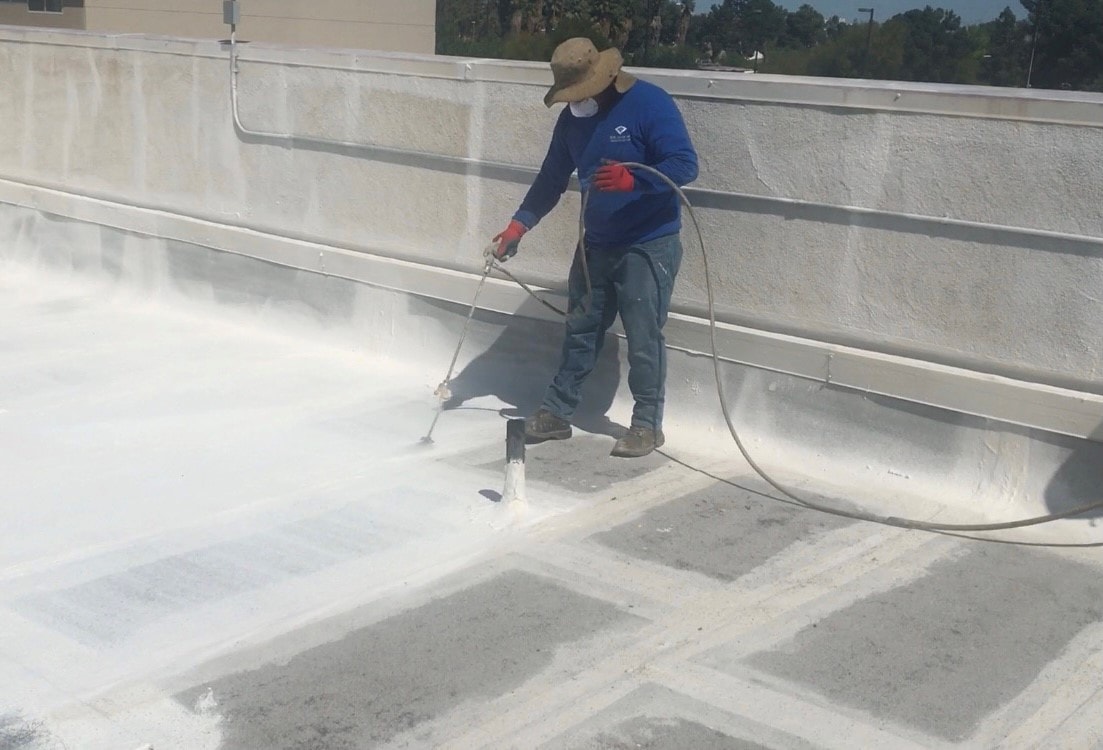
Field coating is applied by spray or roller to the manufacturer's mil-thickness specification. We use a wet-film thickness gauge during application and document the coverage rate against the manufacturer's requirements. The coating is inspected before final acceptance by the manufacturer's field representative for all warranted systems.
Closeout includes the manufacturer warranty document, the application log showing coverage rates and weather conditions during application, and a maintenance schedule - most coating warranties require an annual inspection and re-coating of worn areas at the mid-point of the warranty term. We include that service in our maintenance program offering.
Frequently asked questions
How do I know if my Raleigh building's roof is a coating candidate?
The short answer: only after a moisture core pull and seam inspection. Roofs that appear visually sound often have saturated insulation under the surface that disqualifies them from coating without remediation. We pull 5-10 moisture cores on a representative sample of the roof and probe seams and flashings. If less than 15% of the insulation is saturated and the seams and flashings are in repairable condition, the roof is typically a coating candidate. If we find higher saturation levels or widespread seam failure, we will tell you - a coating over that substrate would not carry a warranty and would not extend the roof's life.
What warranty terms are available on coating systems?
Manufacturer warranties on commercial coating systems run 10, 15, and 20 years depending on the system, the mil thickness specified, and the substrate. Ten-year warranties are available on most sound EPDM and TPO substrates. Fifteen and twenty-year warranties require thicker systems, substrate verification, and manufacturer inspection at closeout. We specify the warranty term based on what the manufacturer will actually stand behind for the specific roof condition - not the maximum term on the spec sheet.
Can a coating system be installed on an occupied building?
Yes, with appropriate sequencing. Solvent-based primers require ventilation notification for any occupied spaces with HVAC intakes on or near the roof. We coordinate HVAC intake management with your facility manager before application. Water-based acrylic systems have minimal VOC impact. In either case, the application schedule is based on weather windows - silicone and acrylic both require dry surfaces and ambient temperatures above 40F, so we work from an accurate Triangle weather forecast and do not begin application on days where afternoon showers are likely.